Welcome to the first wave of Syria Poll. This inaugural issue presents findings from surveys conducted in Damascus, Rural Damascus, and Homs in early February 2026, examining how residents assess their living conditions, government performance, and recent political developments.
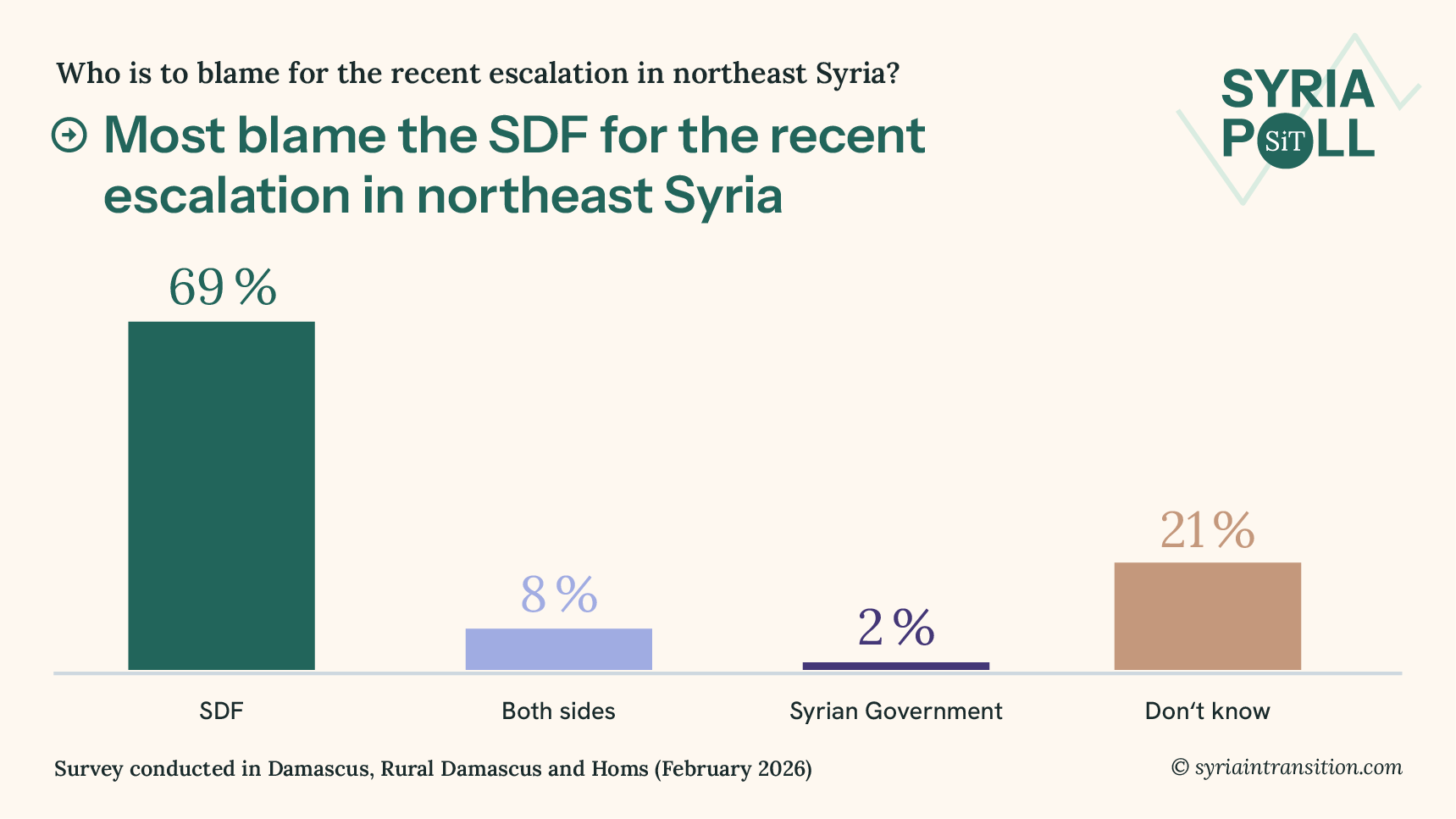
1. The year has already been turbulent, with conflict and deal-making between the government in Damascus and the SDF. Among respondents, one pattern stands out: responsibility for the recent escalation is attributed to the SDF. A total of 69 per cent say that the SDF is to blame, while only 2 per cent attribute responsibility to Damascus.
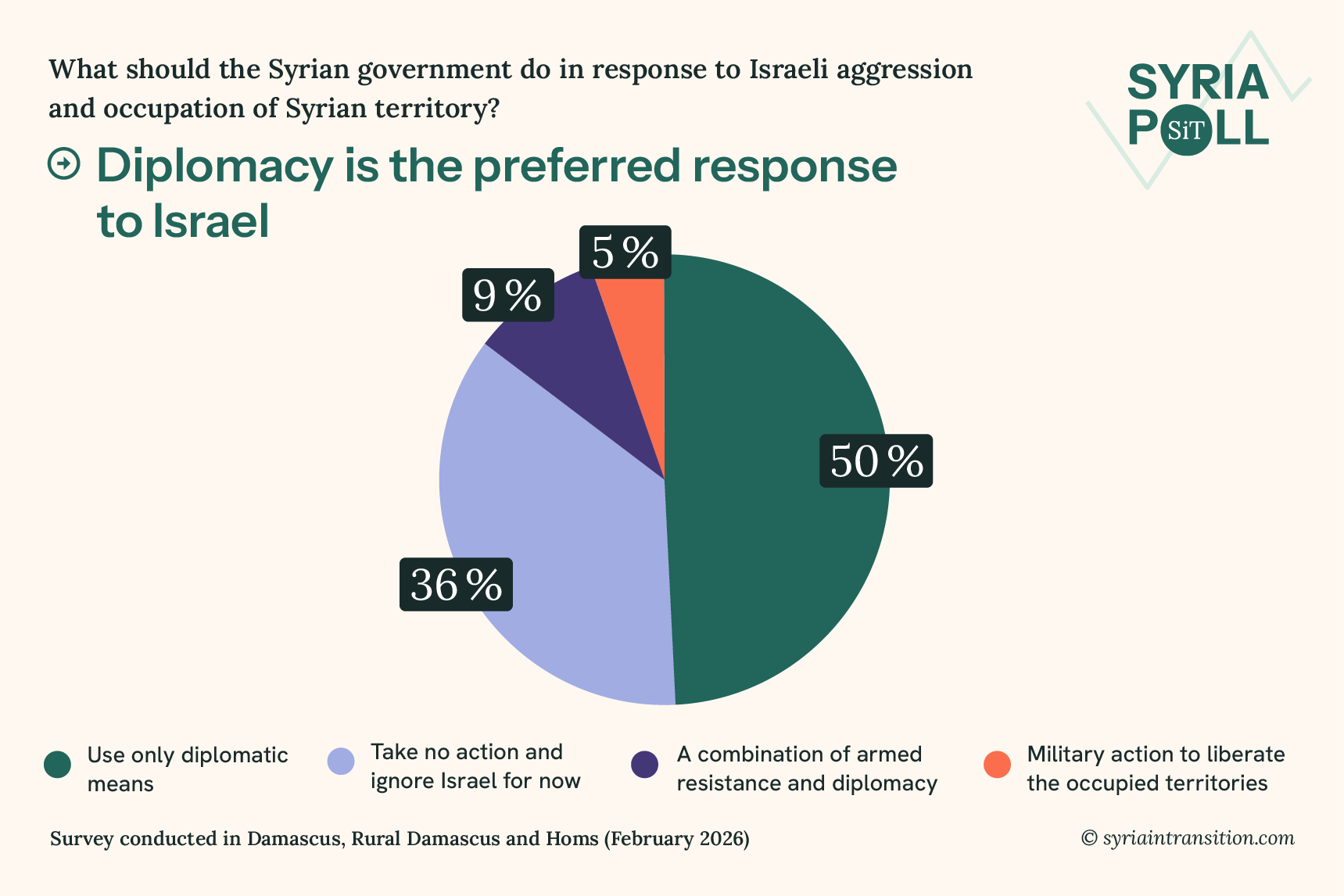
2. In southern Syria, tensions are also simmering amid Israel’s continued incursions and occupation of Syrian land. However, only 5 per cent of respondents favour a purely military response. Most respondents prefer non-military options, with 50 per cent supporting diplomatic engagement and 36 per cent favouring no immediate action. A smaller share (9 per cent) supports a combination of military and diplomatic measures.
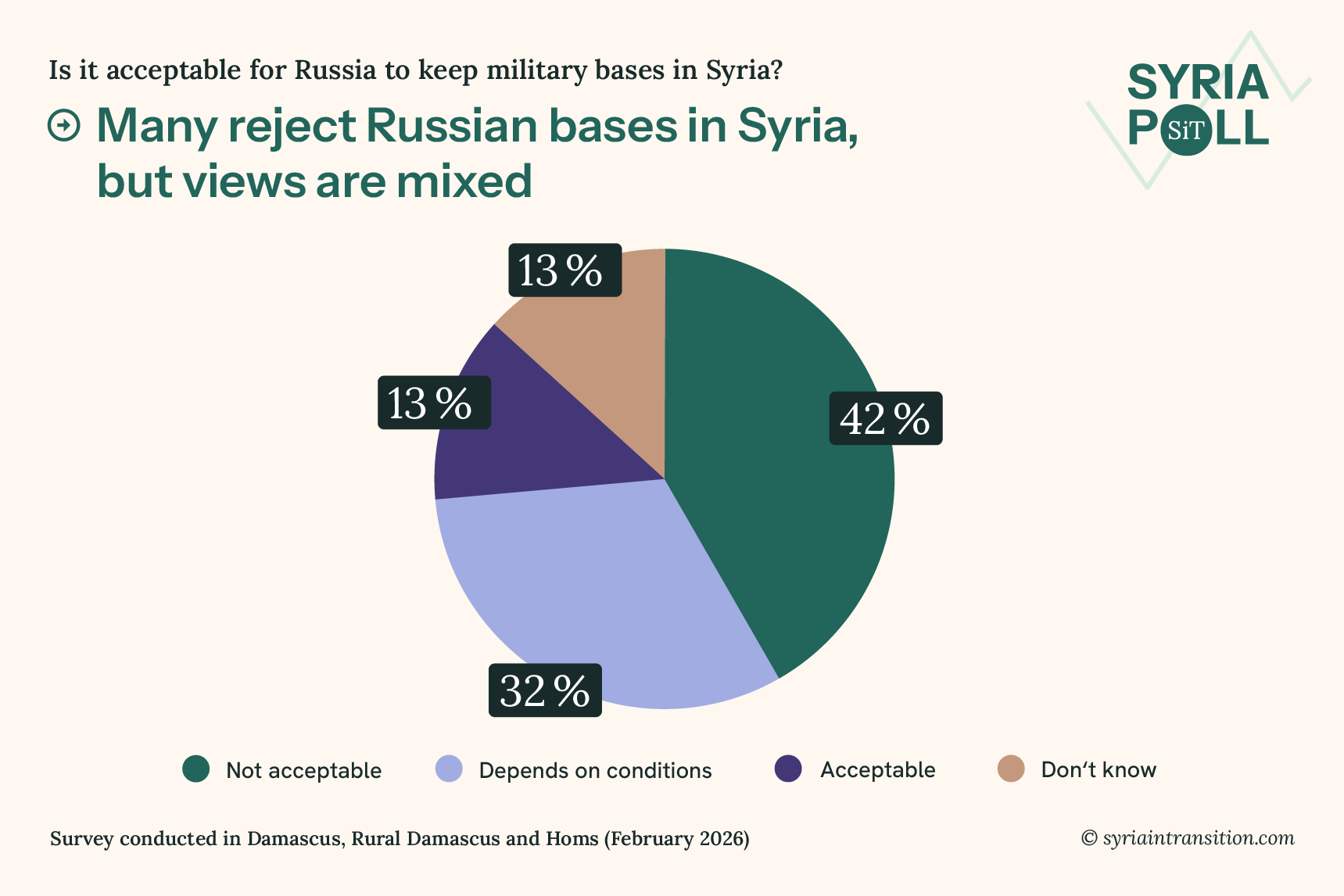
3. The continued presence of Russian military bases in Syria elicited mixed views. 42 per cent say it is not acceptable at all, while 32 per cent are more pragmatic and say that it depends on conditions. Only 13 per cent consider it generally acceptable.
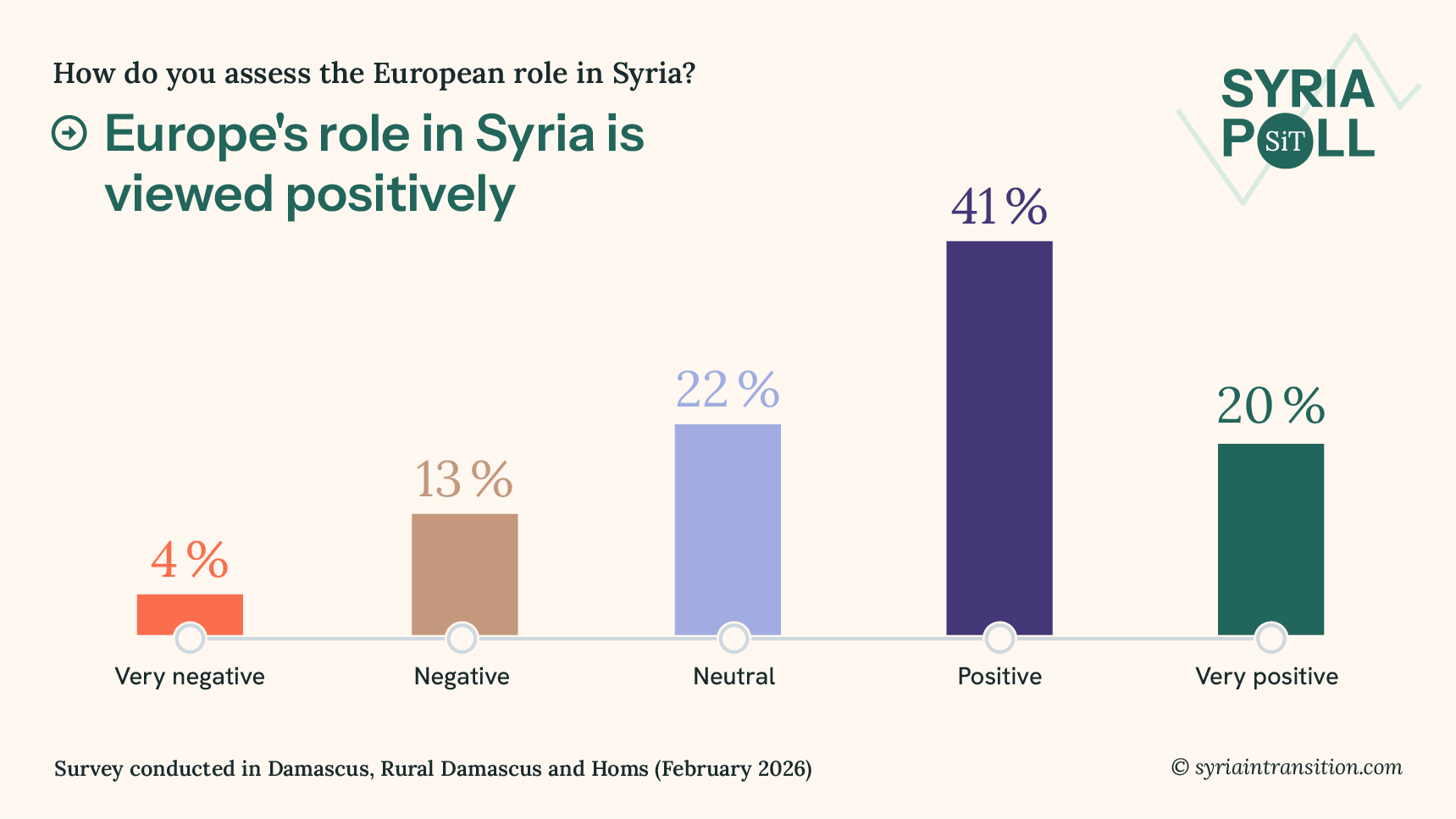
4. A majority of respondents appreciates the European role in Syria, with 61 per cent rating it as either very positive or positive. 17 per cent say that it is negative or very negative.
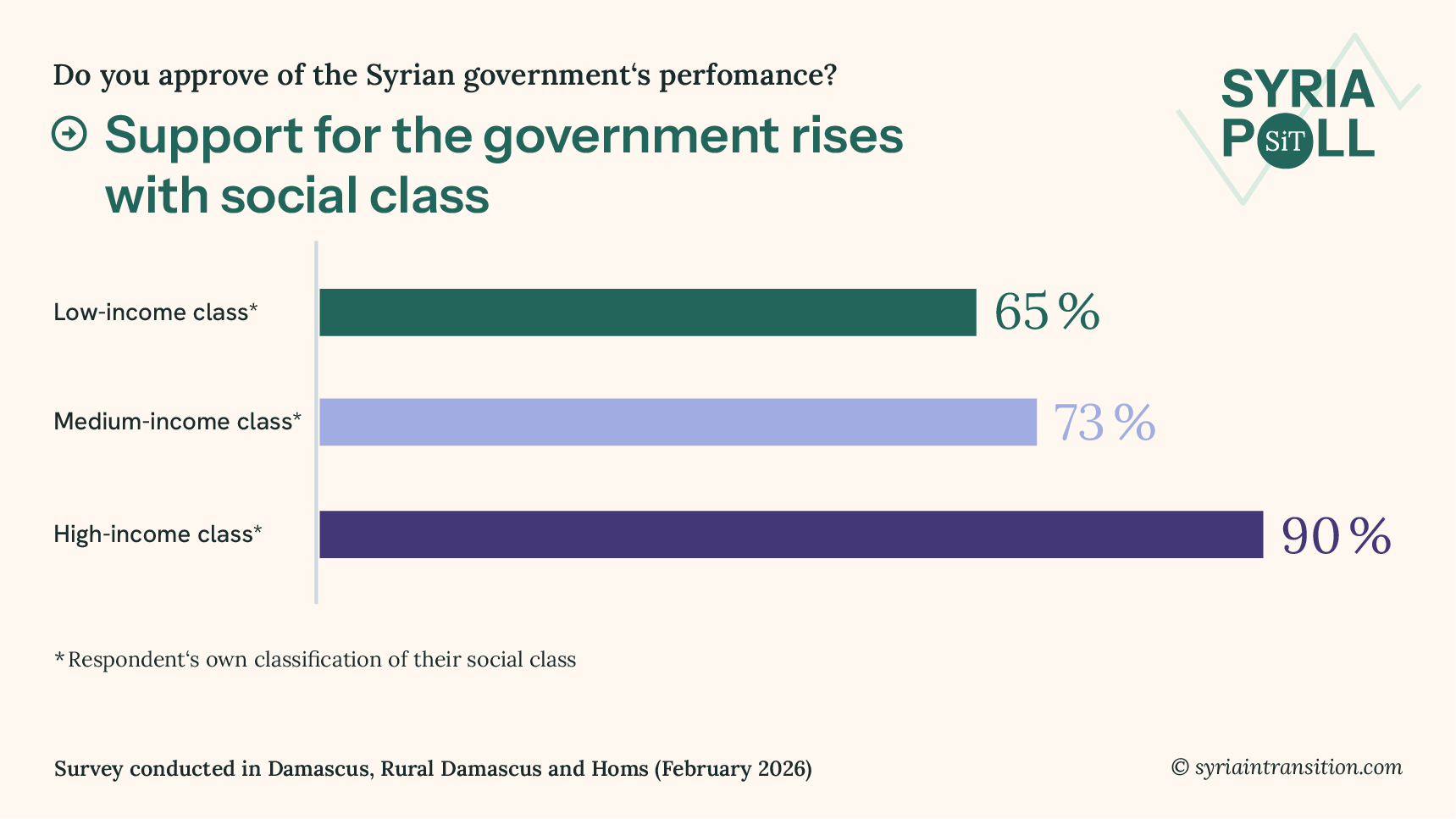
5. A majority express support for the government. Support rises with self-identified social class: around 90 per cent of those who identify as high-income class express moderate or strong support, compared to 65 per cent among those who identify as low-income class.
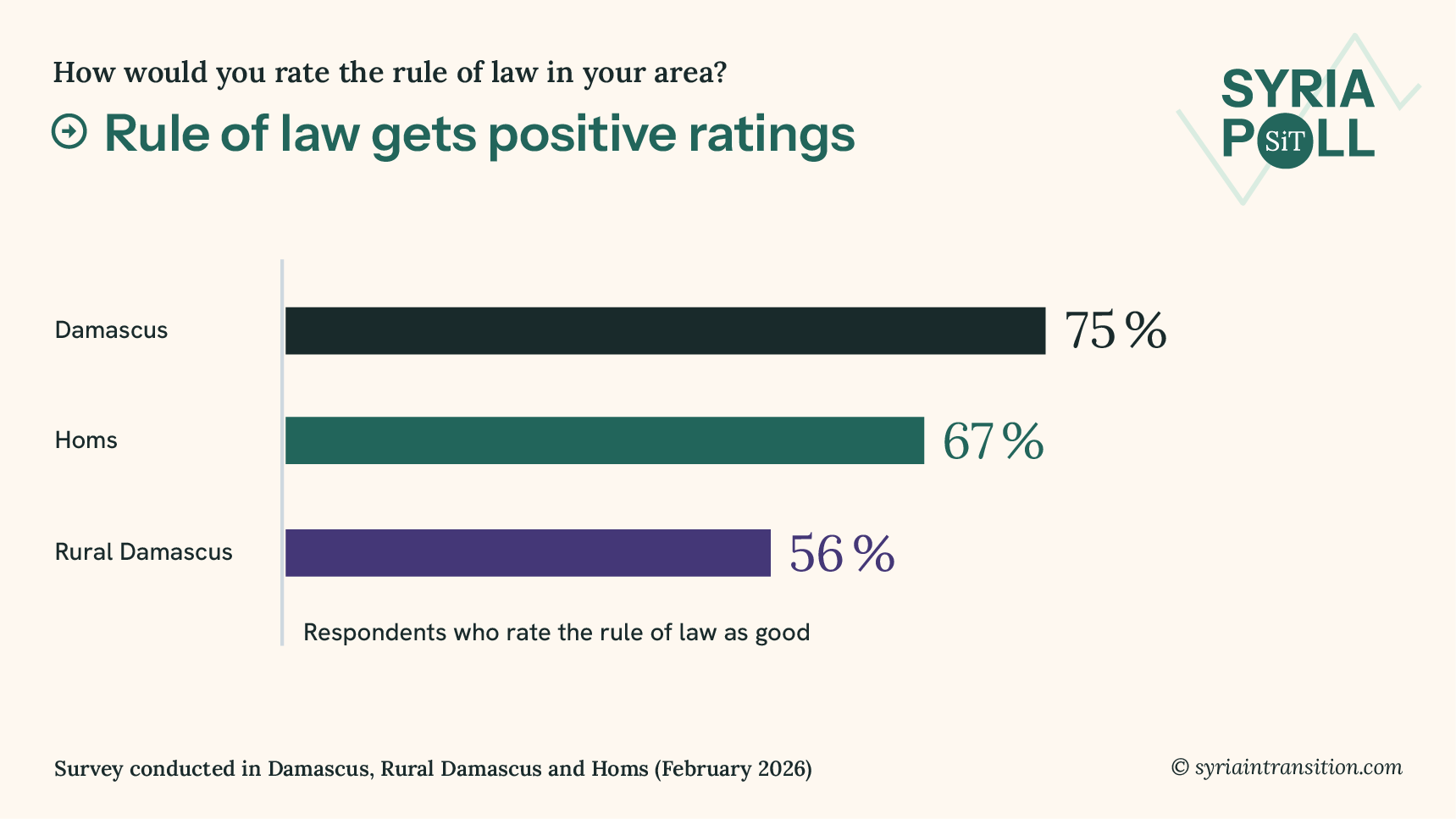
6. A majority rate the rule of law positively, with higher levels in Damascus than elsewhere. Around 75 per cent in Damascus rate it as good, compared to 67 per cent in Homs and 56 per cent in Rural Damascus.
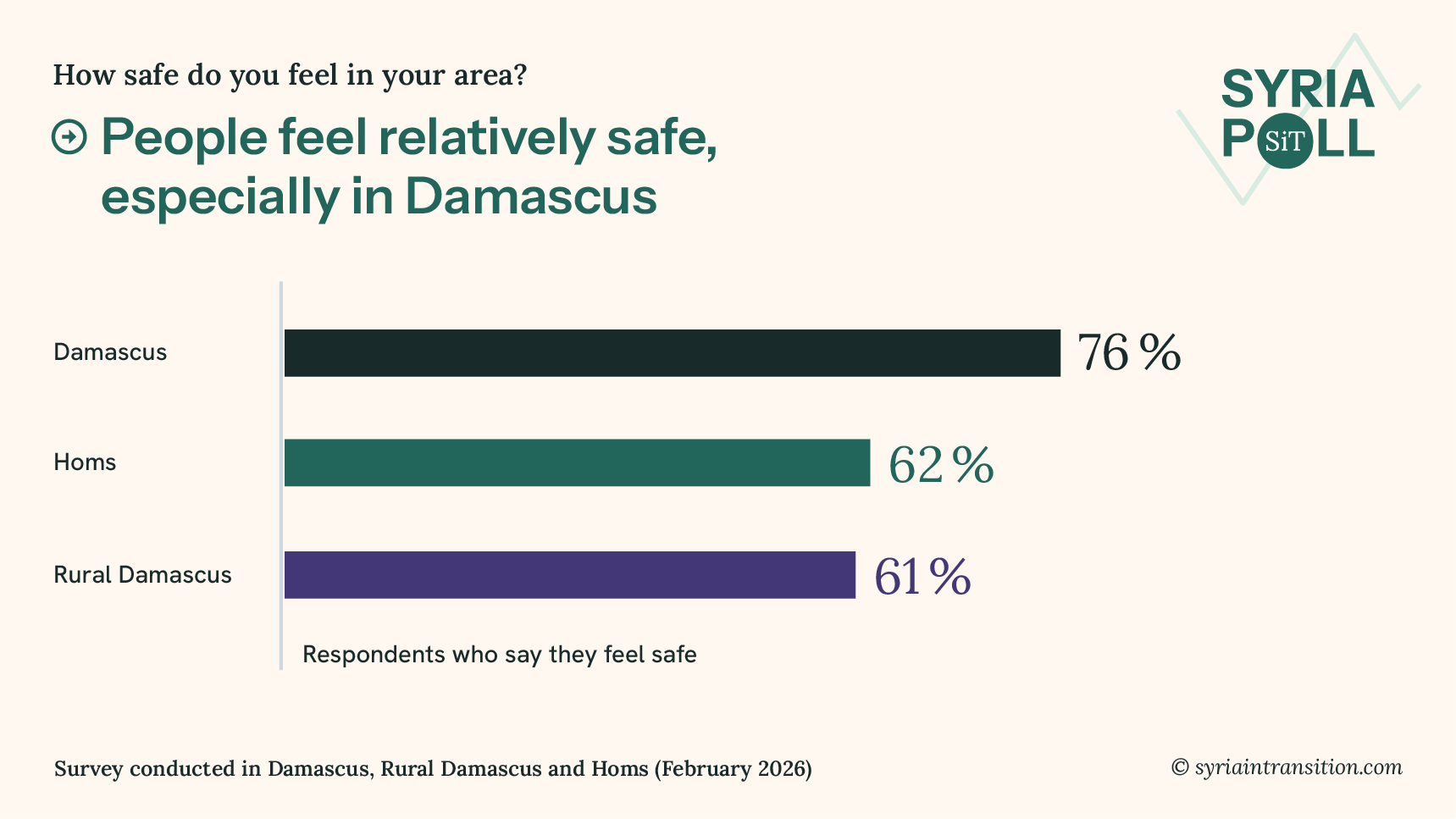
7. Perceptions of safety are generally positive, but vary across locations. Around 76 per cent in Damascus say they feel safe, compared to 62 per cent in Homs and 61 per cent in Rural Damascus.
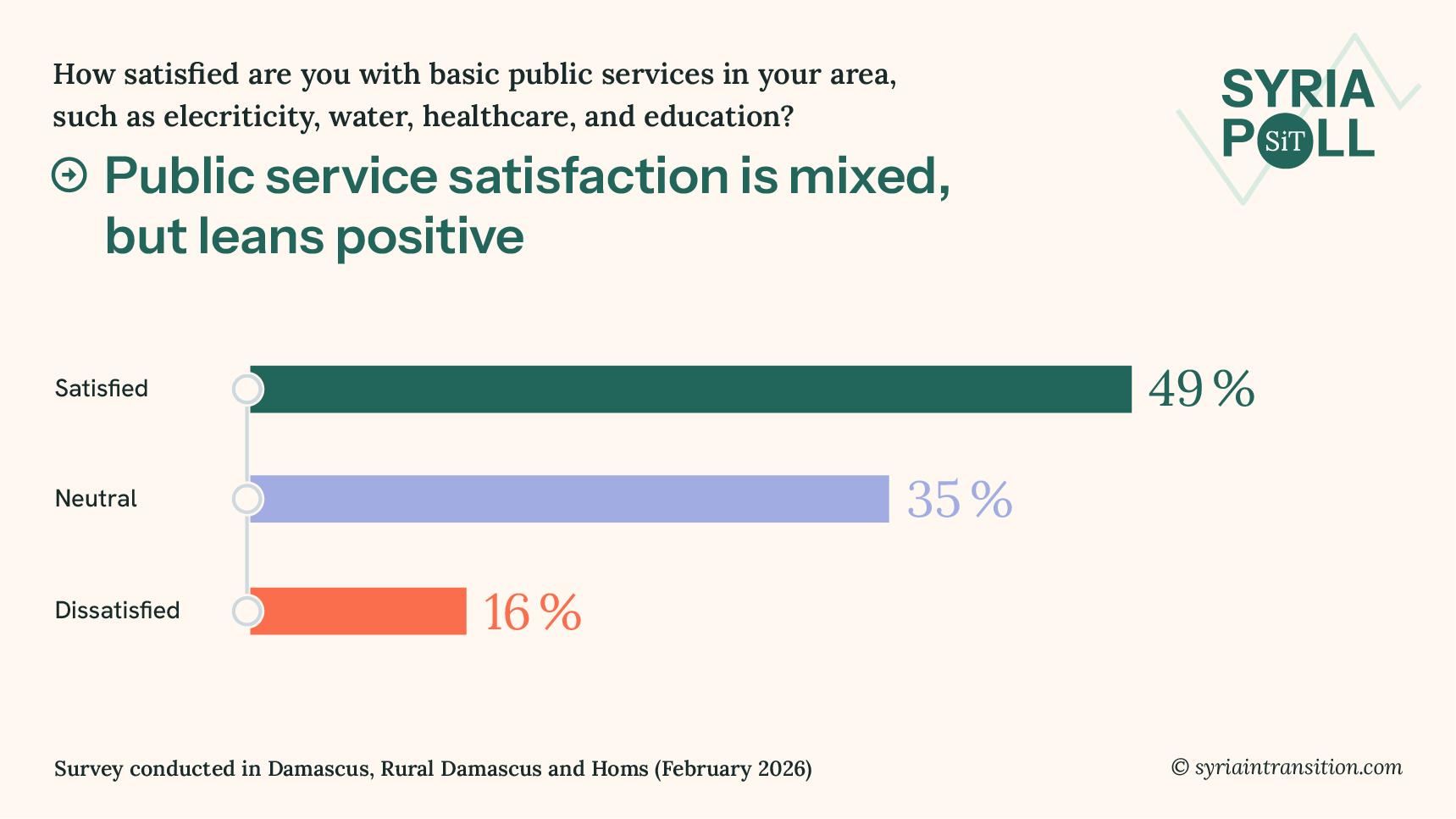
8. While 49 per cent of respondents report being satisfied, only 16 per cent say they are dissatisfied, and 35 per cent take a neutral position.
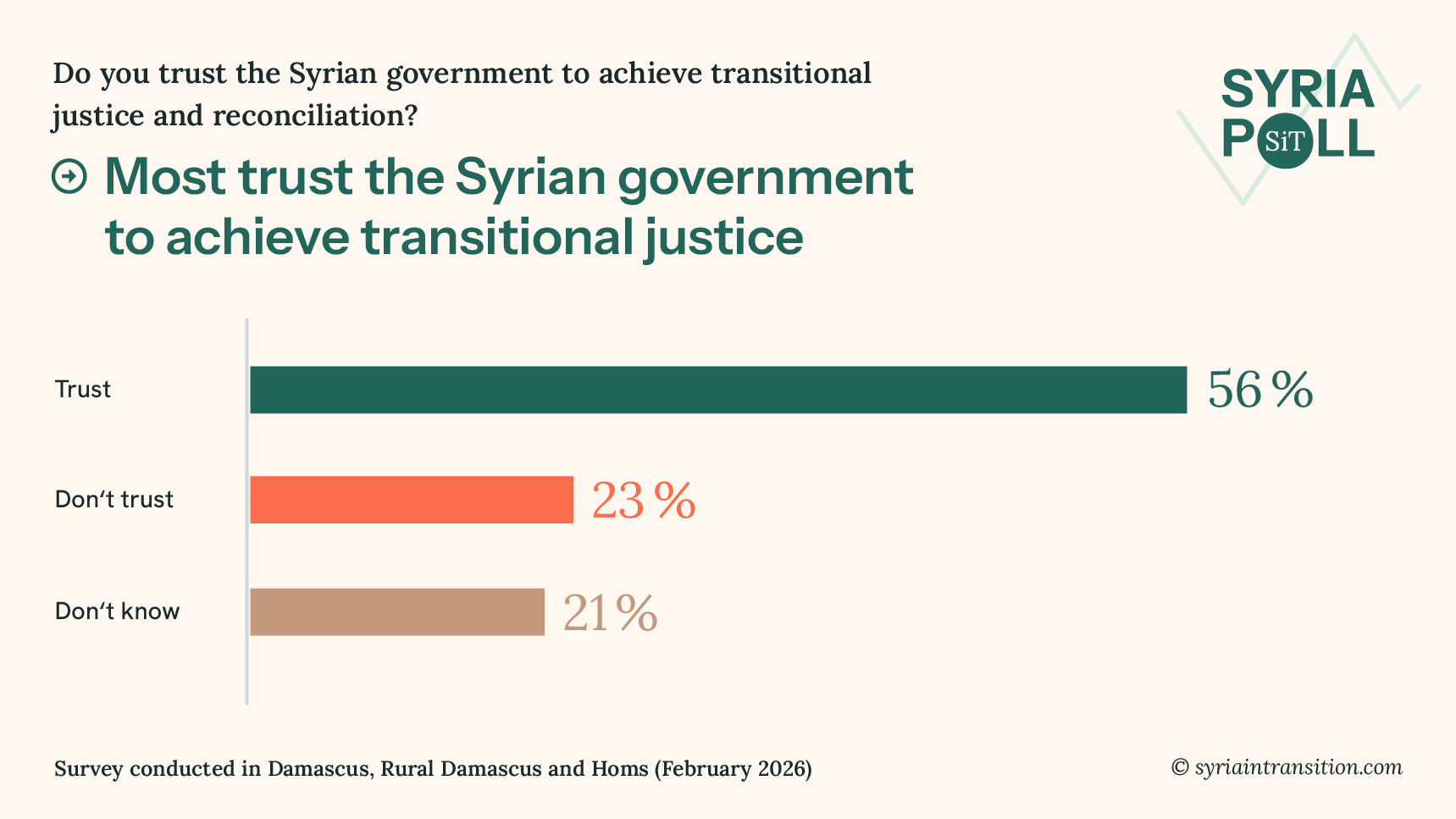
9. Most respondents express trust in the government to achieve transitional justice. While 56 per cent say they trust the government, 23 per cent say they do not, and 21 per cent are unsure.
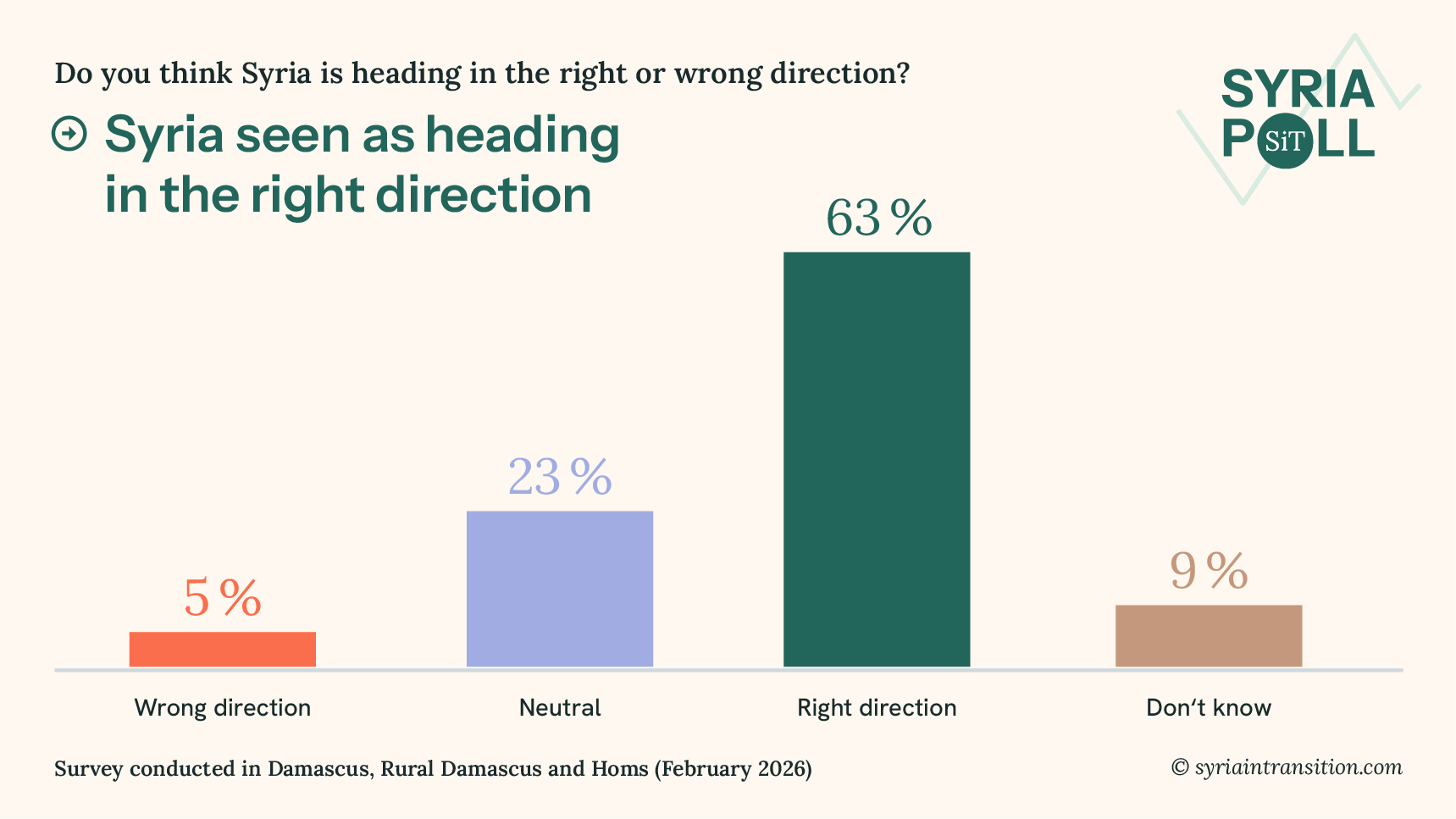
10. Fourteen months after the collapse of the Assad regime, nearly two-thirds of respondents (63 per cent) say their country is heading in the right direction.