Welcome to the April wave of Syria Poll. This issue presents findings from surveys conducted in Damascus, Rural Damascus, and Homs in mid April 2026, examining how residents assess their living conditions, government performance, and recent political developments.
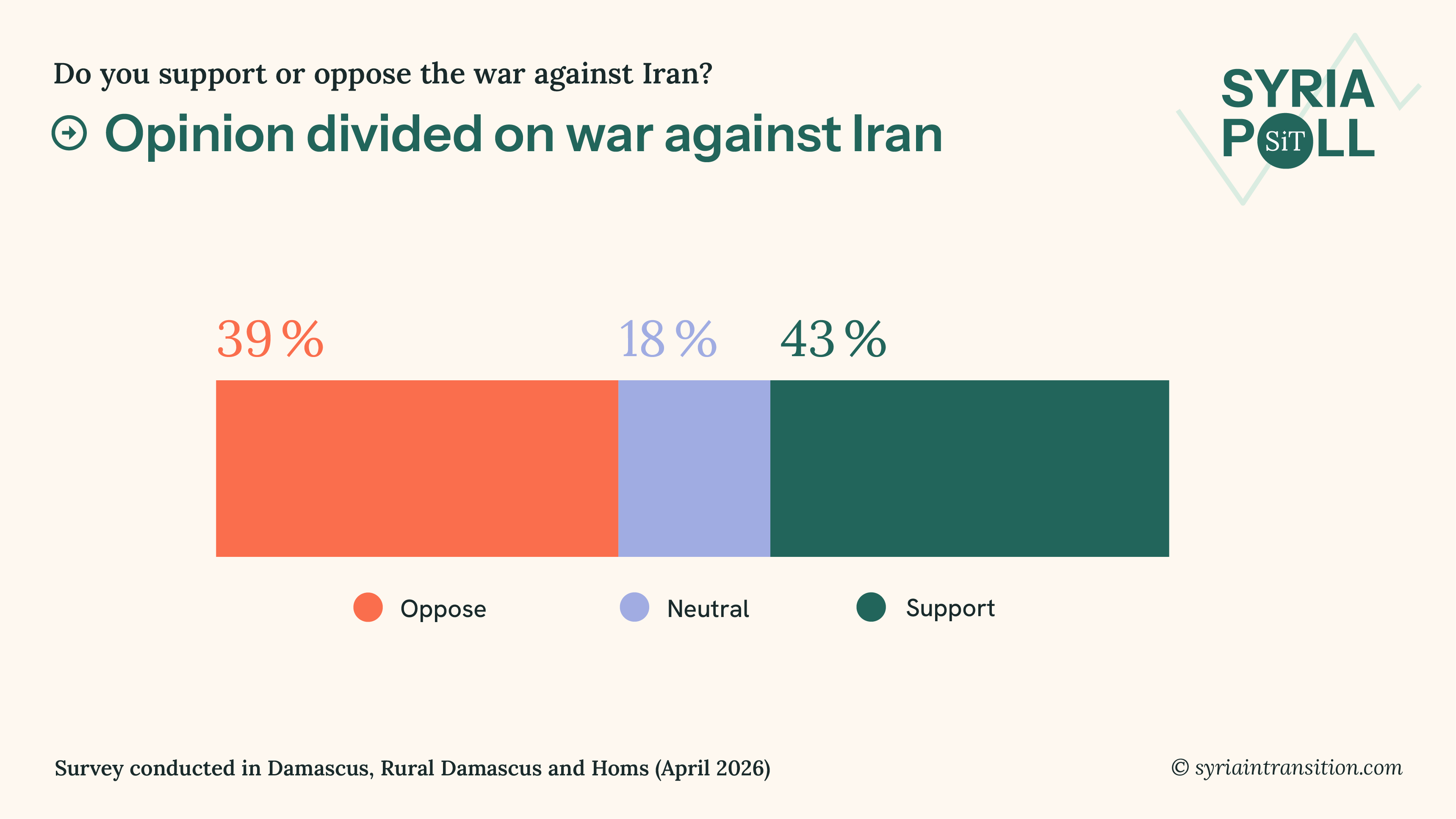
1. With Iran being a strong backer of the Assad regime, many respondents hold critical views of its regional influence. At the same time, opinion on the US-Israeli war against Iran is divided. 43% of respondents support it, while 39% oppose it. A further 18% remain undecided.
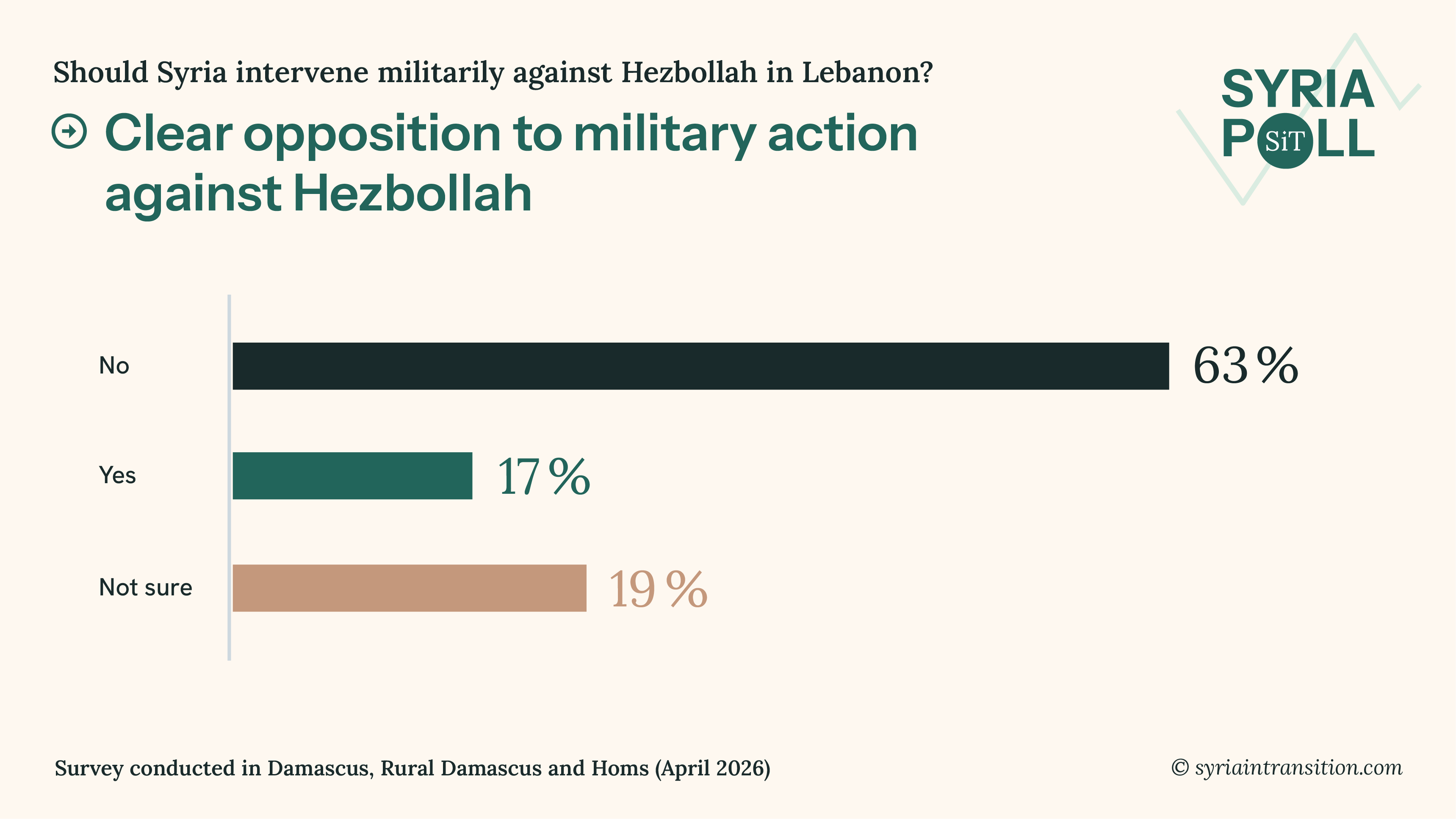
2. While views on the Iran war are split, there is clearer consensus on whether Syria should join the war. A majority of 63% opposes Syrian military intervention in Lebanon, while only 17% are in favour. Around one in five remain unsure.
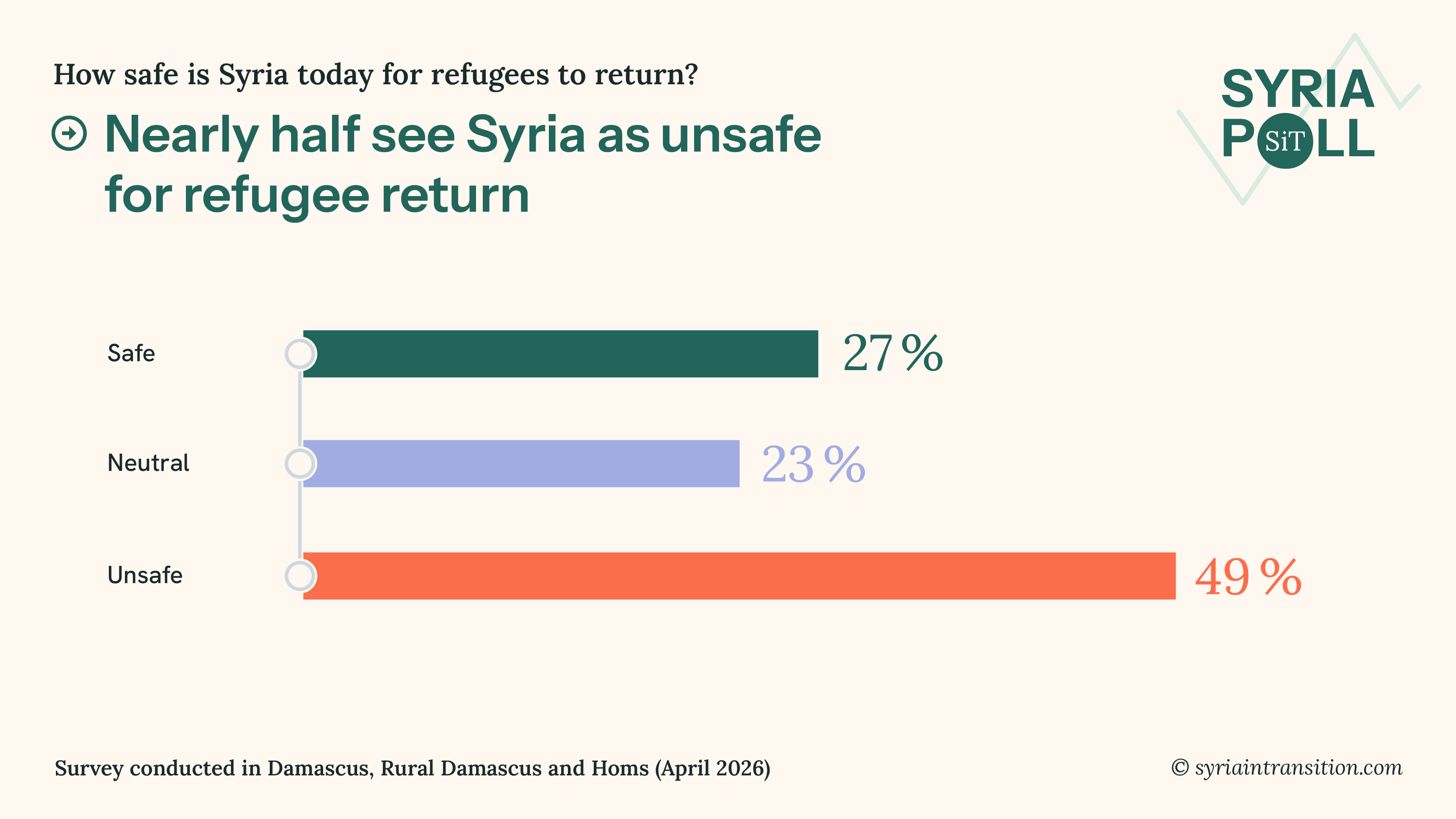
3. With millions of Syrians still living abroad, perceptions of return conditions remain cautious. 49% consider Syria unsafe for refugee return, while 27% say it is safe. The remainder take a more ambivalent position.
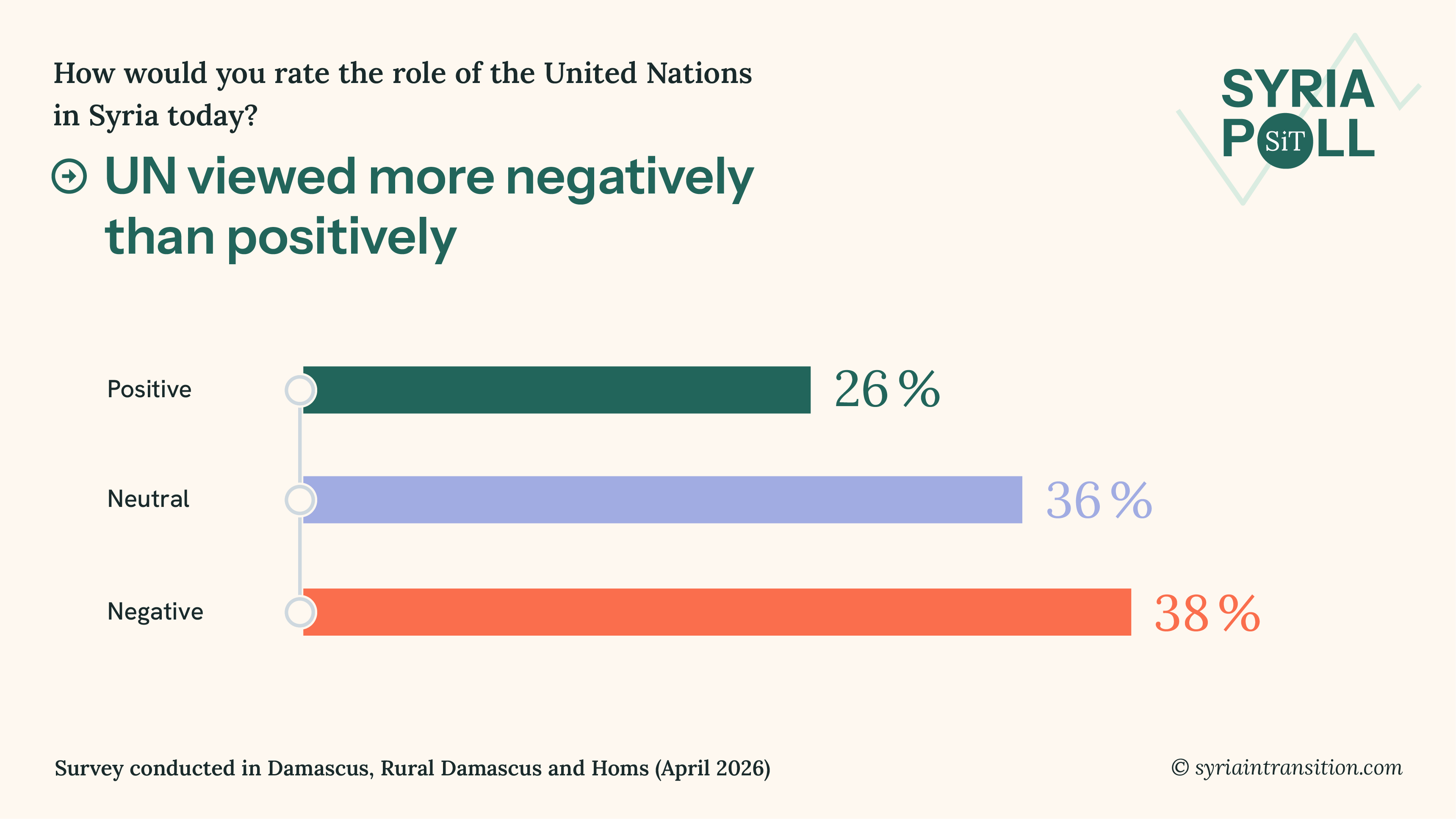
4. The UN plays multiple roles in Syria, from humanitarian assistance to political engagement. Overall, perceptions are mixed but lean negative. 38% rate the UN’s role negatively, compared to 26% who view it positively. A substantial 36% express neither a clearly positive nor negative view.
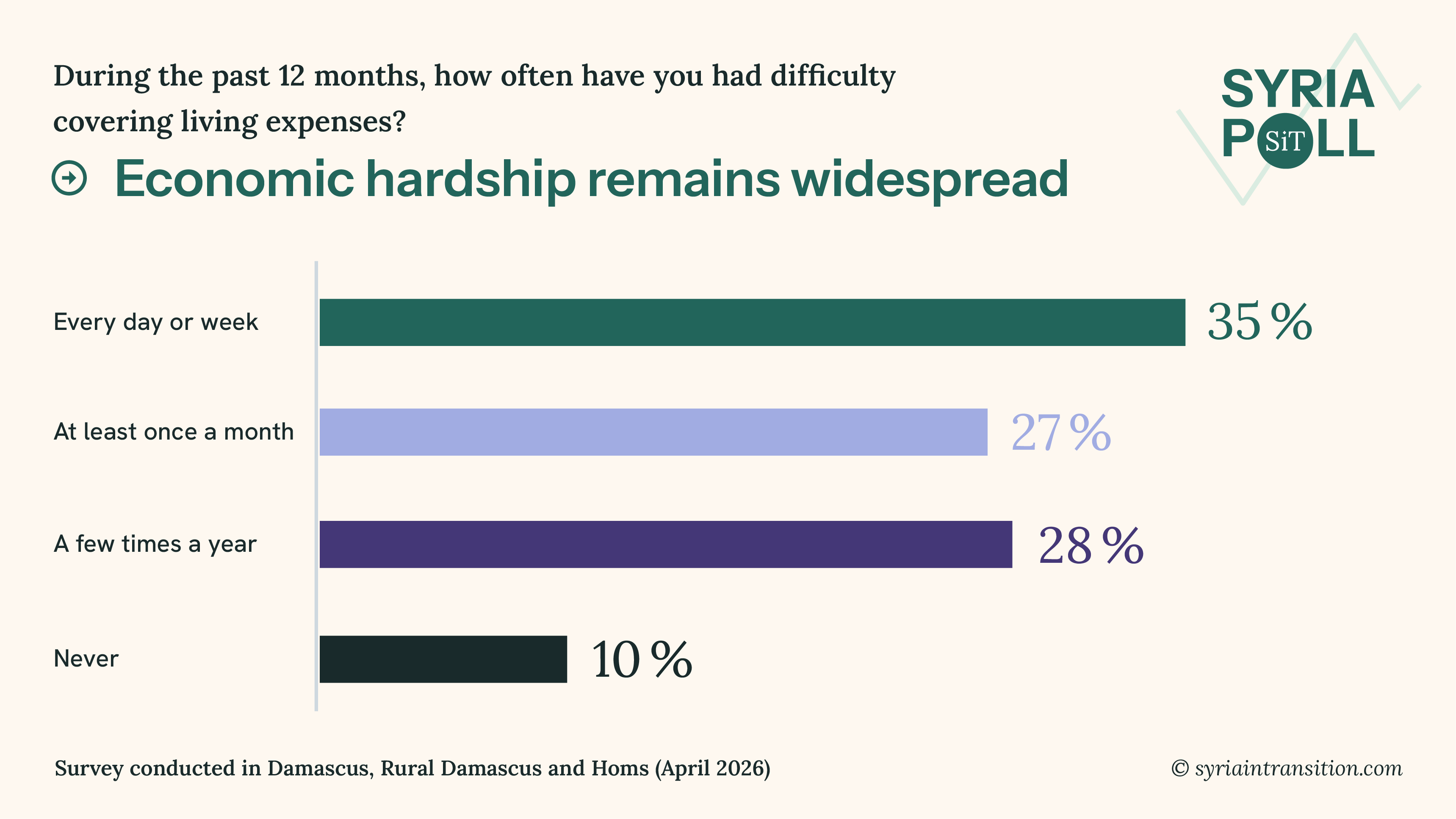
5. Economic pressure remains a defining feature of daily life. A combined 62% report difficulties covering living expenses on a daily, weekly, or monthly basis. Only 10% say they have not faced such difficulties over the past year.
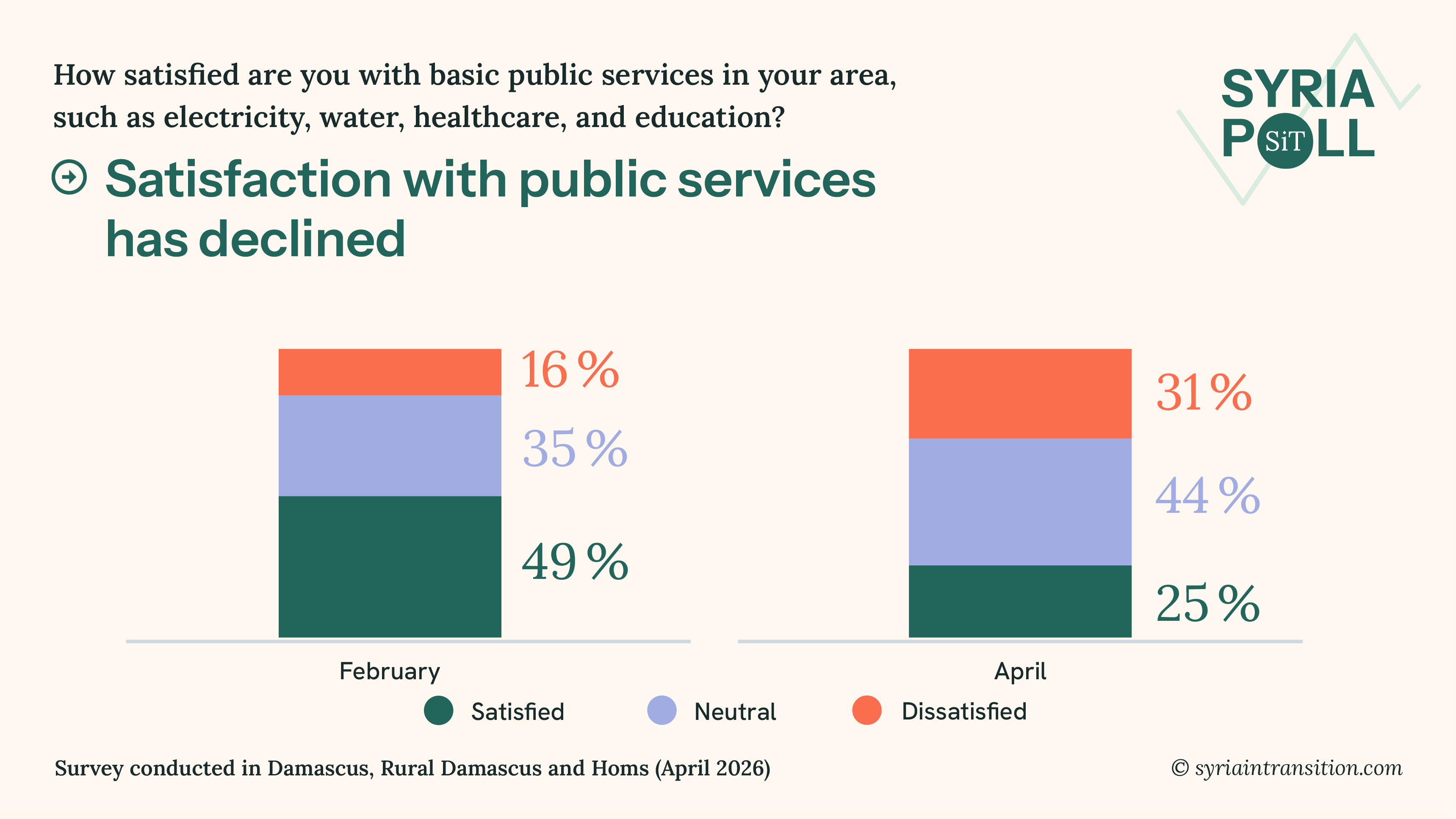
6. Since February, satisfaction with public services has dropped markedly. The share of respondents expressing satisfaction has fallen from 49% to 25%, while dissatisfaction has increased from 16% to 31%. A growing share now takes a neutral position.
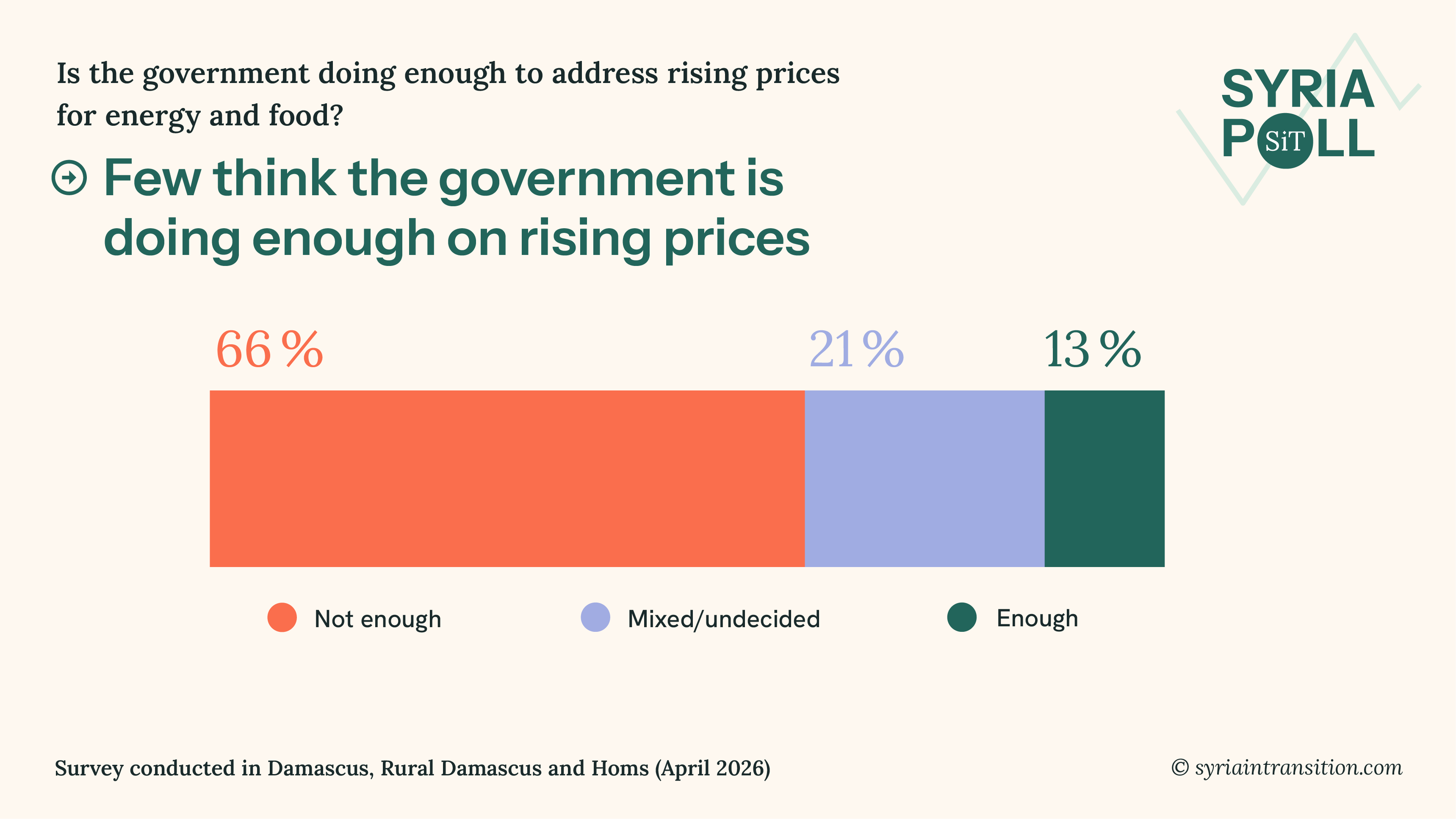
7. Amid rising costs and widespread economic strain, confidence in the government’s response is low. Only 13% believe it is doing enough to address price increases, while 66% say current efforts are insufficient.
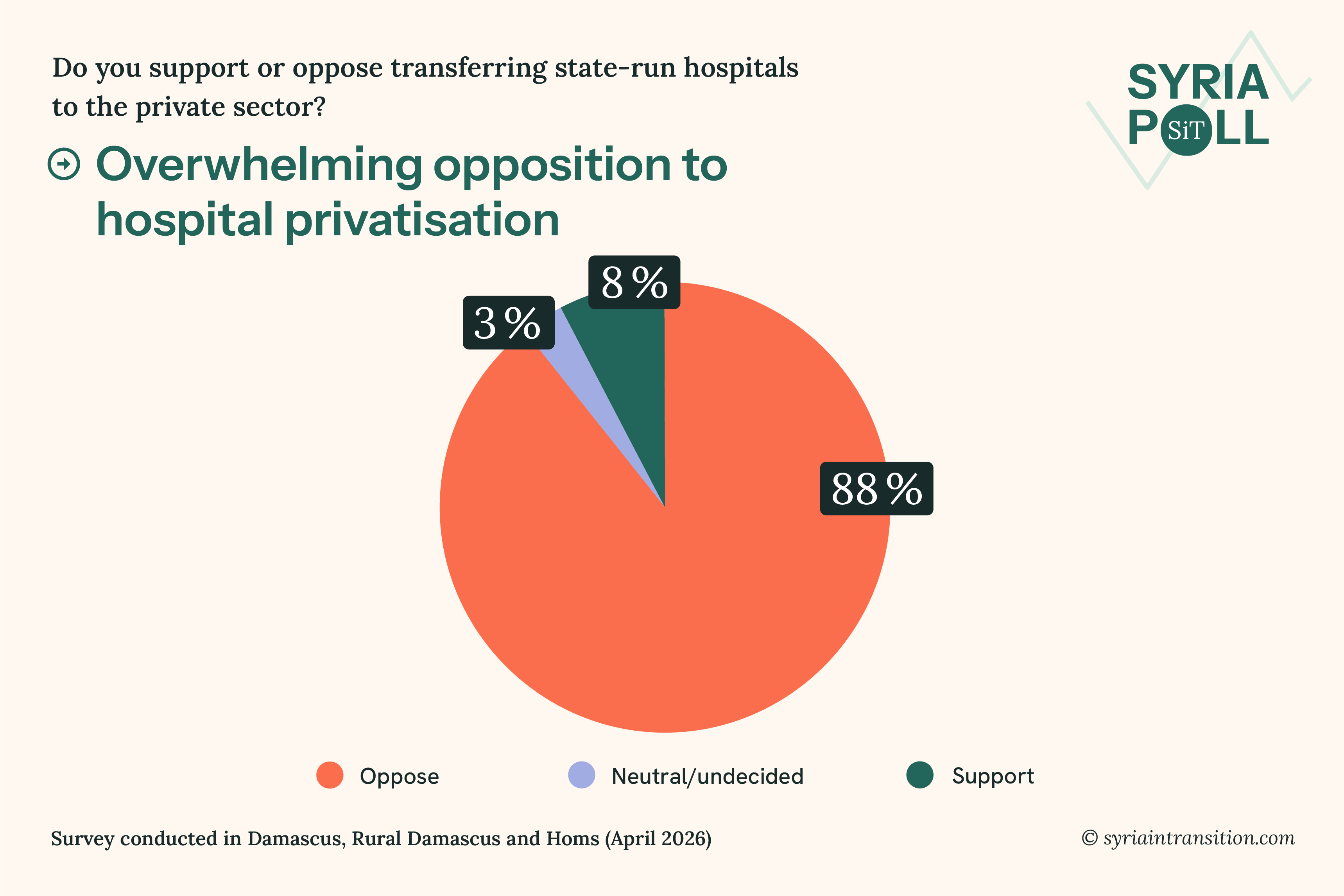
8. Recent statements by officials about expanding private-sector involvement in healthcare have sparked concern. A large majority of 88% opposes transferring state-run hospitals to the private sector, while only a small minority expresses support.
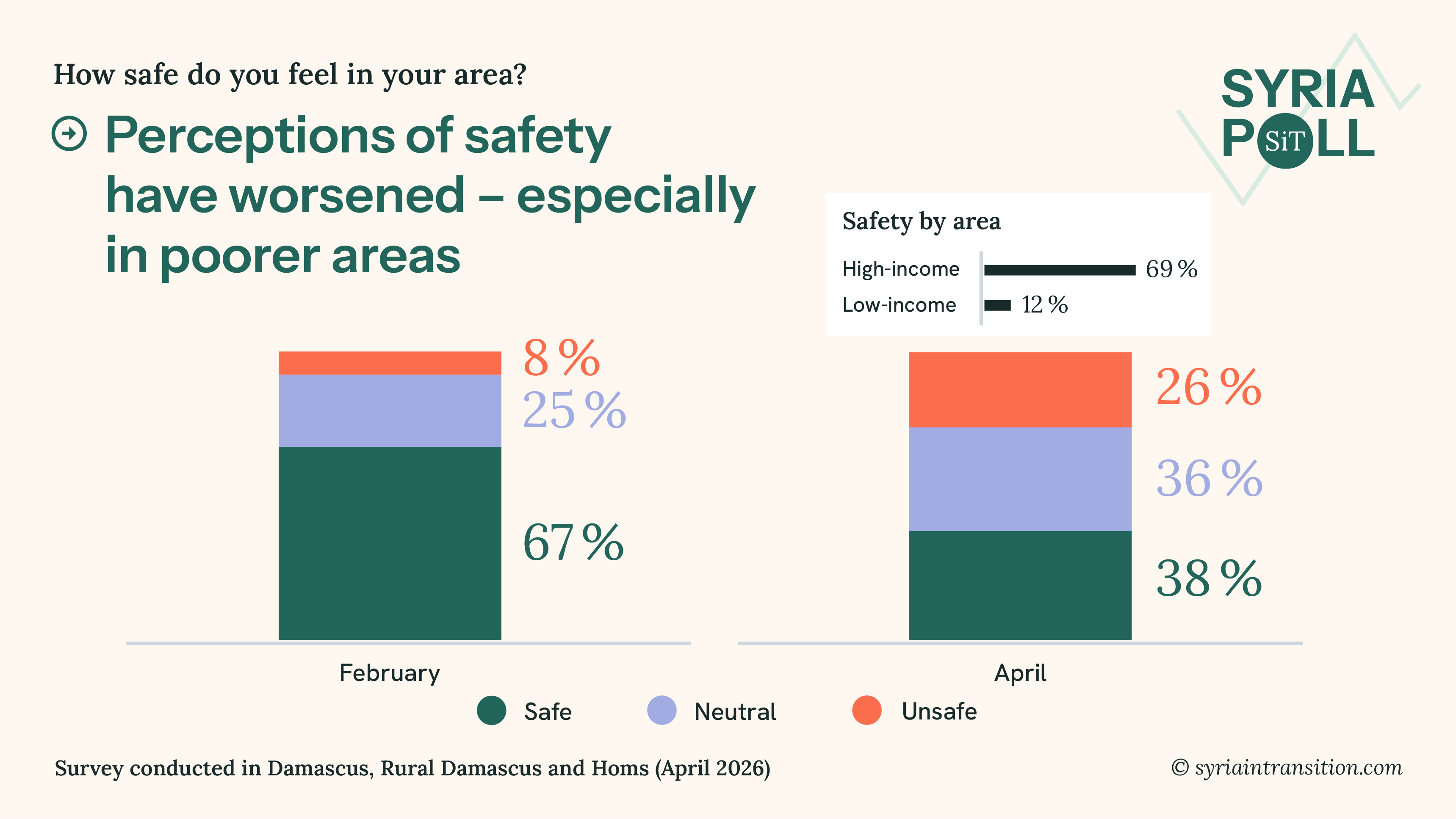
9. Since February, perceptions of safety have deteriorated. The share of respondents who say they feel safe has fallen from 67% to 38%, while those who feel unsafe has risen from 8% to 26%.
Differences between areas are pronounced. In high-income areas, 69% report feeling safe, compared to just 12% in low-income areas.
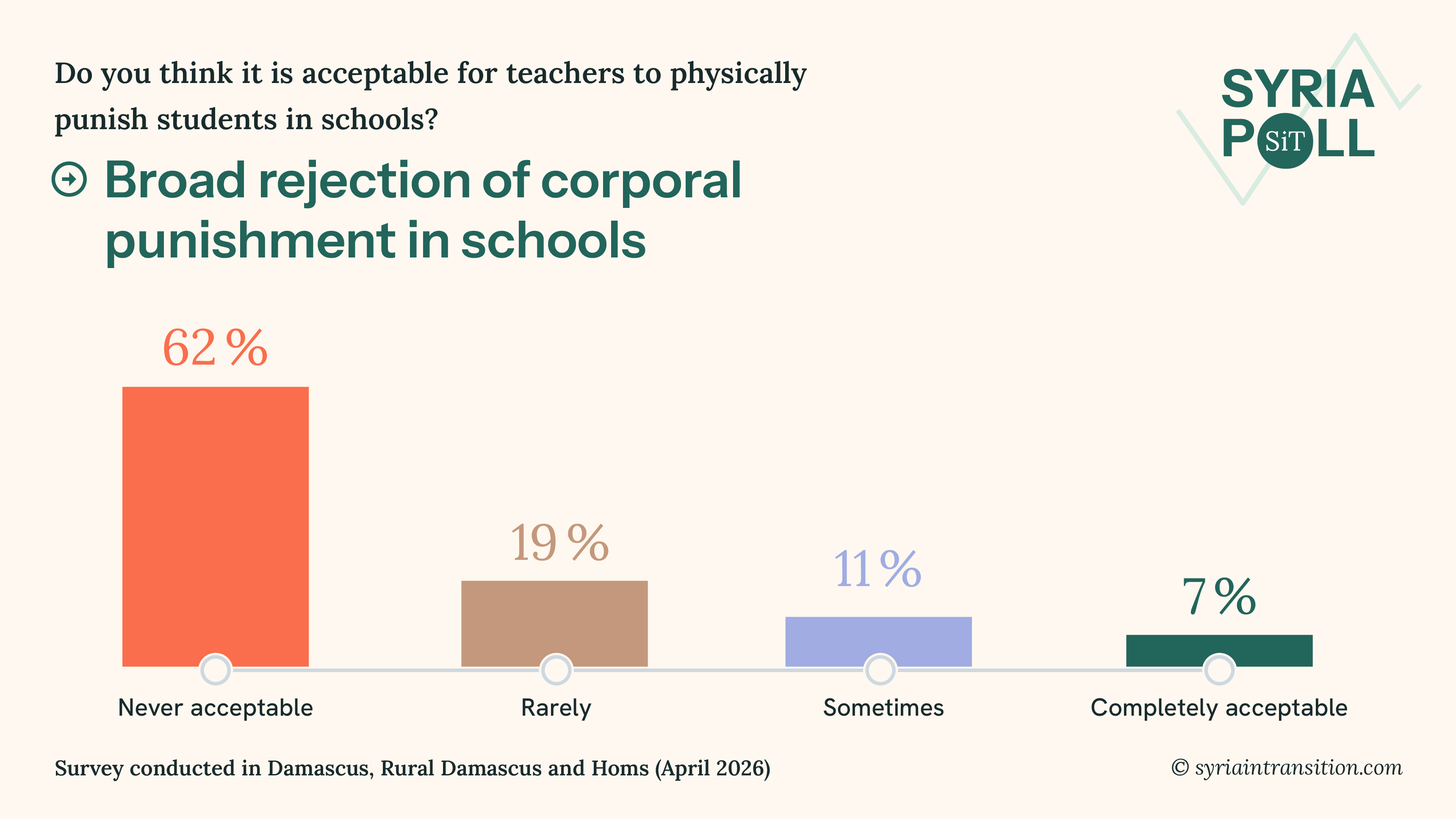
10. As Syria’s education system undergoes reform, attitudes toward discipline reflect changing norms. A majority of 62% say physical punishment in schools is never acceptable. Others express conditional acceptance, with smaller shares saying it is acceptable in some or all circumstances. The question forms part of an upcoming series on educational reform in Syria in Transition.