Welcome to the June wave of Syria Poll. This issue presents findings from surveys conducted in Damascus, Rural Damascus, and Homs in mid June 2026, examining how residents assess their living conditions, government performance, and recent political developments.
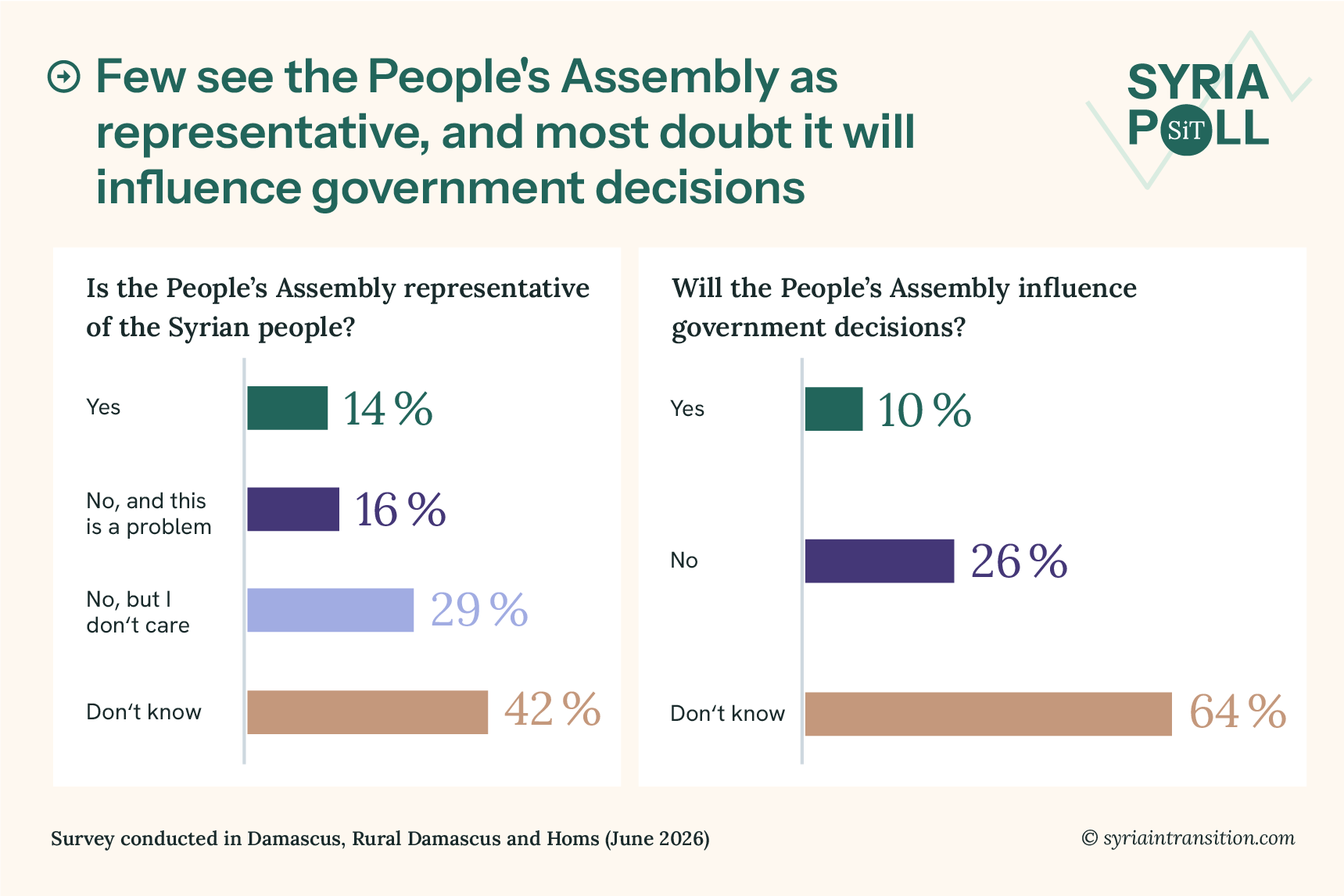
1. With the announcement of most members of Syria's People's Assembly expected by late June, we asked respondents whether they consider the new body representative and whether they expect it to have real influence on government decisions. Only 14% view the Assembly as representative, while 16% say it is not representative and that this is a problem. Another 29% say it is not representative but do not consider this important. The remaining 42% say they do not know. Expectations regarding its influence are similarly limited: only 10% believe the Assembly will have real influence on government decisions, compared to 26% who do not. Nearly two thirds of respondents (64%) say they do not know.
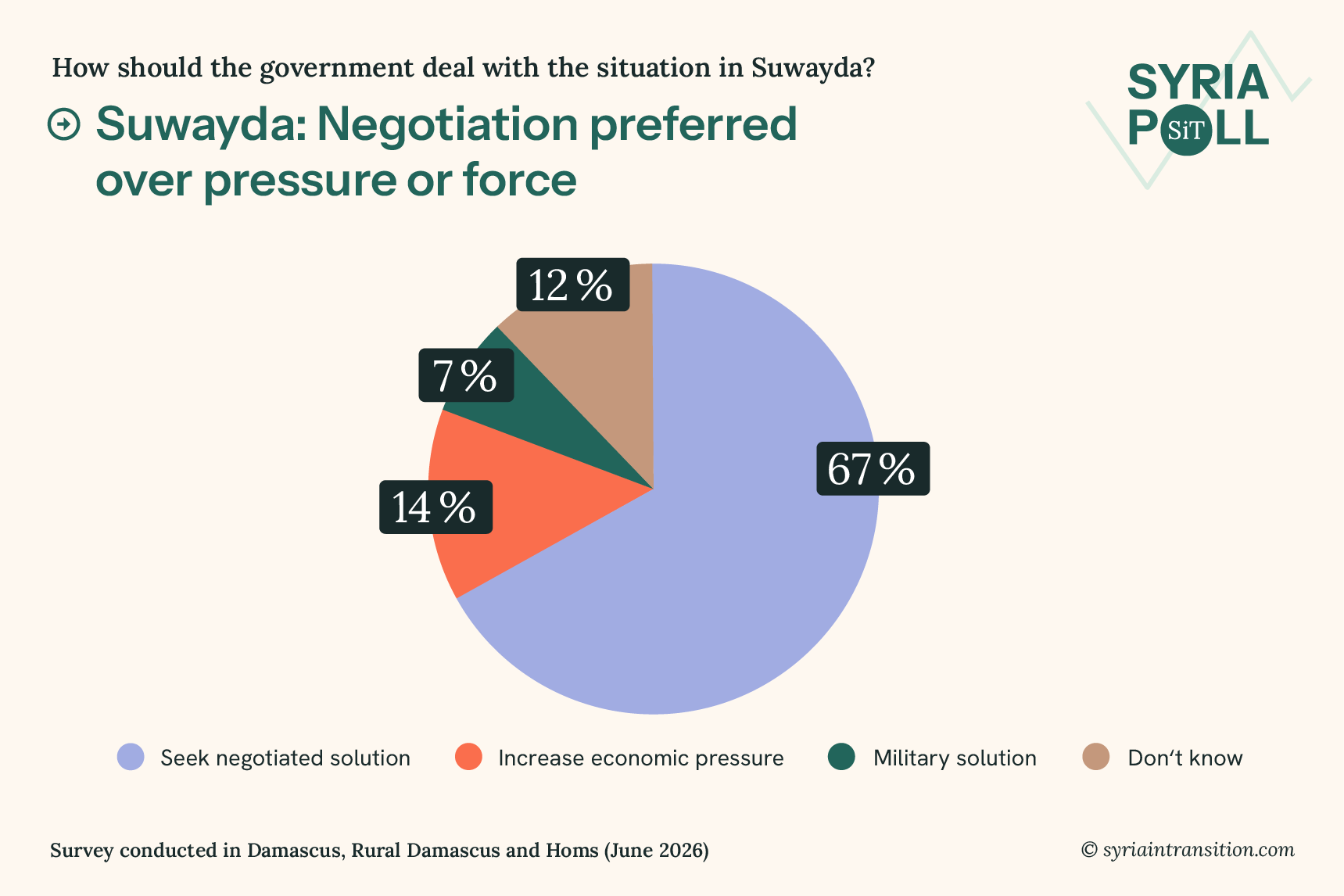
2. Amid a fragile ceasefire and signs of renewed escalation, respondents clearly prefer dialogue over force. Asked how the government should deal with the situation in Suwayda, 67% favoured a negotiated solution. By contrast, only 14% supported increased economic pressure and 7% preferred a military solution. Another 12% said they don’t know.
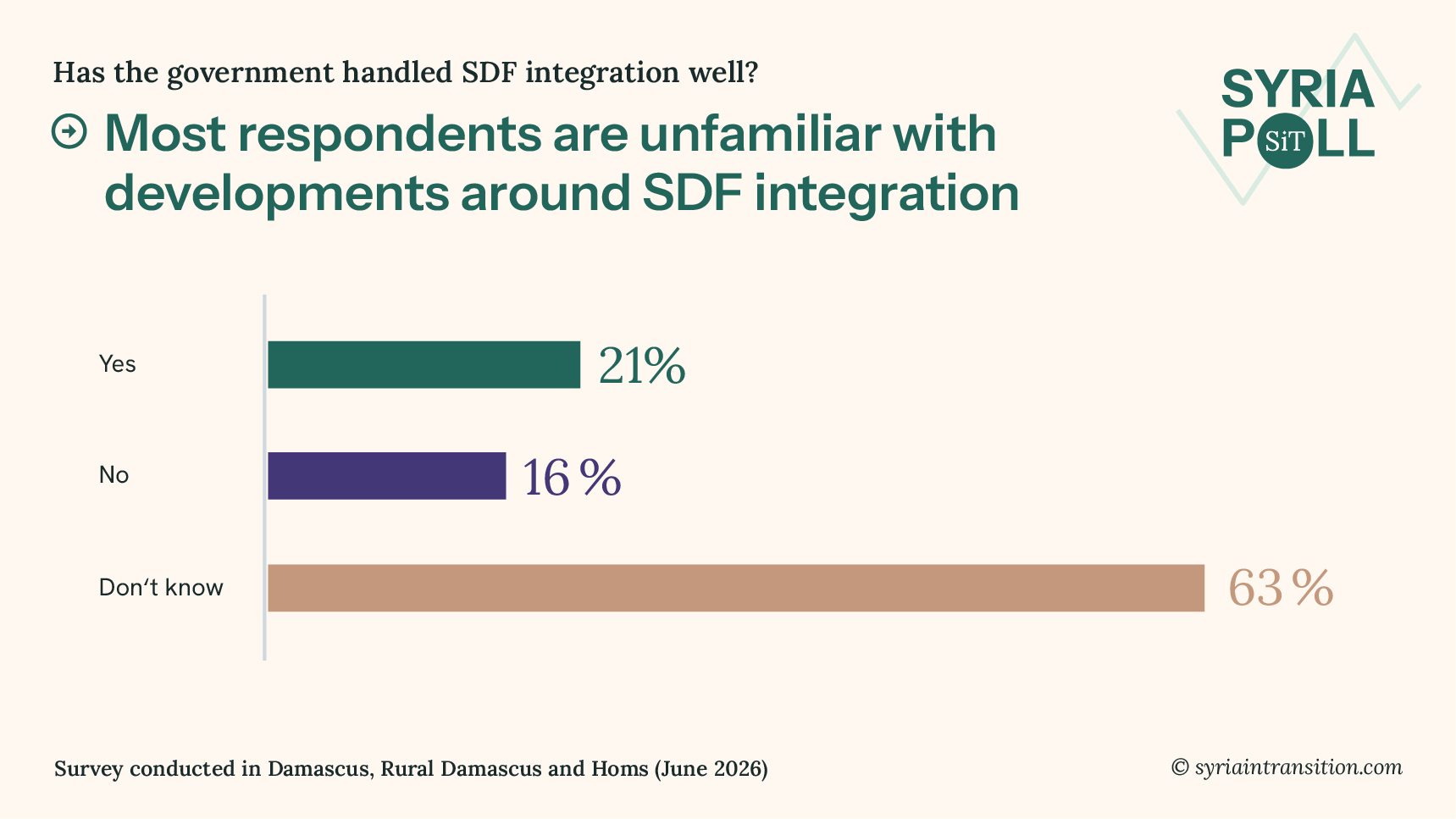
3. Nearly six months after government forces retook control of Arab-majority areas in northeast Syria, marking the effective end of the SDF project, many respondents are unfamiliar with developments surrounding SDF integration. While 21% consider the government’s approach successful and 16% disagree, nearly two thirds (63%) say they do not know how to assess the government’s handling of the issue.
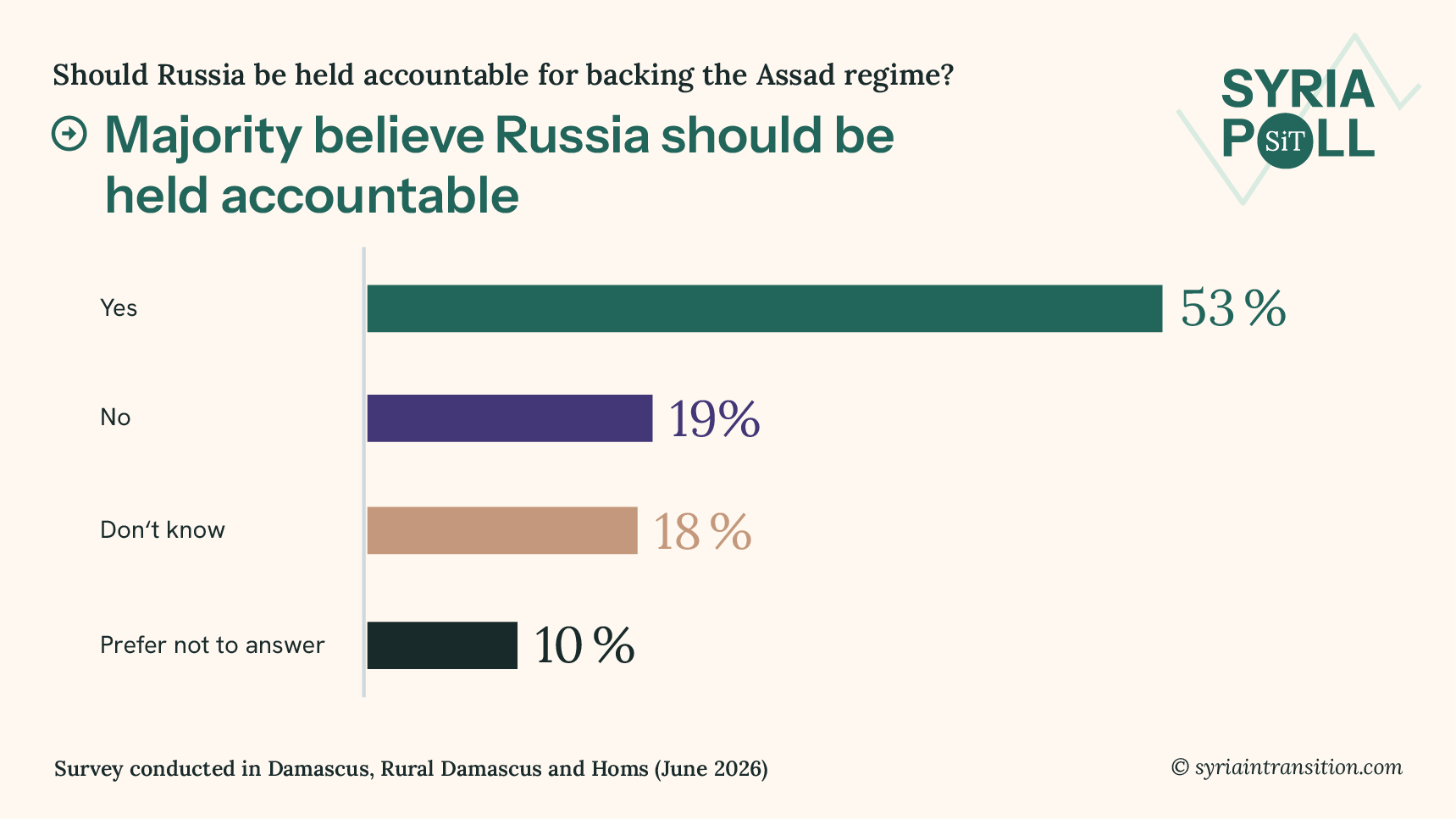
4. The future of Russia’s role in Syria – whether through military bases, economic ties, or broader security cooperation – remains the subject of ongoing discussions between Damascus and Moscow. At the same time, respondents continue to attach importance to Russia’s role during the war. A majority of 53% believe Russia should be held accountable for its backing of the Assad regime, while 19% disagree and 18% are unsure. Another 10% preferred not to answer the question, underlining the perceived sensitivity of the issue.
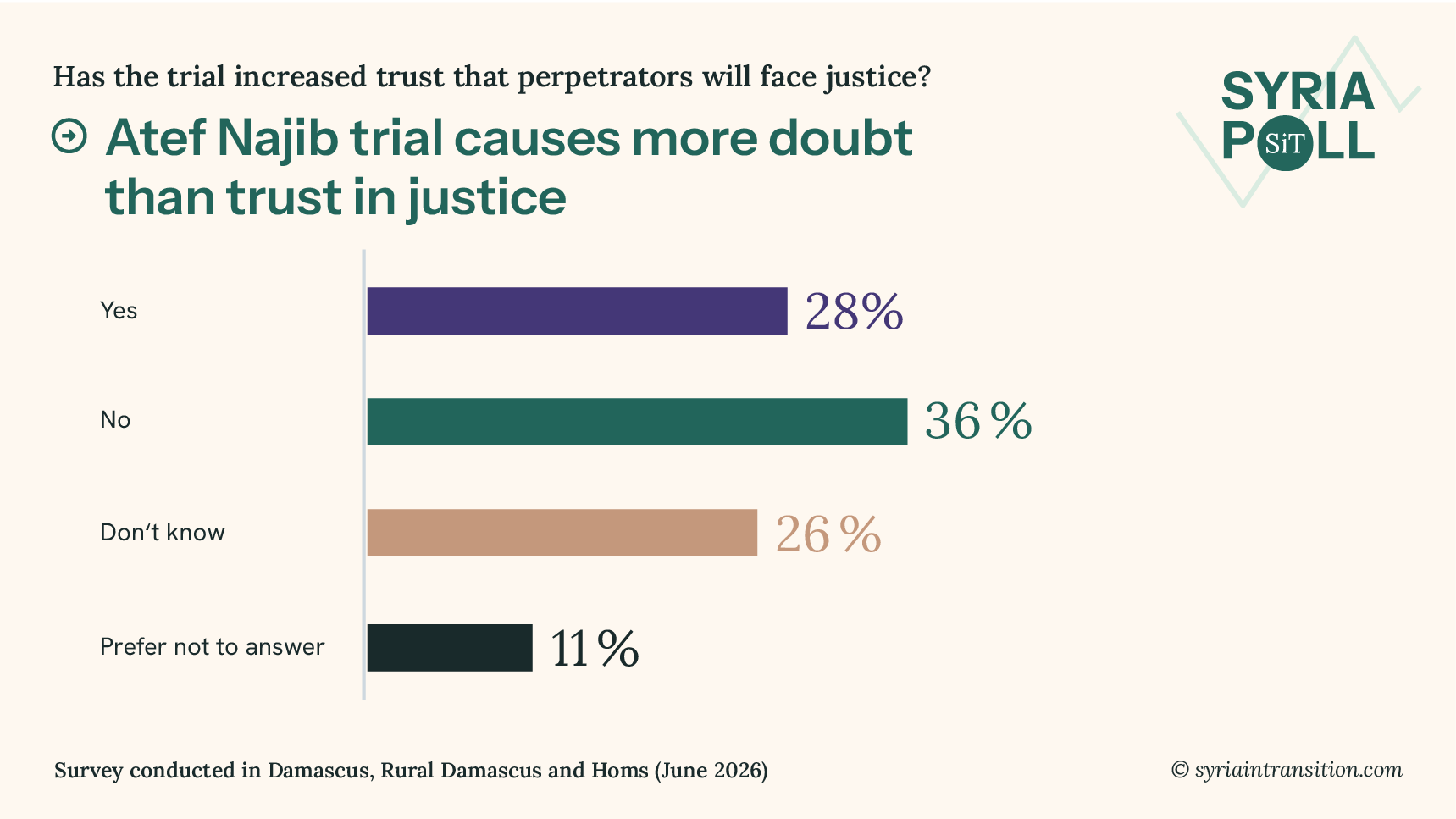
5. The trial of Atef Najib, a former security chief in Daraa and cousin of Bashar al-Assad, is the first high-profile case against a senior figure of the former regime. As such, it is an important test case for Syria’s broader transitional justice process. So far, however, the proceedings have not substantially increased confidence that perpetrators will face justice. While 36% of respondents say the trial has not increased their trust, only 28% say it has. Another 26% are unsure, while 11% preferred not to answer the question.
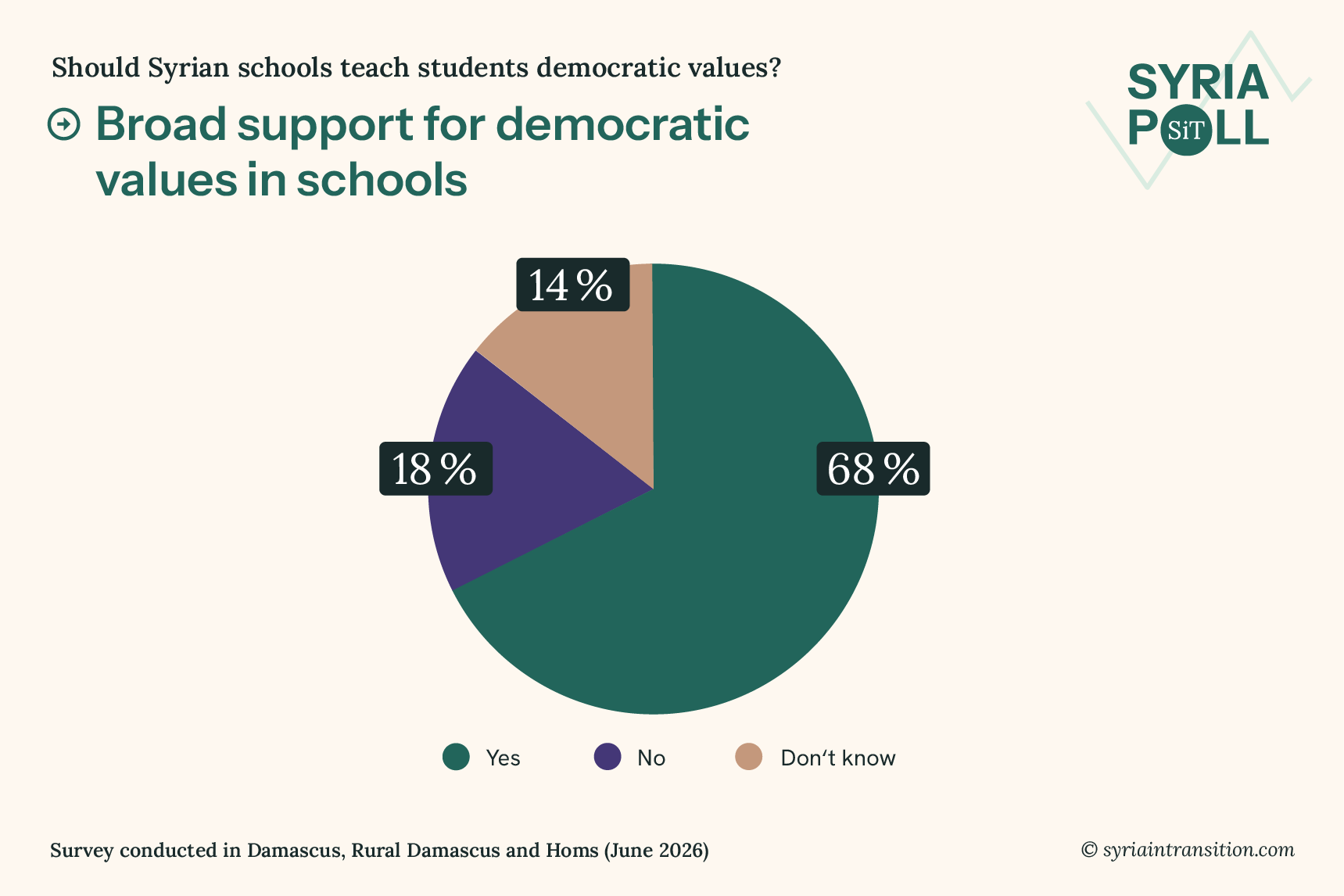
6. With Syria’s education system undergoing changes, respondents were asked whether schools should teach democratic values. A clear majority of 68% support the idea, while 18% oppose it and 14% are unsure. The question forms part of a Syria in Transition series on educational reform.
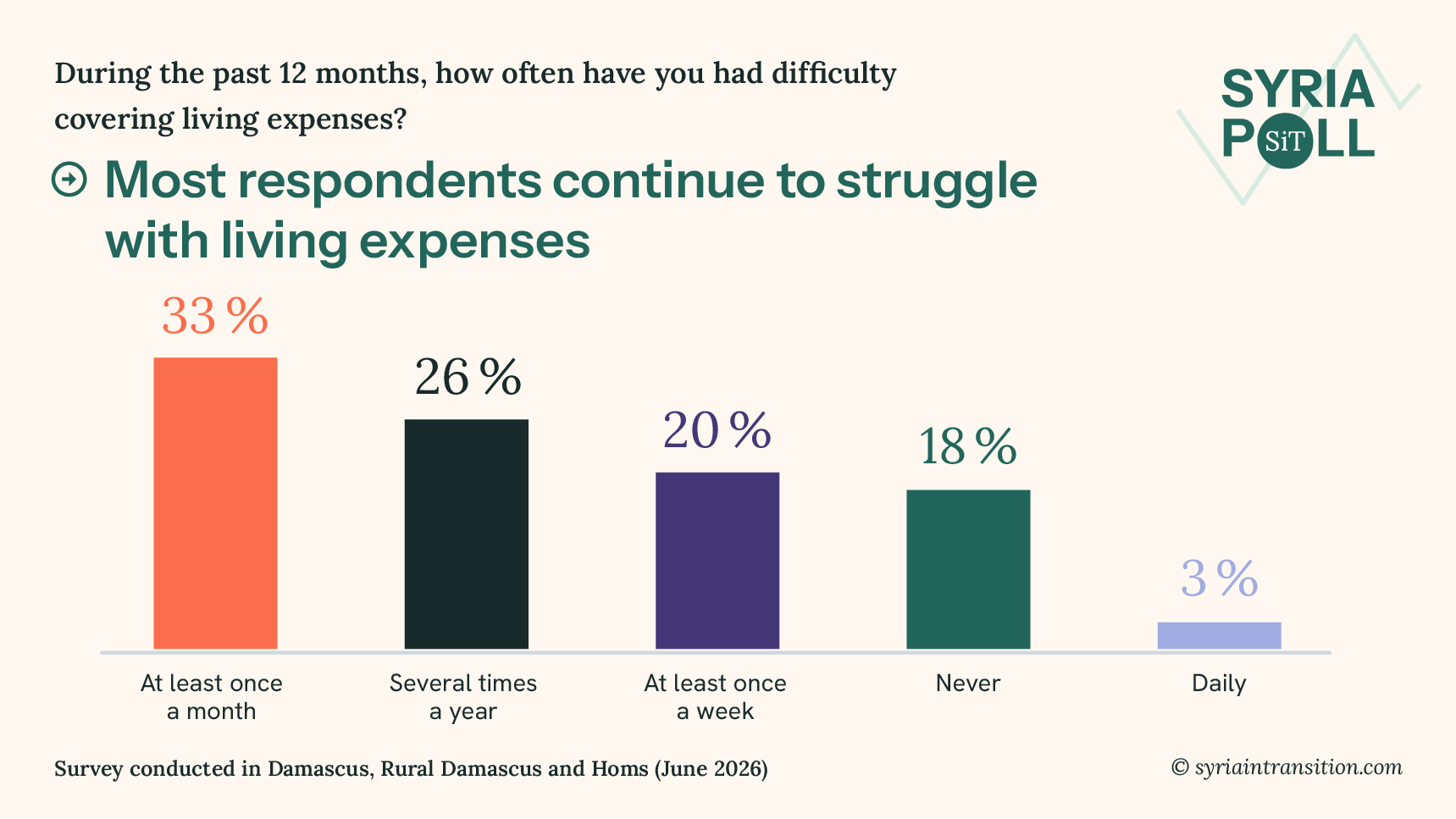
7. Economic hardship continues to be prevalent. More than half of respondents (56%) report having difficulties covering living expenses at least once a month, including 23% who experience such difficulties on a weekly or daily basis. Another 26% say they face hardship several times a year, while only 18% report never having difficulty covering living expenses.
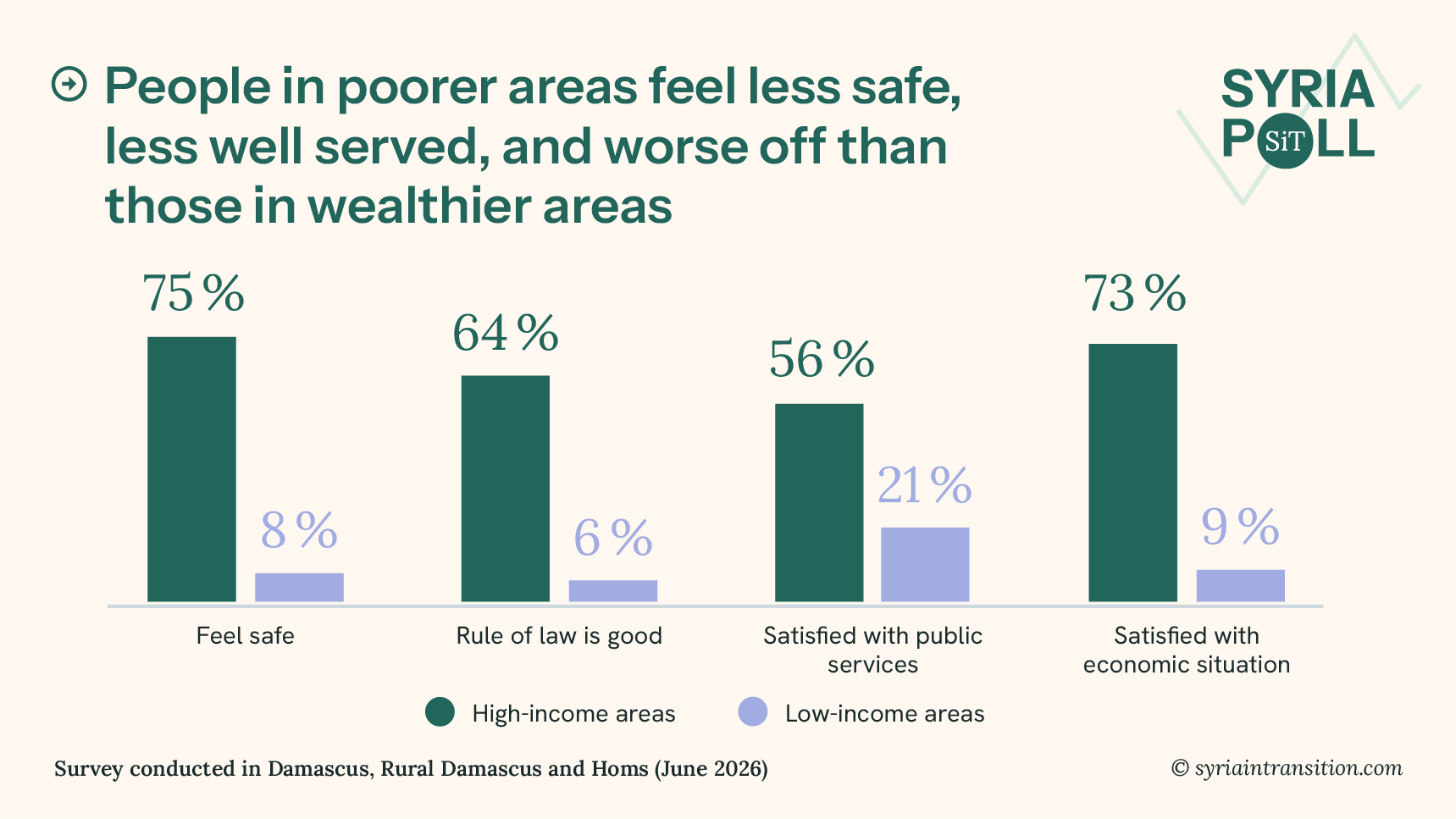
8. The divide between rich and poor areas is stark. Whether it is safety, the rule of law, public services, or personal economic conditions, respondents report very different experiences. While 75% of respondents in high-income areas say they feel safe, only 8% of those in low-income areas do. Similarly, 64% rate the rule of law positively in high-income areas, compared to just 6% in low-income areas. Satisfaction with public services stands at 56% versus 21%, while 73% of respondents in high-income areas describe their economic situation positively, compared to only 9% in low-income areas.
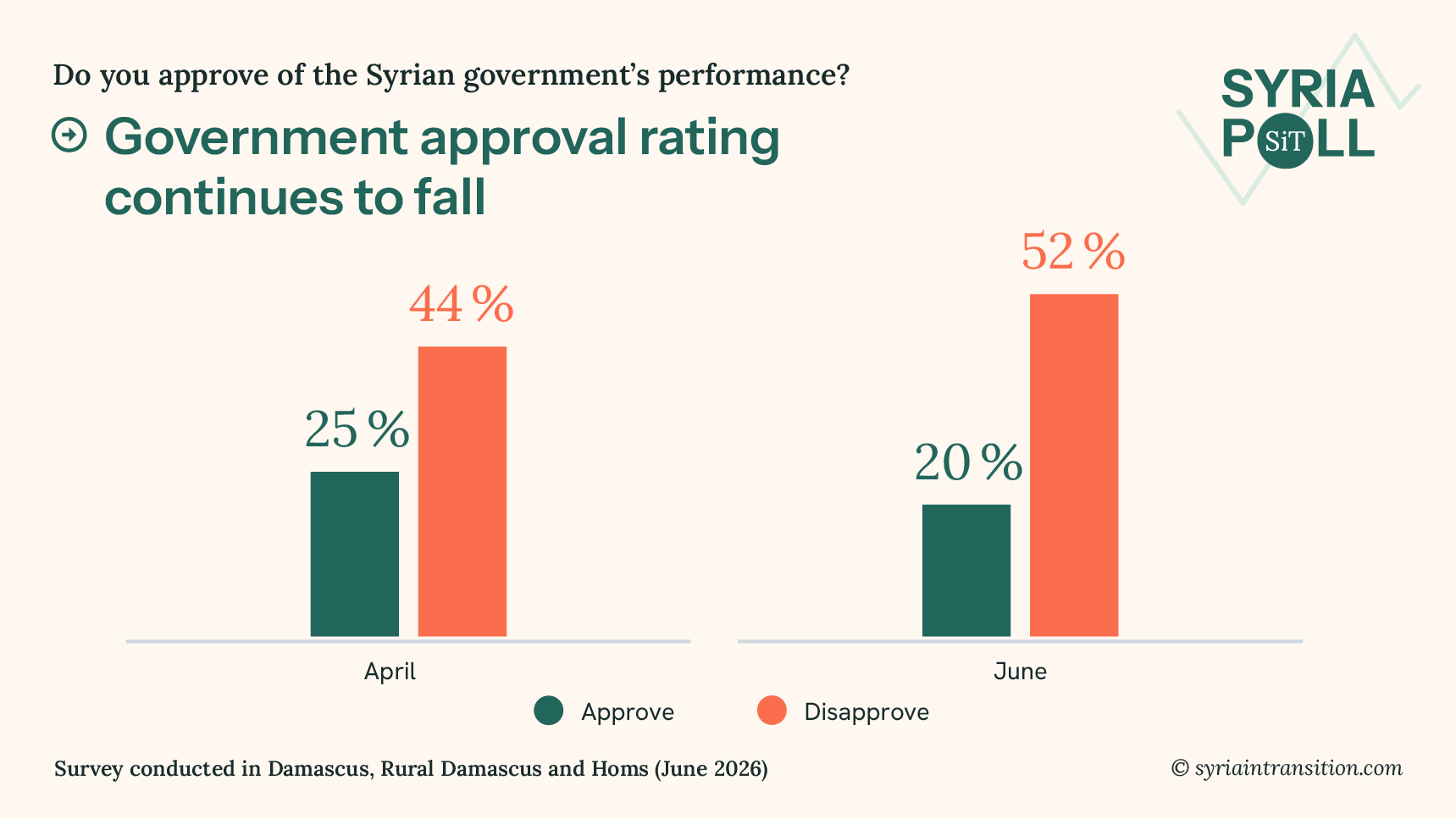
9. Between April and June, the share of respondents approving of the government’s performance fell from 25% to 20%, while disapproval increased from 44% to 52%. As of June, more than half of respondents express dissatisfaction with the government’s performance.
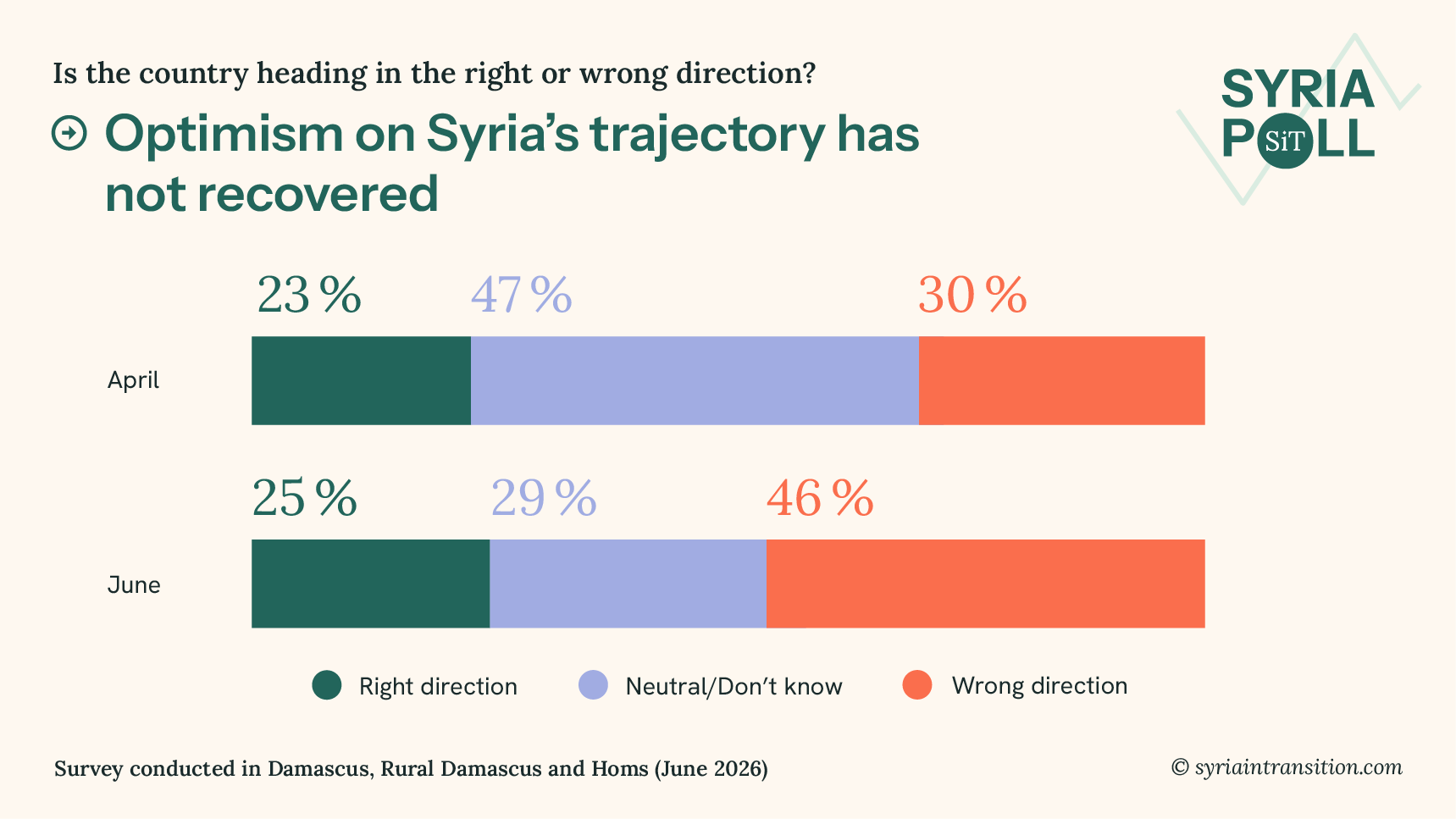
10. Views on Syria’s overall trajectory have become more negative since April. While the share of respondents who believe the country is heading in the right direction remained largely unchanged (23% in April and 25% in June), the share saying Syria is heading in the wrong direction rose sharply from 30% to 46%.