New Look Shabiha
A Sunni town’s uneasy reinvention after years as a regime stronghold
Once dubbed the 'Qardaha of Hama', Qumhane was long held up by supporters of the Assad regime as proof of its supposedly cross-sectarian nature. A Sunni town of around 30,000 residents just north of Hama city, Qumhane supplied hundreds of 'martyrs' who died fighting in the regime's army and auxiliary forces. Today, the town is trying to move beyond that legacy.
To understand Qumhane’s relationship with the Assad regime, one must go back to the late 1970s and early 1980s, when an Islamist armed rebellion arose in Hama province and other parts of northern Syria. Members of one family in particular – the Sibahis, who were poor – were rewarded with money and positions for their assistance to the regime in crushing the Muslim Brotherhood. Most prominently, Nibhan Sibahi rose to become head of State Security in Idlib province at around the turn of 1980, remaining in his position for two decades. His son Issam served as a member of the regime's parliament during the civil war. Nibhan was arrested in 2025 but later released on health grounds, sparking outrage among those who had supported the opposition and now feel that he should answer for his complicity.
By contrast, members of other families – such as the Ajaj and Shihab – who helped people escape the 1982 Hama massacre or smuggled supplies into the besieged city were subjected to arrest and torture.
Although memories of violent repression likely deterred many residents of Qumhane from rising up against the regime in 2011, there were nonetheless some protests in the early days of the revolt, documented in video footage. The evidence from the time points to a rapid mobilisation of regime loyalists to suppress the demonstrations.
Revolutionary fault lines
An oppositionist from Qumhane who was in exile in Idlib but returned after the fall of the regime and now works in the new government, offered several explanations to Syria in Transition for the widespread support for the regime once the initial protests had been suppressed.
Some residents, he said, remained loyal on ideological grounds, sincerely believing in the Arab nationalist ideas of the Baath Party. Others observed how members of the Sibahi family had gained wealth and status and thought that they might be able to follow suit. Still others saw opportunities from looting the property of oppositionists and insurgents. Finally, there were those who felt that the homeland and authority were one and the same and believed that loyalty was owed to whoever ruled in its name. He noted that this same logic later drove many to become mukawwi'un ("those who make a U-turn") following the regime’s fall.
Whatever the motives, locals from both the opposition (including a very small number who stayed in Qumhane during the war) and those who supported the regime agree on one point: loyalists in the town consistently outnumbered oppositionists throughout the war.
Although reports of 'Shiification' accompanied Iranian and allied militia involvement in many regime-held areas, this was not significant in Qumhane, even though some residents did work with IRGC-affiliated formations during the war. Rather, Shiism in Qumhane predated the war and was largely confined to a local family that had converted through Shia Lebanese influence in the 1990s.
A larger portion of the town's loyalists who took up arms on the frontlines rallied around Haydar al-Na'asan, who was linked to Maj-Gen Suhayl al-Hasan and led a militia called "The Regiment of the Renowned Ones”. The group operated under the umbrella of al-Hasan's elite Tiger Forces, which in 2019 were renamed the 25th Special Mission Forces Division and were backed by Russia. One of the regiment’s leading field commanders, Ghassan al-Na'asan, fled Syria as the regime collapsed and was recently killed in Lebanon. The regiment, which organised rallies in support of the regime in Qumhane, did not recruit exclusively from the town. Especially during in 2016-2020, when the regime appeared militarily ascendant, it also drew Sunnis from nearby Hama localities such as Tayyibat al-Imam.
As the regime began to unravel in late 2024, Qumhane still appeared publicly loyal. In a video clip, Abu Ridha (Ahmad al-Nabhan), one of the town's mukhtars (headmen) who was arrested after Assad's fall, stood alongside regime soldiers leading pro-Assad chants. A resident of Qumhane who had worked with the Iranians told Syria in Transition at the time that he did not trust insurgent offers of amnesty in exchange for surrender. "They torture and kill those who stood against them,” he said, and warned that they would eventually turn against "states supporting terrorism." It seemed plausible that Qumhane could become the site of a bloody battle as the regime's last line of defence just north of Hama city. Instead, rebel forces simply encircled the town and imposed a siege that forced its capitulation.
New sheriff in town
After the regime’s collapse, control of Qumhane shifted decisively to opposition figures. The municipal office is now headed by Eisa al-Ali al-Qadour, a Muslim Brotherhood member who spent sixteen years imprisoned by the regime in Palmyra. Individuals identified as regime loyalists were removed from positions of influence. Several prominent figures and fighters associated with the Assad regime died in reprisal attacks, though most of those at risk have fled to Lebanon or gone into hiding. Rank-and-file soldiers and former shabiha (‘ghosts’ – pro-regime militiamen) meanwhile, largely recast themselves as mukawwi‘un and adapted to the new order.
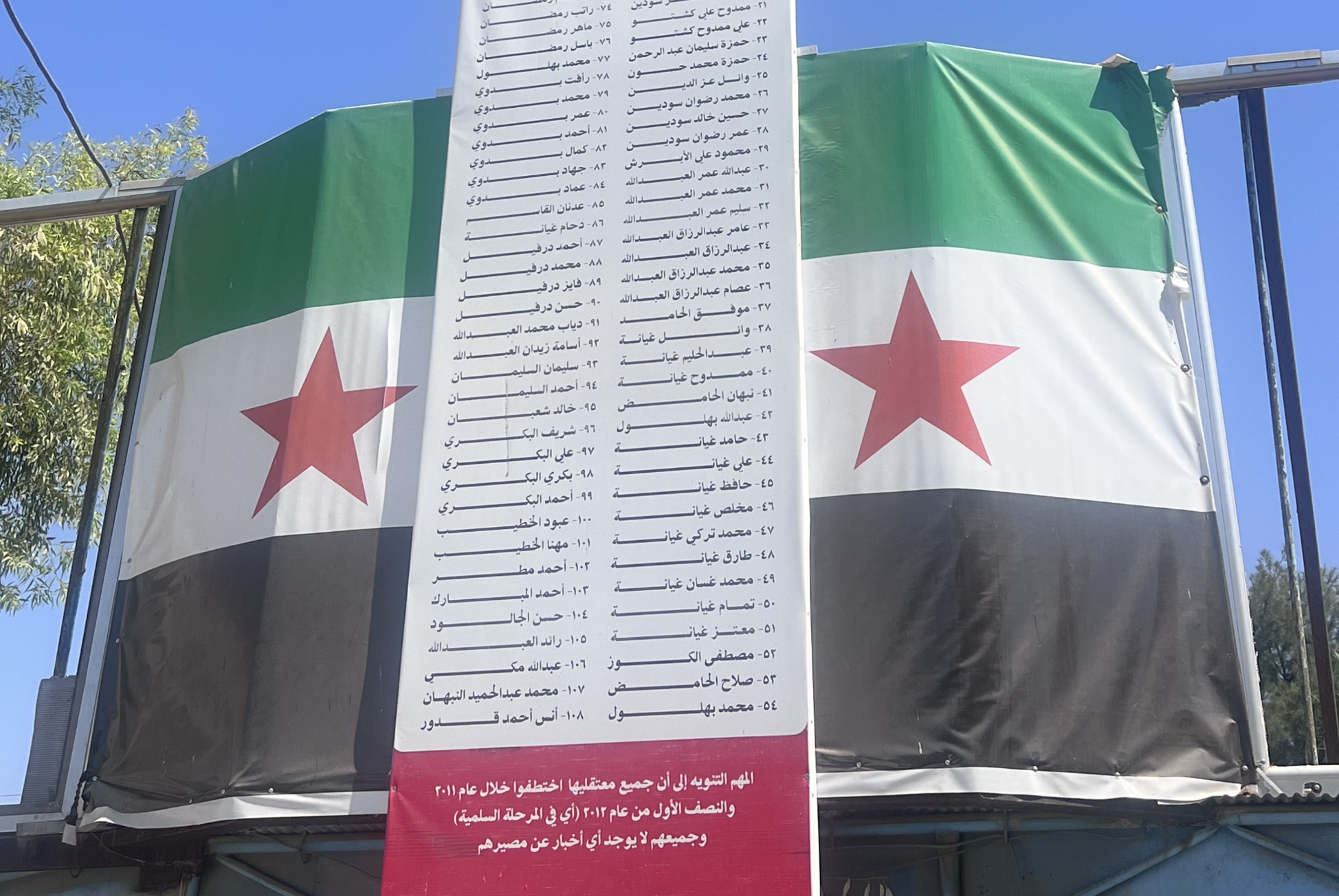
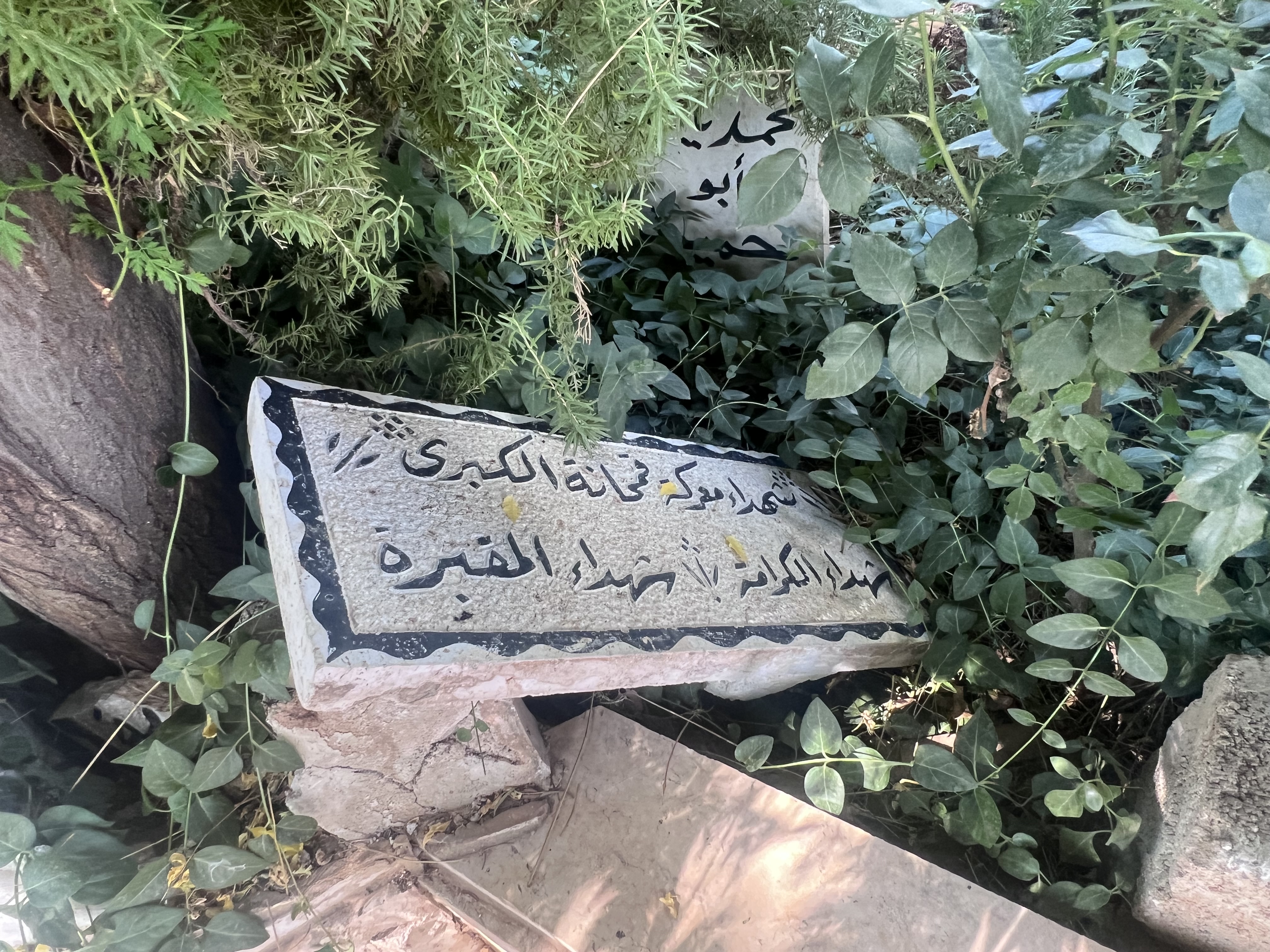
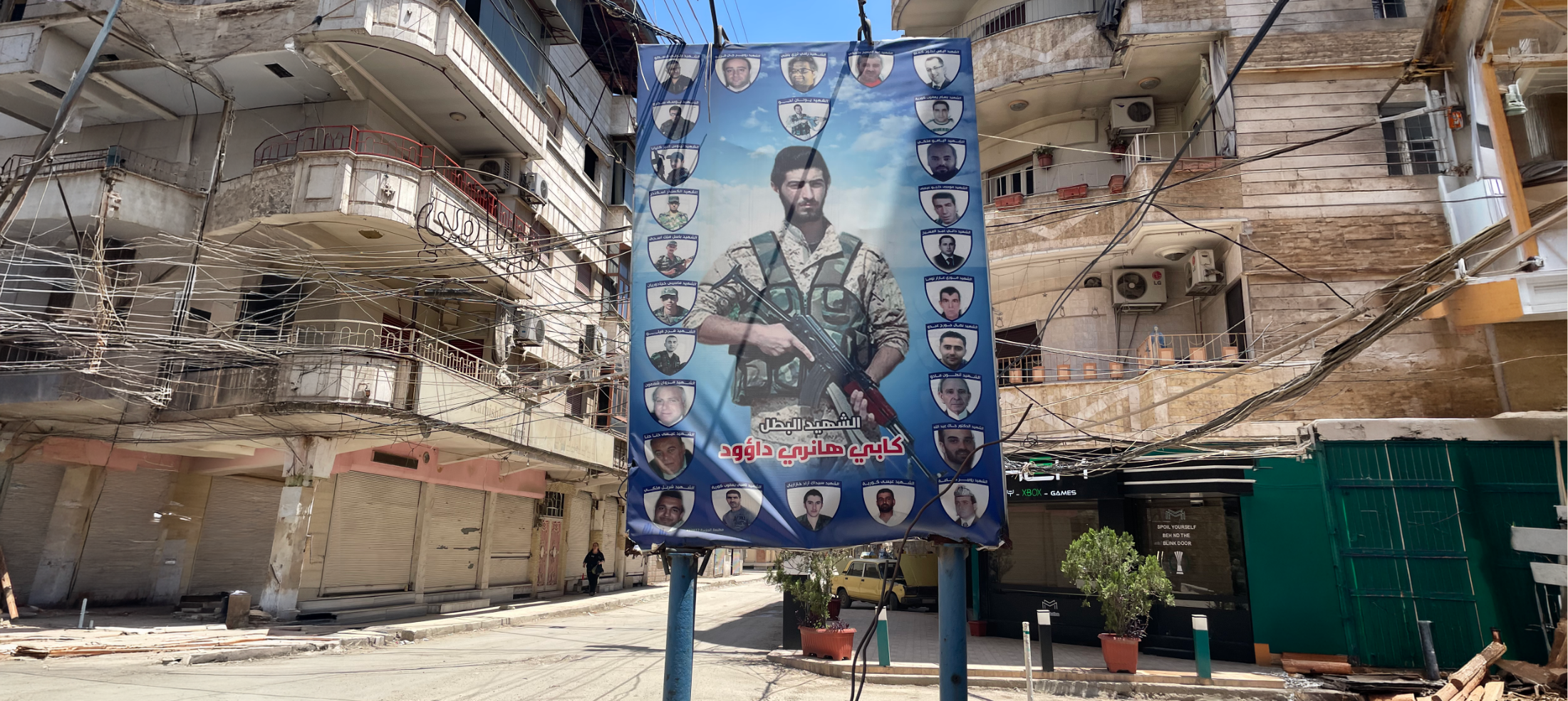
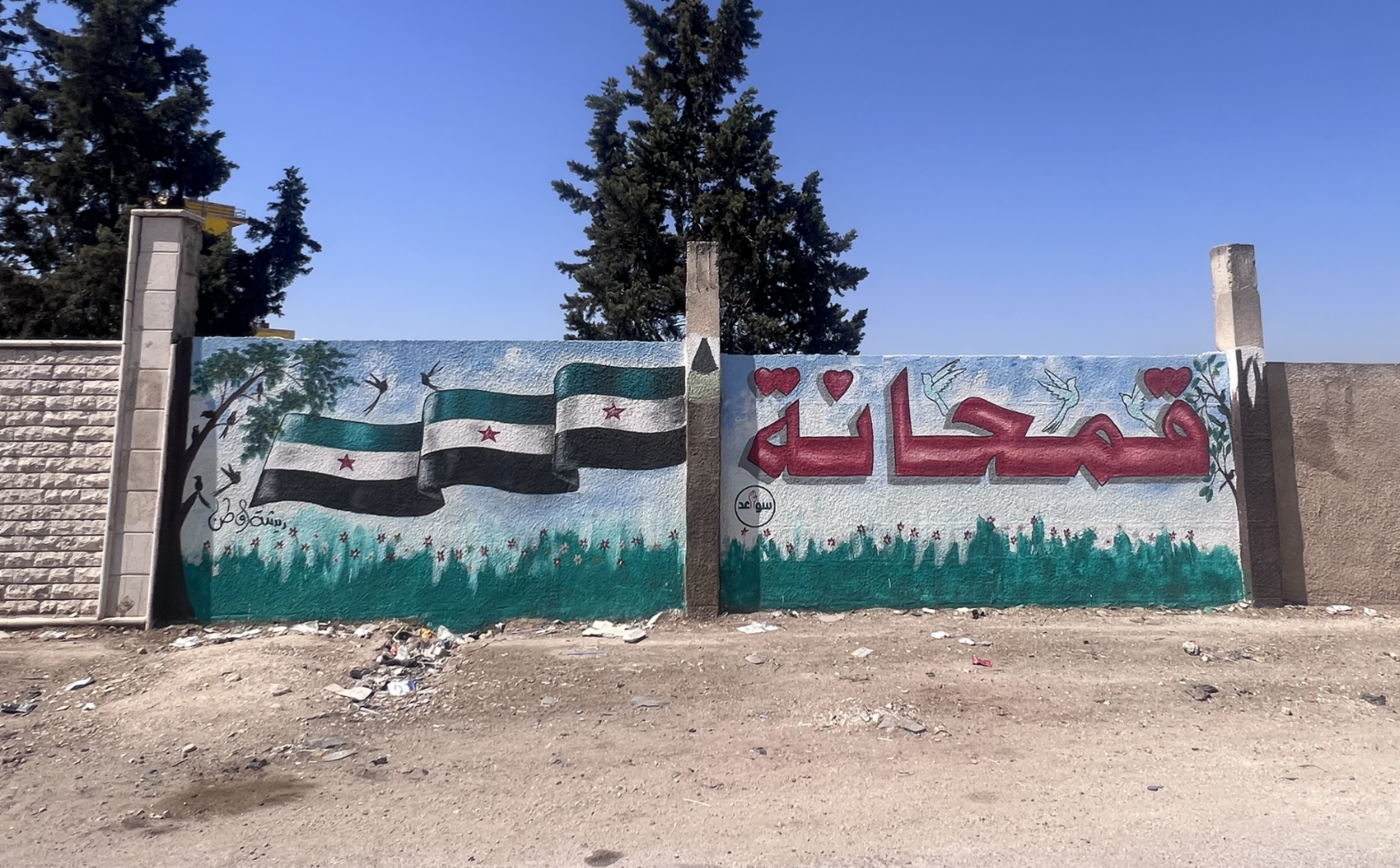
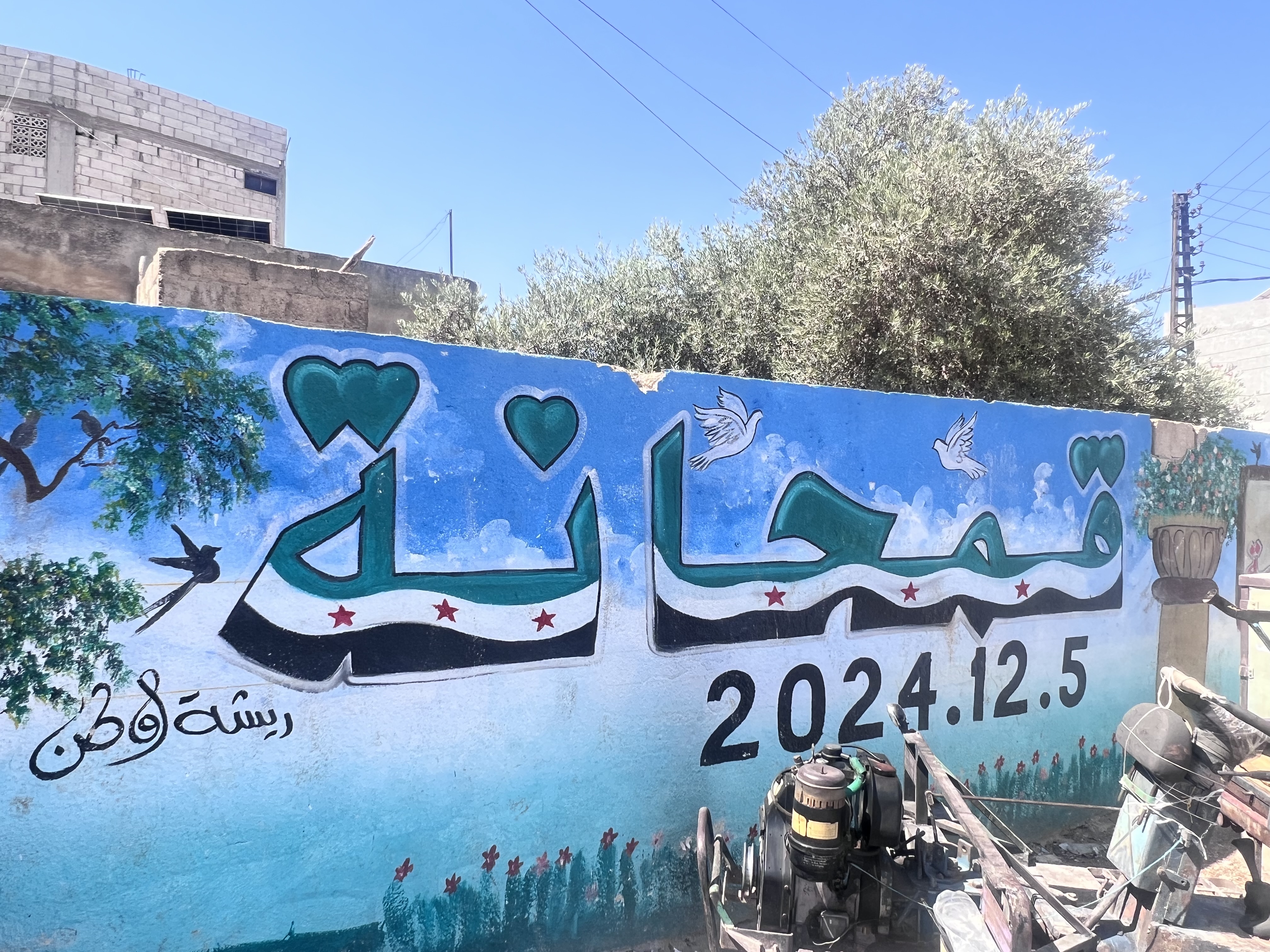
While Qumhane still has a wider reputation as a shabiha town, both oppositionists and the mukawwi'un have worked hard to remake its image. Although one can still find the graves of 'martyrs' who fought on the side of the regime and its forces, there are now also murals featuring Syria's new flag and commemorating the day of Qumhane's 'liberation' on 5 December 2024. Along one of the main roads, a large poster lists the names of 108 people from Qumhane and its environs who were detained, arrested or forcibly disappeared by the regime between 2011 and the first half of 2012.
Civil war in the most literal sense
This list of the disappeared – alongside records of Qumhane residents who fought and died on the side of the insurgency – is a reminder of how the Syrian conflict was a civil war in the most literal sense, pitting neighbours, relatives and extended families against each other.
Genuine reconciliation does not appear to be imminent. Sunni pride has emerged as the dominant social tone, but Sunnis who supported the regime feel differently. For many of those unwilling or unable to flee or remain in hiding, becoming a mukawwi‘ has thus become an almost logical – if mentally taxing – choice.