No quick fix
Oil, wheat and the limits of economic recovery in northeast Syria
Government control over oil and wheat in the northeast is framed as the missing piece of Syria’s economic revival. The numbers tell a different story.
The 30 January settlement between the government and the Syrian Democratic Forces (SDF) was one of the key political events following the fall of the Assad regime. Beyond its security and governance implications, it has triggered intense debate about the economic reintegration into the state of areas in the northeast formerly under the control of the SDF.
Talk shows, social media influencers, government affiliated newspapers and even regional media outlets portray the northeast as the missing piece of the Syrian economic recovery puzzle. Certainly northeast Syria accounts for a significant share of Syria’s hydrocarbons and agricultural production. But like the rest of the country, it has endured years of violence, destruction, displacement, infrastructure decay, institutional erosion, climate stress and severe drought. What, then, can reasonably be expected from the economic integration of this region?
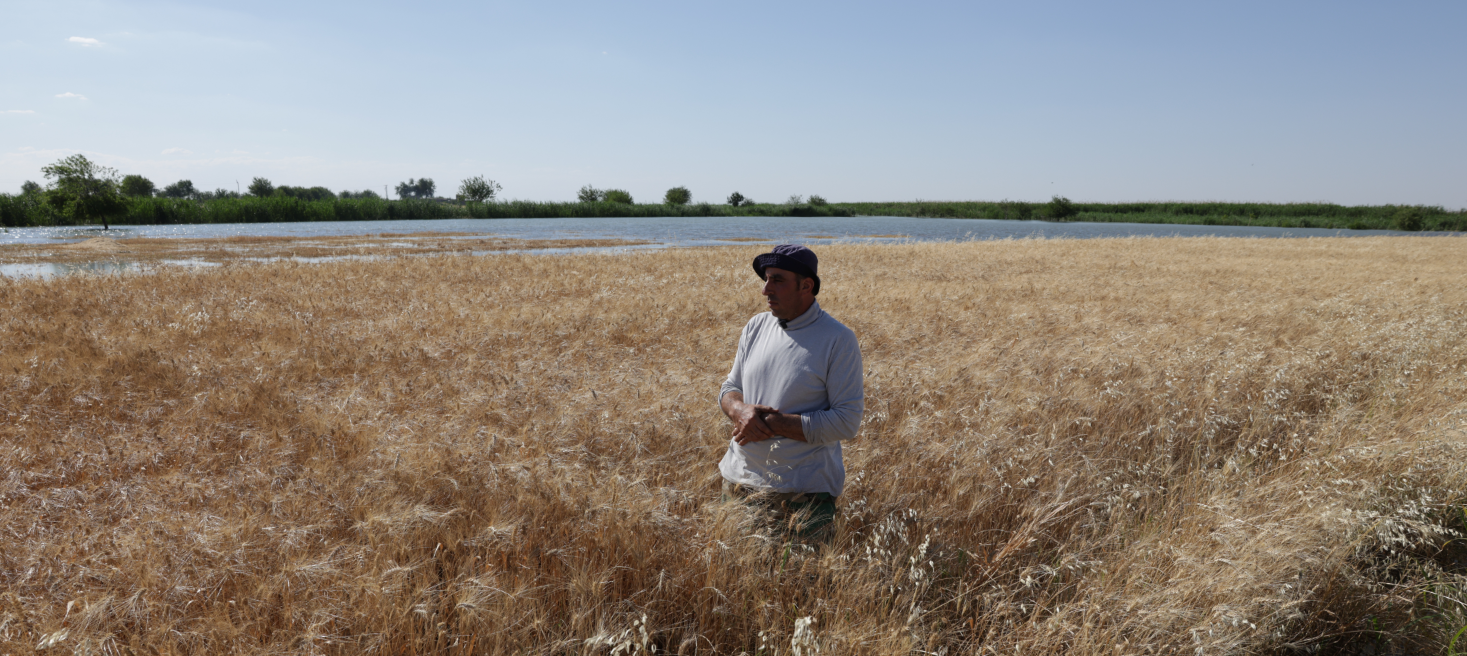
Wheat: a subsidy blackhole
Syria’s wheat production has fallen significantly since 2011. Before the war, annual output averaged around 4.1 million tonnes. Over the past five years, it has fluctuated between roughly 2.8 million and 1 million tonnes. Agricultural production in Syria has always been politically managed from the centre and depends on an intricate network of subsidies, extension services, state procurement, and financing. That system crumbled piece by piece during the war.
Producing wheat in Syria is expensive, and so is buying it. Production costs remain high and productivity is low. Degraded soils, weak seed systems, irrigation pump fuel costs and shortages, pest attacks, outdated machinery and methods and climate volatility are all major challenges. In 2024, farmers in northeast Syria estimated a wheat production cost of around USD 270 per ton, while the global average selling price was about USD 201 per ton. Under current conditions, importing wheat is cheaper than growing it domestically.
The state, however, does not operate purely on market logic. It purchases wheat from farmers at an administratively-set procurement price, typically above production cost, to guarantee incomes and secure domestic supply. In recent years, procurement prices have ranged between USD 310 and USD 450 per ton. Assuming, conservatively, an annual production of 2 million tonnes would be some USD 620 – 900 million – 80 percent of which would go to farmers in northeast. That is only the procurement cost. It does not include storage losses, milling, transport, bread subsidies or operational costs of the public system.
The dilemma is straightforward: does the government have the resources to sustain wheat procurement from the northeast at these levels? Paying a lower price risks discontent among farmers and further production declines. Paying a higher price increases fiscal pressures in an already constrained budget at a time the government is already taking steps to move away from subsidies. What happens if the government decides to pursue its free market approach to the point where it does not buy the wheat from Syrian farmers anymore?
Oil: rivers of imaginary cash
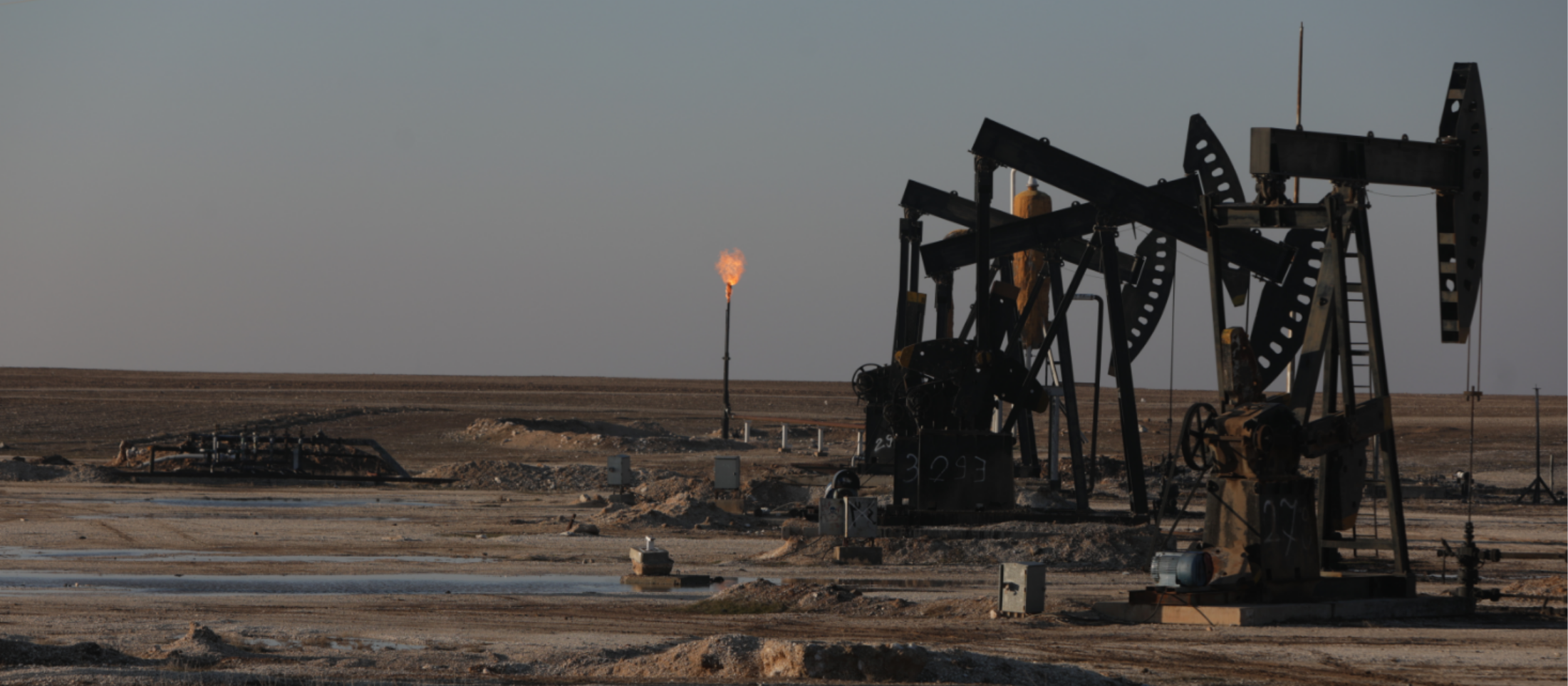
The images that circulated in January of people standing next to open oil pools, even swimming in them in celebration of liberation from SDF control, revived a familiar image in the Syrian imagination: rivers of oil - and money - just waiting to be reclaimed for the state. Translating barrels into budget surpluses, however, is not that simple. Production volume remains uncertain but most estimates place output from the mature fields of Deir Ezzor and Hasakah at 80,000 - 100,000 bpd (barrels per day). Officials in Damascus have stated that output could stabilise at around 100,000 bpd within months. Even if achieved, however, that would not automatically translate into transformative fiscal relief.
A useful reference point is the published financial reports of the Kurdish-run Autonomous Administration. In recent years, oil revenues fluctuated between roughly USD 600 and USD 700 million annually, which formed the backbone of the Administration’s revenue base. These figures likely reflect recorded and captured revenues rather than the full value of oil marketed. The difference suggests substantial discounts, operating costs, and possible leakages and/or off budget transactions. An important caveat is that these revenues were generated under sanctions and through informal marketing channels, with crude oil reportedly sold at discounts that in some cases were up to 35 percent below international benchmarks.
Restoring the sector would demand significant capital investment, and officials have acknowledged that rehabilitation will take years. Some companies, such as Gulfsands Petroleum, which held rights in Block 26 in the Rumeilan oil field, have expressed interest in resuming work conditional on legal reform, sanctions relief and a stable operating environment. At the same time, however, legacy operators such as Shell, which suspended operations in 2011, have moved to withdraw from remaining interests rather than expand them. The reality is that the sector remains plagued by uncertainty, with revenue projections tied to conditions that have yet to materialise. In practical terms, this suggests revenue outcomes closer to those previously generated by the Autonomous Administration, possibly improved by higher realised prices, slightly higher production and – it is hoped – fewer off book transactions.
A reordering of constraints
Wheat and oil serve here as proxies because they reflect the fiscal structure of the northeast. Oil formed the backbone of revenue generation, while wheat procurement constituted for decades one of the largest civilian expenditure commitments by the Syrian government. Together, they illustrate where expectations about integration can go wrong. The narrative of “newly captured resources” may be convenient, but what has happened is a transfer of control over existing revenues – together with related obligations. Higher revenues must be weighed against the costs of security and of health, education, infrastructure and other essential services in the newly integrated areas.
That does not mean there are no net gains. Reintegration reduces fragmentation, lowers transaction costs and restores a unified regulatory and customs framework. Producers in the northeast gain formal access to regional and international markets while producers elsewhere in Syria regain unhindered access to markets in the northeast. While these are real gains, however, they are incremental. They will not, by themselves, generate new wealth at scale.
Oil production will likely remain limited in the near term. Even if foreign investment materialises, it typically involves significant concessions that constrain the state’s net revenue. In wheat, domestic production has historically fluctuated, and even in good years Syria remained a net wheat importer. Local production affects the size of the import bill but won’t eliminate it. Should wheat markets be liberalised further, food security would become even more directly tied to external suppliers, particularly Russia, which in recent years has been the dominant exporter of wheat to Syria.
There are no easy answers to the multiple challenges facing the north east’s economy and its national integration, and many of the key constraints will persist. Overall, there will likely be real benefits, at both local and national levels; but expectations should be tempered by the realities.
This analysis was provided exclusively by Strategic Ventures Advisors, an investment and economic advisory platform.