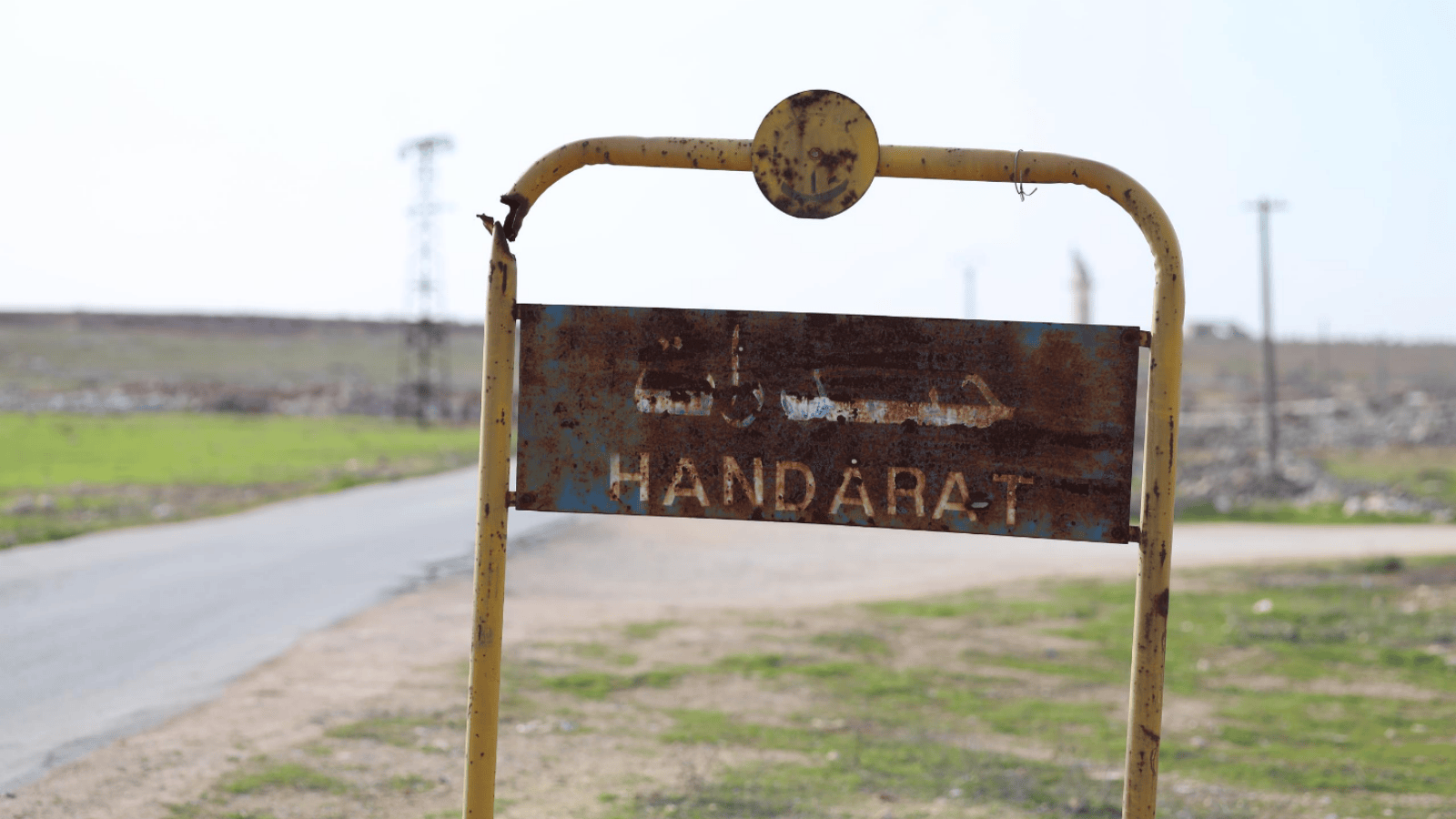
Handarat after the fall
A shattered refugee camp becomes emblematic of the Palestinian ordeal in Syria
Once a frontline in Aleppo’s war, the devastated Palestinian camp now faces a new reckoning over militias, reconstruction and the question of Syrian citizenship.
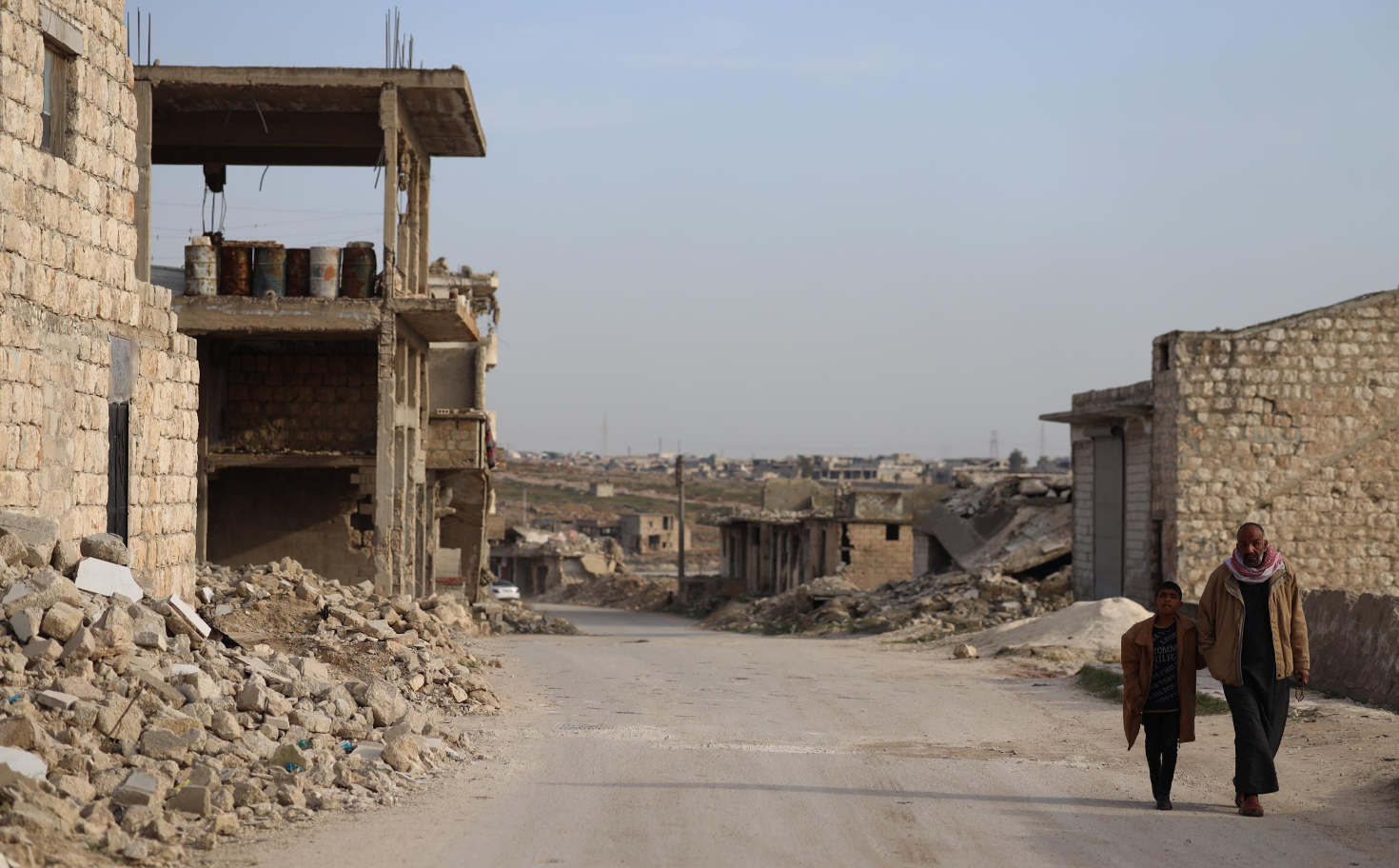
On a hill in northeast Aleppo, overlooking the Queiq River waterfall where families gather in summer to swim and picnic, lies the Handarat Palestinian refugee camp. The extent of the destruction in the camp is reminiscent of the ruins of Gaza, though it is not unique. Similar devastation can be found in other Palestinian camps such as the better-known Yarmouk camp on the outskirts of Damascus. Handarat in many ways typifies the broader Palestinian experience of Syria’s war.
Unlike Yarmouk, Handarat had a relatively small pre-war population, estimated at between 6,000 and 8,000. Many traced their origins to villages in what is now northern Israel. Today, however, most of that community is absent. The camp’s streets are largely empty, and even with the fall of the Assad regime few have returned. According to Ibrahim Abu Hashim, liaison officer with the government and head of the camp’s Development Committee, around 280 families have returned out of roughly 1,500 that had lived in the camp before the war. These returns did not begin after Assad’s fall, but started slowly and sporadically from 2017.
© syriaintransition.com
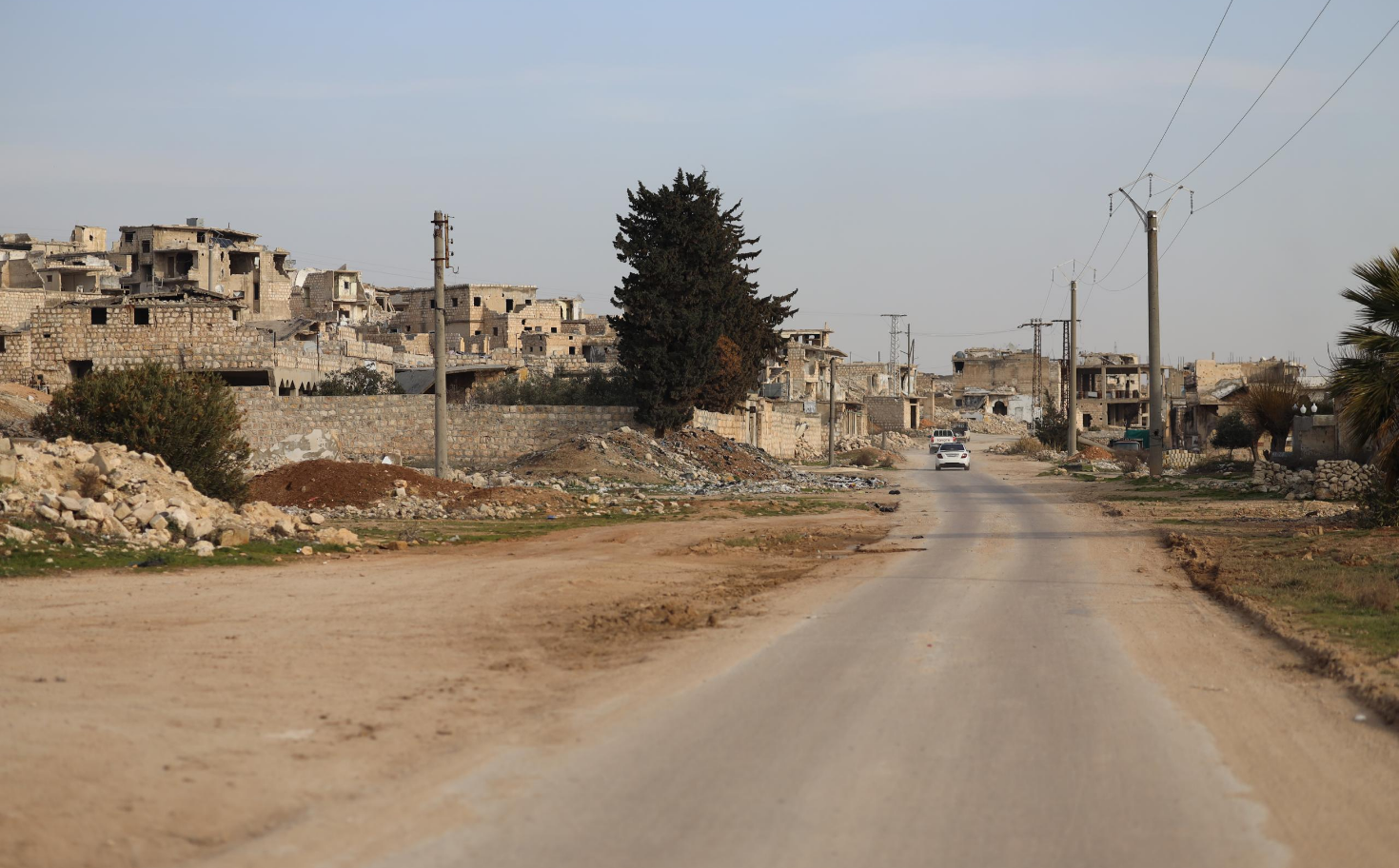
The primary reason for the scale of destruction is that the camp and the surrounding area became a front line between 2012 and 2016. The Syrian army and Russian forces frequently bombed the camp. Unlike Yarmouk, however, Handarat did not witness the rise of a local Syrian-Palestinian insurgency that drove regime forces out. The rebels who entered the camp largely came from elsewhere in the northern Aleppo countryside, including factions such as Liwa al-Tawhid, an Aleppo-based Islamist group that was one of the best known factions in the early years of the war. The key moment was the 'liberation' of the camp as part of an insurgent offensive dubbed the 'Battle to Liberate the Prisoners' in April 2013. The fighting that followed turned Handarat into an open conflict zone, prompting much of the civilian population to flee.
Conflicted loyalties
It may be tempting today to portray the camp as uniformly sympathetic to the uprising but Ibrahim Abu Hashim stresses that most Palestinians in Handarat initially adopted a position of neutrality. Nevertheless, some local men joined the pro-Assad Liwa al-Quds ('The Jerusalem Brigade'), which was originally founded in 2013 by Palestinians in the al-Nayrab camp, also located in Aleppo province, as an anti-rebel force. Initially part of the Iranian-backed Local Defence Forces network, Liwa al-Quds grew to become one of the most prominent pro-regime militias. While nominally affiliated with Military Intelligence, its primary loyalties shifted to Russia, from which it received training and salaries even as it maintained some links to the Iranians.
Syrian-Palestinians who joined the militia did so for varied reasons. Some genuinely believed that the regime and its foreign backers represented hope for the Palestinian cause, imagining that a regime victory would ultimately strengthen prospects for the defeat of Israel. Others joined from more immediate concerns: the promise of a salary, or fear of repercussions should they be seen as sympathetic to the opposition. Within the Handarat camp itself, some Palestinian factions - Fatah al-Intifada, Palestinian Islamic Jihad, Hamas and the Democratic Front for the Liberation of Palestine - were active prior to the war. In contrast to Yarmouk and parts of Damascus where some Hamas members supported the insurgency, the factions in Handarat largely aligned with the regime and channelled their involvement through Liwa al-Quds. No Hamas-linked armed group emerged in the camp to support the rebels. Those who supported the opposition instead left. A former commander in the Hamas-linked Aknaf Bayt al-Maqdis group in Khan al-Shih camp in the Damascus countryside told Syria in Transition that some opposition-leaning Palestinians linked up with his faction and established a training centre in Idlib to support the rebellion.
© syriaintransition.com
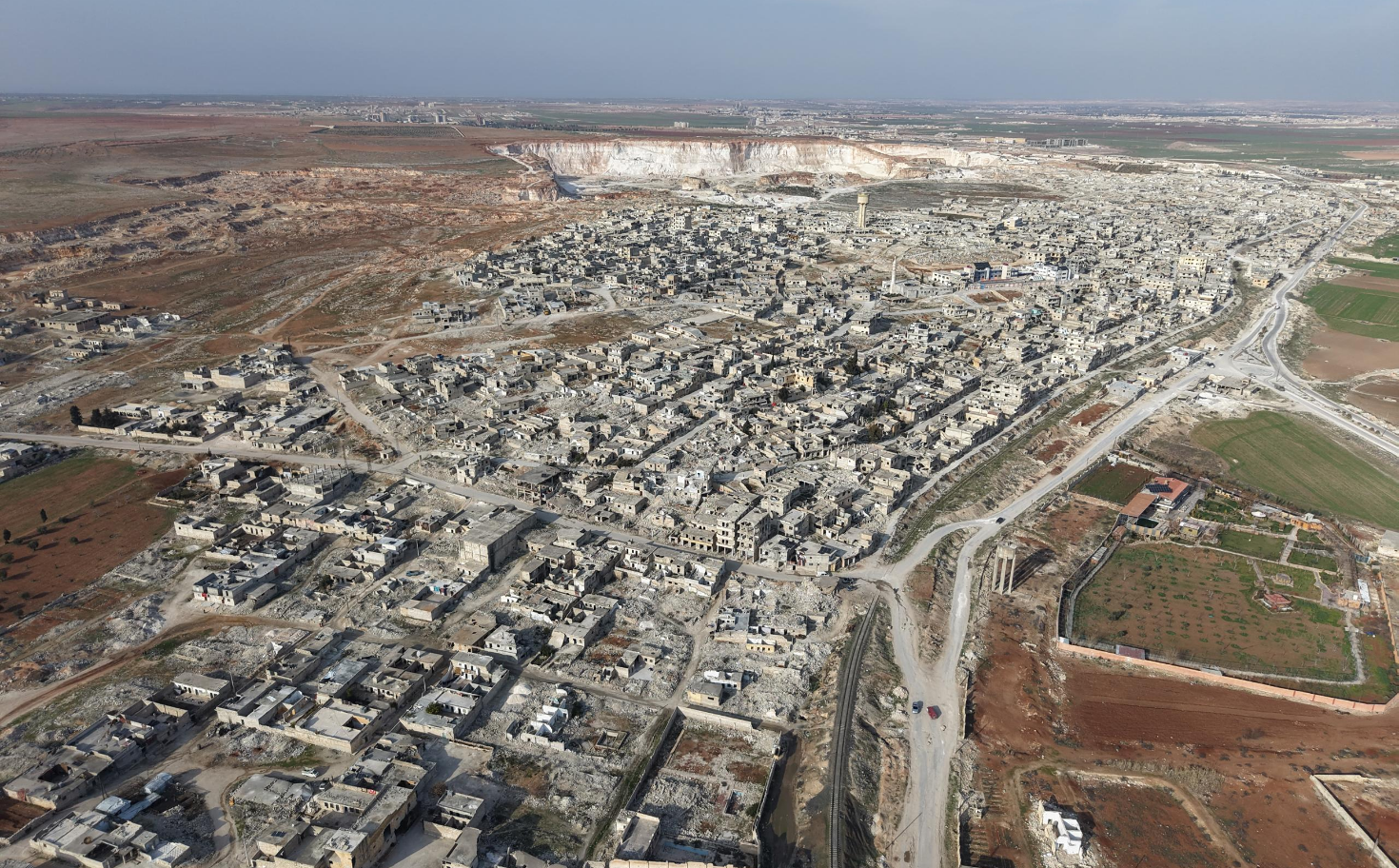
Liwa al-Quds became a crucial auxiliary force in the regime’s campaign to retake Handarat and the wider area. By 2016, as regime forces consolidated control over Aleppo and expelled rebels from eastern districts of the city, the camp was firmly back under regime authority. Security control of the camp was delegated to Liwa al-Quds, but apart from a few symbolic acts such as installation of solar lighting by a Palestinian Islamic Jihad-linked charity backed by Iran, and the opening of 'Return Square' in 2023, the regime and Liwa al-Quds did little by way of reconstruction and there were scant political gains for the Palestinian community. Indeed, much of the remaining infrastructure and property was looted – as happened in other depopulated areas retaken by the regime. When the rebel offensive swept through Aleppo province at the end of 2024, the Liwa al-Quds garrison within the camp simply melted away without resistance.
© syriaintransition.com
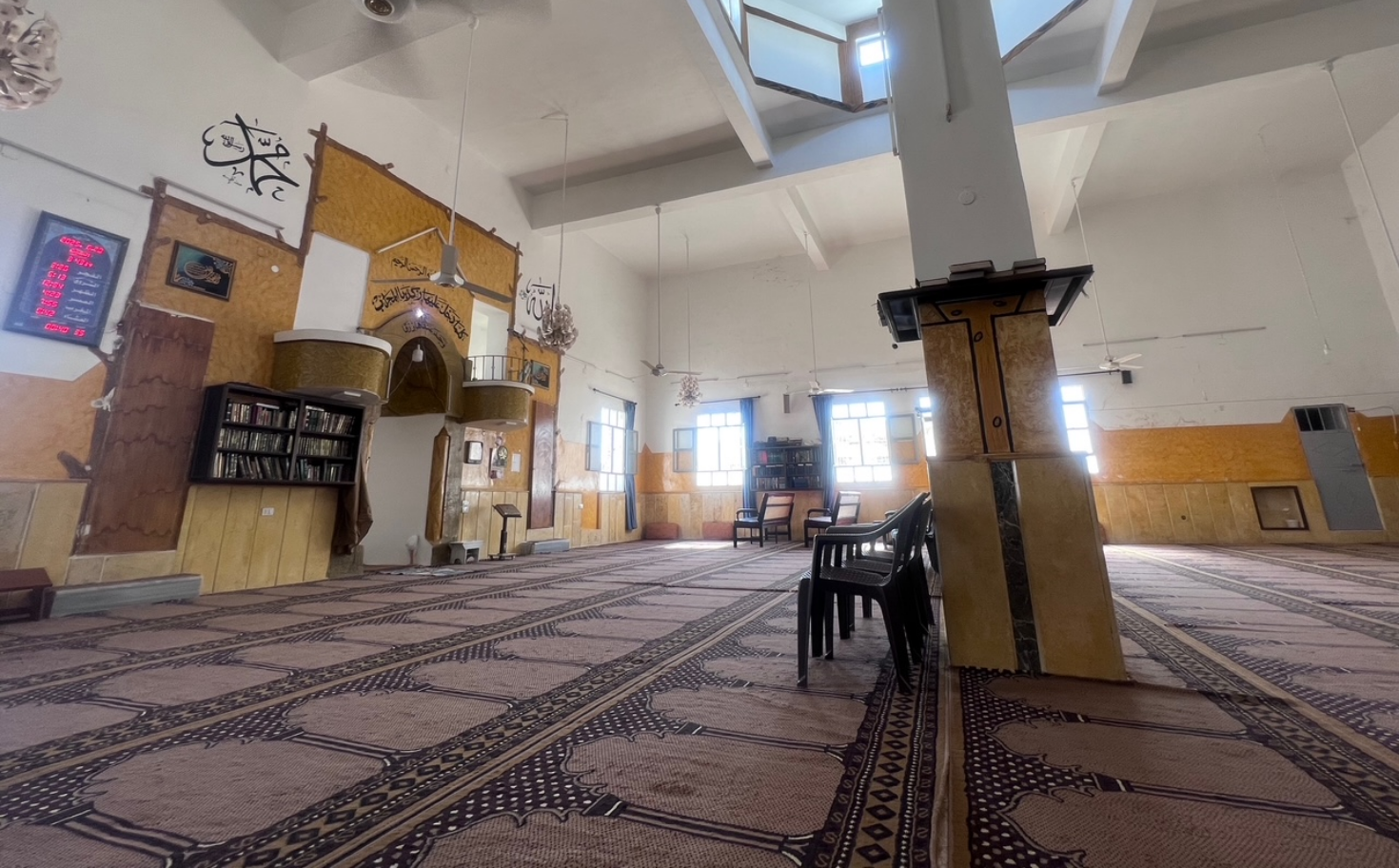
Today, much of Handarat remains in ruins. The most visible exception is a local school and administrative building run by UNRWA, the United Nations agency responsible for supporting registered Palestinian refugees. UNRWA has provided some limited services in the camp, reopening a primary school in 2024; just before the fall of the regime; establishing a small health centre; assisting with cleaning services; and, in cooperation with an NGO, installing a transformer and electricity poles in 2025 to supply power to a small section of the camp. Most of Handarat camp lacks electricity. The water supply system remains heavily damaged and provides water only two or three times a week. As elsewhere in Syria, some modest renovations – such as repairs to a local mosque – have relied on donations from Palestinians in exile.
Right to belong... and return
Three issues will shape the Palestinian community's future in Syria: the status of Palestinian armed factions in the country, the new government's relations with Israel, and the legal status of Palestinians themselves within Syria. Both Washington and Tel Aviv have stressed that Syria should not become a hotbed of Palestinian militancy. At least within the Handarat camp, the Palestinian factions once overtly active now seem to have melted away. This partly reflects a crackdown and de facto ban on Palestinian factions that very overtly supported the Assad regime, such as Fatah al-Intifada and the Popular Front for the Liberation of Palestine - General Command (PFLP-GC). Indeed, with the fall of the Assad regime, Palestinians who stood behind the regime have either fled the country, accepted or even embraced the new order or are simply keeping a low profile.
Other groups whose political positions were more complex see little incentive to resume activity in a camp that remains small, depopulated and largely destroyed. Some of these groups, however – and especially those seen as less 'problematic' politically from the viewpoint of the government – do have an overt presence in Palestinian communities elsewhere in Syria. Fatah, for example, continues publicity activities in the Yarmouk camp and among Palestinians in Latakia. In contrast, Palestinian Islamic Jihad and Hamas, though active, find themselves constrained, either out of fear of Israeli strikes or pressure from the new regime in Damascus.
© syriaintransition.com
Asked about the prospect of a security agreement with Israel (something that enjoys pragmatic support among Syrians), Handarat Development Committee head Ibrahim Abu Hashim says he does not categorically oppose such a step for the sake of "neutralising an enemy", and encouraging economic recovery and reconstruction. At the same time, he argues that any agreement of such significance should be subject to parliamentary debate and public approval.
Following the recent government decision to grant nationality to Syria’s remaining stateless Kurds, speculation has grown that a similar step could apply to Palestinians. Certainly there would be significant practical benefits. Not least, Palestinians would again be able to own property, a right they had been given under Law 260 of 1956 but which had been nullified by a regime decision in 2022.
Ibrahim supports the idea of Palestinians acquiring Syrian nationality so long as it would not impede the right of return to Palestine. For now, however, he says there are only rumours about citizenship.