Assadism as lived experience
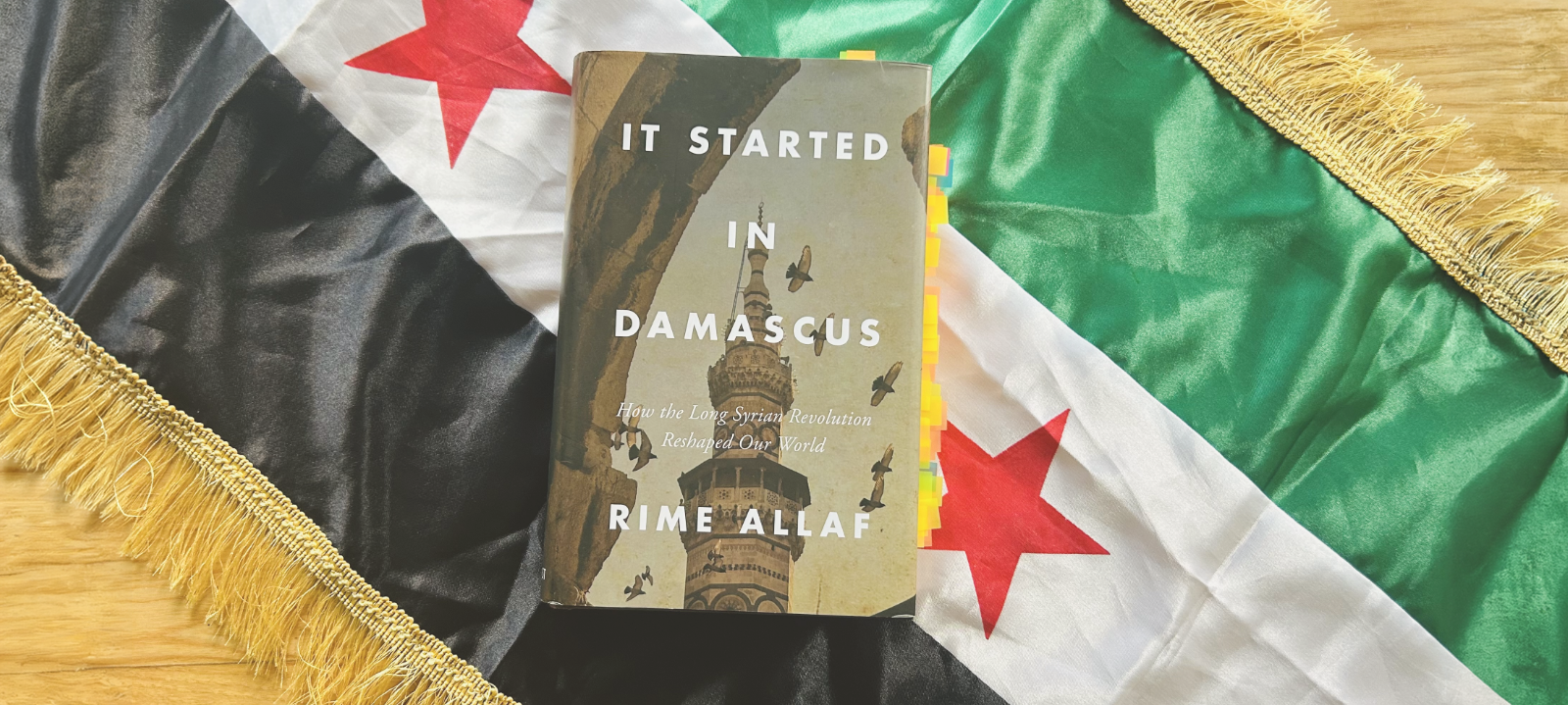
A review of Rime Allaf’s book 'It Started in Damascus'
What does dictatorship do to people’s inner lives? Our review of Rime Allaf’s chronicle examines how Assadism seeped into language, memory and conscience, taking root in social habits shaped by fear and scarcity. The book argues that Syria’s reckoning cannot stop at dismantling institutions; it must also confront what the regime made of its citizens, and what still lingers in the country’s socio-political culture today.
Amid the many analyses of unbounded prison violence, institutional dysfunction and the kleptocratic lifestyle of the elites around the Assad family, it is easy to lose sight of a simpler fact: Syria’s dictatorship was also a theatre of lived experience. It left deep traces in emotional worlds, behavioural habits, and in the way people speak or, just as often, in the way they do not.
The Kafkaesque reality of this social space – where a personality cult was omnipresent, scarcity was not only material but socially organised, and participation in everyday repression became a civic virtue – remains underexplored in much of the scholarly literature. Yet this is precisely where a decisive yardstick lies for judging a tyranny: for assessing not only what a regime does, but what it makes of people.
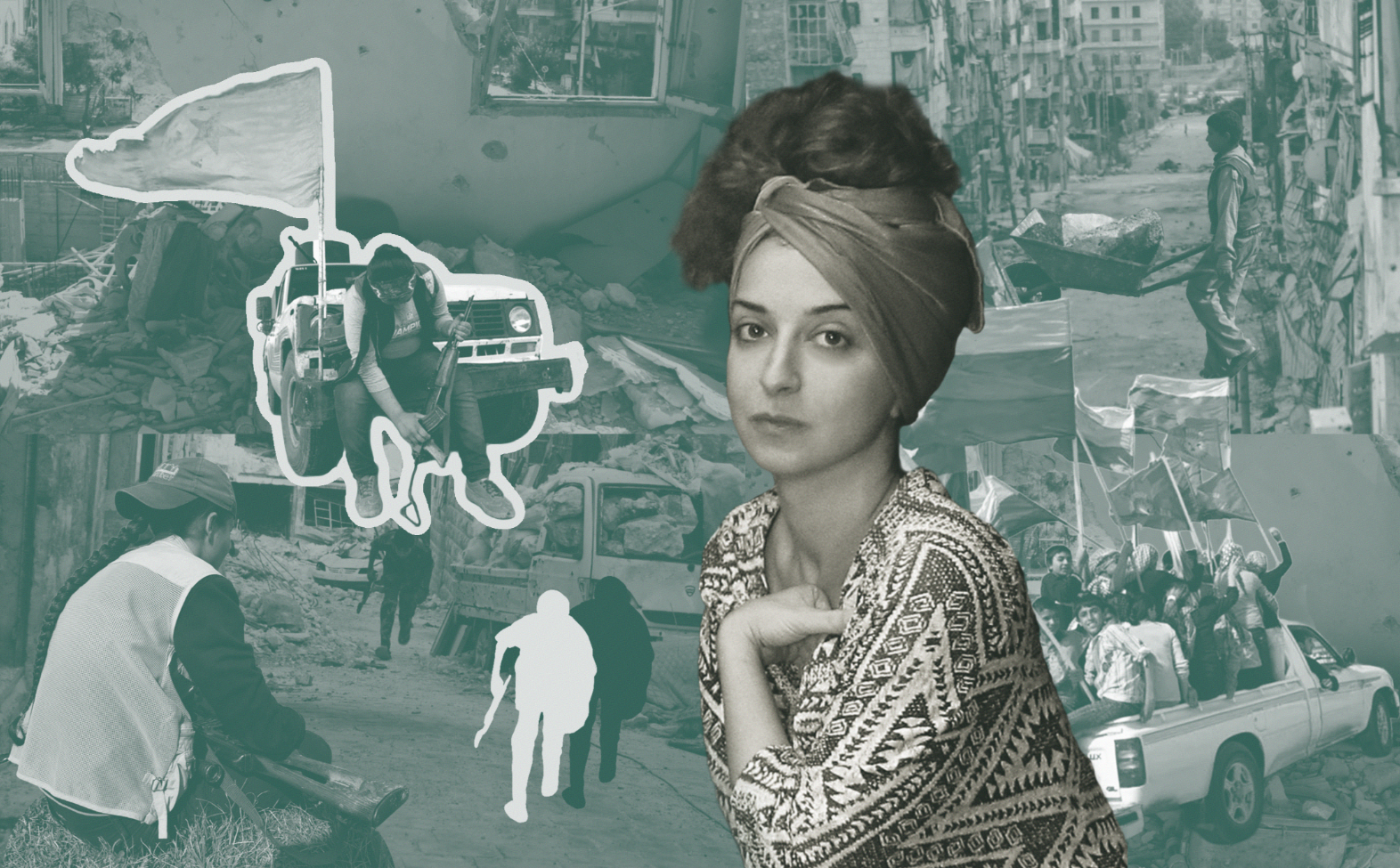
Rime Allaf, daughter of a diplomat and long-time fellow at Chatham House, offers in her chronicle, published shortly after the fall of the Assad regime, an account that illuminates precisely these zones of everyday existence. It is not scholarly work in the narrow sense, but an anecdote-driven narrative best read as a contribution to oral history. Precisely because Allaf writes from within lived experience, the book cannot be “worked through” according to the criteria of academic processing. Yet it remains analytically productive. It surfaces dimensions of Assadism that either still await systematic study or, by their very nature, can only be captured through memory and narrative.
In what amounts to a form of literary fieldwork, Allaf reveals a deep structure that tends to disappear in technocratic regime analyses, and nudges the reader toward an unsettling question: whether describing Assad’s Syria as merely “authoritarian” is analytically sufficient – or whether that label, while accurate, fails to capture the extent to which this system penetrated thought, language, and conscience.
Total control of the mind
While many analyses of Assad’s violence default to sectarian antagonism as the primary explanatory frame, Allaf moves in a different direction. She places the consequences of personalised rule at the centre. Drawing on her experience of Syria under Hafez al-Assad and later Bashar, she redirects attention to what is most obvious yet often analytically flattened: the mechanics of a finely woven infrastructure of compliance, held together by the tight corset of a triad of army, security services, and party.
Through synchronised mass organisations in schools, workplaces, and social life, this architecture extended deep into everyday existence. It comes close – if not fully – to meeting institutional features commonly associated with totalitarian regimes.
For this system to work, the regime relied on a cult logic that recalls Lisa Wedeen’s Ambiguities of Domination (1999). Wedeen famously interpreted the cult - the familisation of the nation through Hafez as the “father” of all Syrians, the iconography of murals, and the public performance of loyalty - as a social “as if”: a form of opportunistic conformity. Allaf takes this account a step further, asserting that these claims to authority were not merely performed but became lived reality for many in her social environment.
Her recollections of her aunt’s grief at Hafez’s death, the weight carried by family names as markers of hierarchy and privilege, and the subtle linguistic codes through which power was recognised and navigated all point to a political theology that hardened into social-psychological normality.
The Everyday Gospel of Assadism
Allaf’s excursion through Syria’s recent history makes clear that it was not Baathism alone that held the system together. It was the patrimonial logic of the Assad family, which translated the state into a web of personal dependencies. The cult operated like an everyday gospel: it did not merely set political boundaries, but regulated the social life and penetrated the private sphere. The familiar authoritarian bargain - political passivity in exchange for a measure of personal quiet - worked only imperfectly in Assad’s Syria. As family rule hardened into something approaching deification, sovereign discretion expanded. The boundary between the “political” and the “unpolitical” was systematically dissolved. Nothing was entirely outside power’s reach.
Beyond the ritual demand to accept the leader’s absolute authority, Allaf shows how social mobility depended on proximity to the ruling pyramid. Even modest material advantages were contingent on personal connections and tacit concessions. In what might be called a civitas Assad, the cult defined the horizon of the possible. Sometimes it manifested as performative loyalty; at other times as genuine submission. In both cases, it structured expectations, compelling reactions, and set the limits of interaction.
The arbitrariness she describes - appointing and dismissing ministers at will, monopolising sectors of the economy through cronies such as Rami Makhlouf, or turning mourning for members of the Assad clan into a national injunction under threat of being branded a heretic - ultimately rested on organised violence. Through the politics of scarcity in the 1990s, through Syria’s occupation policy in Lebanon, and eventually through the deliberate brutalisation of what began as a civil uprising, Allaf traces a recurring pattern: the Assads presented themselves as saviours from crises they had themselves helped create.
Within this logic, society itself became corroded. Syrians were drilled into exploiting and surveilling one another. Over time, a bleak anthropology took hold — the regime’s own claim that “these people” could only be governed “with the shoe over their heads.” It was a self-fulfilling prophecy, manufactured and then invoked as justification.
Disciplined conscience
Perhaps Allaf’s strongest case for the Assads’ totalising reach emerges where she describes what might be called a regime of conscience, built patiently over decades. It begins in school. Classrooms functioned as apparatuses of indoctrination: pedagogies that replaced understanding with rote memorisation were designed to choke off independent thought at the root and to drill compliance with propagandistic red lines as a civic virtue.
Her account of Syria’s cultural industry further reveals where the regime’s sovereignty over “truth” resided. Criticism was permitted but rationed. The boundaries of what could be said shifted with the political weather and the security mood. In tense phases, the security apparatus exploited this elasticity to the full, demanding public professions of loyalty and forcing those who crossed invisible lines to recant on camera.
Allaf also captures how this manipulation of language permeated everyday life. Syrians learned to speak in codes, to decipher “Baathese,” to navigate a dense mamnou’ — a landscape of prohibitions. Conversation required calibration: adjusting one’s position in the social hierarchy, reading each interlocutor as a possible zalamet al-amn (“security guy”) – and pre-emptively adjust speech and behaviour accordingly.
What endures?
Allaf’s account ends with Assad’s flight and a somewhat hurried sketch of the new balance of power. Since the book never claims to offer a systematic analysis of the present, the epilogue keeps its focus on a more fundamental question: what remains after a form of rule that did not merely govern, but permeated life, language, and relationships?
Beyond brief remarks on the challenges of transition, Allaf allows a different kind of gravity to surface that is less political than existential. How does one mourn after a system that shaped perception, reordered reality, and normalised violence for decades? The tone at times borders on the therapeutic, but as recognition that such a history cannot simply be “closed”. It leaves traces in bodies, in speech, in habits of fear and accommodation.
One can only hope the book encourages other Syrians to write down their lived experiences. Such material rarely finds its way into formal scholarship with comparable density. Yet a further question lingers after the final page: what if this long socialisation continues to operate within people themselves long after the dreaded regime is gone?
Allaf’s narrative makes clear that Assad’s Syria cannot simply be equated with the current power configuration under al-Sharaa. But that recognition carries its own burden. A genuine transition requires more than institutional reconstruction. It demands an awareness of the full dimensions of a totalitarianism that reached deep into the national psyche and whose social afterlife persists.
It is a sobering conclusion that hints that the revolution’s completion may yet fall to generations to come.