Small Town Syria
Syria’s governance is marked by HTS factionalism rooted in provincial loyalties
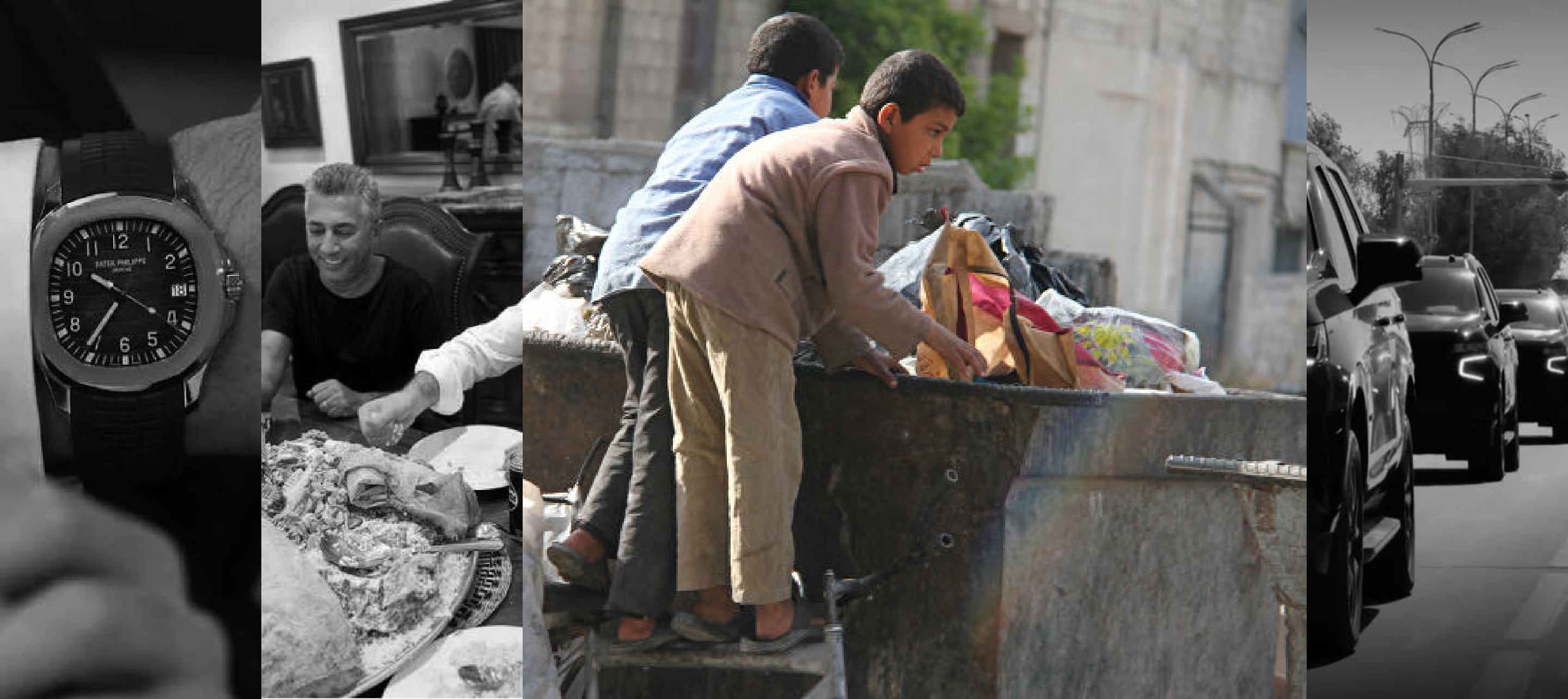
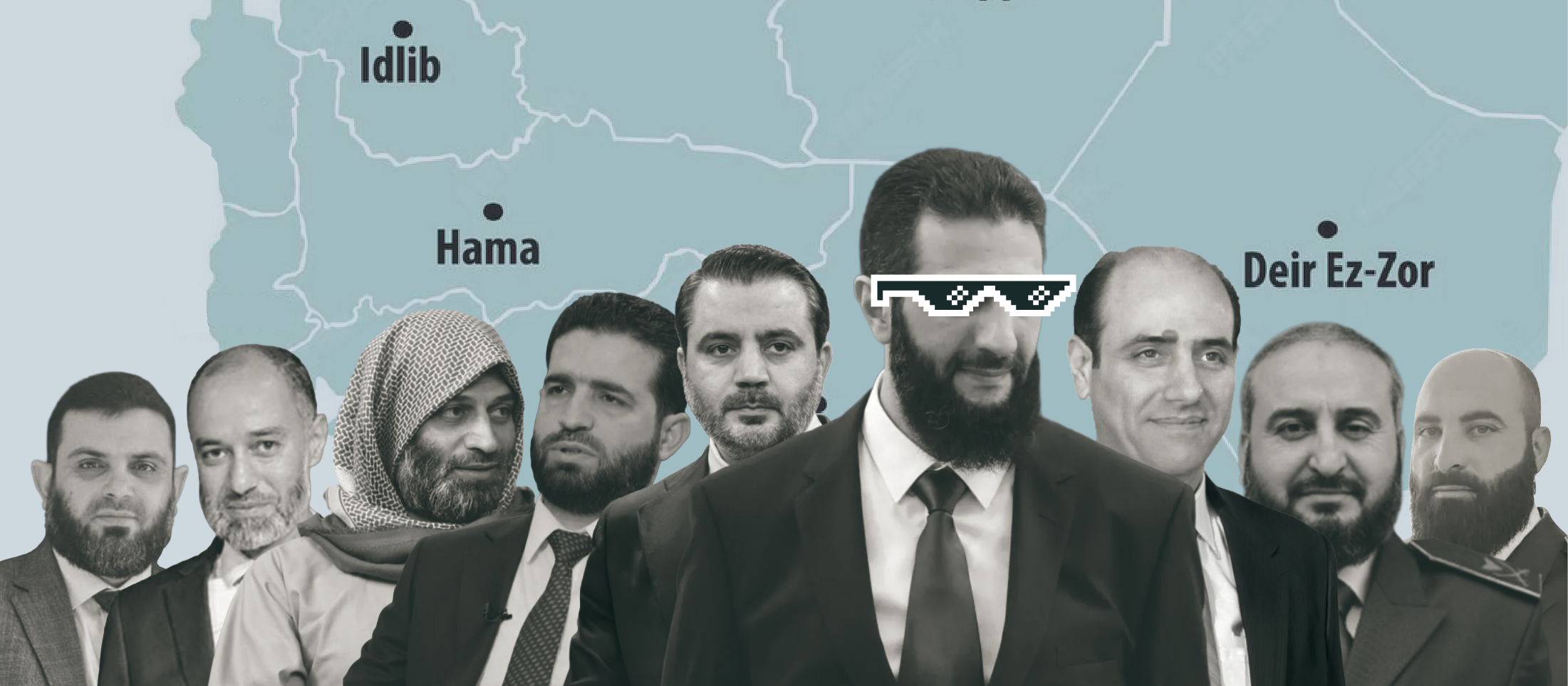
The men who now govern Syria did not rise through formal institutions but through kinship groups rooted in Idlib, Hama and Deir Ezzor. Those provincial loyalties, once useful tools of insurgency, have been transplanted wholesale into the state. What held together in wartime may become harder to manage in peace.
It is not easy to decipher the structure of power within Hayat Tahrir al-Sham (HTS) simply by scanning ministerial titles or reading government communiqués. The visible façade obscures a far denser accumulation of relationships: marriages, provincial loyalties, and patronage networks built painstakingly over years. To understand the regime now led by President Ahmad al-Sharaa, one must look back to the earliest days of Jabhat al-Nusra, at its consolidation of authority in Idlib, and into the transition that followed Assad’s fall. The organisation’s formative years fixed patterns of influence that continue to define Syria’s power structure.
The foundation: a family business
From the outset, Jabhat al-Nusra was more than just another armed group seeking battlefield supremacy. It was a project led by rural elites seeking to grow their power and influence. Its Salafi creed emphasised strict obedience to the leader – a useful creed for such a group – but its recruitment method was more sociological than doctrinal: attract men whose standing within their communities was already secure, and allow their authority to serve as a bridge for HTS into their community.
The town of Shuhail in eastern Syria was the first proving ground. There, the al-Hajers – a leading family of the Bukamil clan of the Ugeidat tribe – played a pivotal role in entrenching HTS in Deir Ezzor. A young Sharaa, in fact, first established Jabhat al-Nusra in the eastern province, and resided at the home of one of its co-founders, the late Ali Hussein al-Mukhlef (aka Abu Mohammed al-Shuhail), a leading figure in the Al-Hajer family. Around that household formed the early nucleus of relationships that would extend into the machinery of state today: Dr Yusuf al-Hajer, a senior foreign ministry official; Ahmed al-Hajer and Bilal Khader al-Hajer, heads of the Political Affairs Secretariat in Deir Ezzor and Damascus respectively; and their cousin Hussein al-Salama (aka Abu Musab al-Shuhail), head of Syria’s General Intelligence Directorate.
The logic of HTS recruitment was simple: secure the loyalty of a conservative, well-rooted family with broad tribal backing and you acquire an entire social base. The model was replicated in rural Idlib, Hama, Aleppo, Homs, and Daraa. Figures were selected not only for ideological commitment but for lineage, local respect and the ability to mobilise kinship networks. They became the “hardcore” through which the organisation penetrated society without provoking the sort of backlash that doomed more brutal rivals like Islamic State.
Idlib years: rise of the blocs
When Jabhat al-Nusra entrenched itself in Idlib, the process of social climbing by rural elite families became more sophisticated. Individual recruitment gave way to the mobilisation of kinship-based blocs capable of performing military, security and economic roles simultaneously.
In Binnish, a rural town in Idlib, Qutaiba Badawi (aka al-Mughira) and his brother Hudhayfa (aka Abu Hafs) emerged as central figures. Qutaiba, a dentist by training and the son of a notable of the town, evolved into overseer of border crossings and de facto economic emir of Idlib. Hudhayfa rose from military responsibilities to security command, eventually serving as deputy to Anas Khattab (now Interior Minister) in Idlib’s security apparatus. Khattab himself, though from the town of Jayroud in rural Damascus, became tightly allied with the Binnish bloc, as was the senior cleric Abdul Rahim Atoun, now Presidential Adviser for Religious Affairs.
In Idlib city, the al-Sayed Issa family became a vehicle for HTS entrenchment. Key figures who helped win for the Salafist group public-service credentials included Dr Qusai al-Sayed Issa, who oversaw one of the largest hospitals in the province, and Qutaiba and Muslim al-Sayed Issa, both heavily involved in relief work. In the town of Taftanaz, Abu Saleh Tahhan defected to HTS in 2016 because he wouldn’t take orders from the Ahrar al-Sham leader who hailed from the same town but from a much smaller and less prestigious family.
Resistance from prominent families was deftly managed. In the town of Jarjanaz in Idlib, the large al-Dughaim family, led by Hasan al-Dughaim and his seven brothers, aligned with anti-HTS factions and resisted co-option. Before the two sides reconciled in 2020, HTS countered by empowering the town’s smaller families. Today, Hasan al-Dughaim is the most ardent pro-government TV pundit.
Two identifiable blocs, the Binnish and the Shuheil, crystallised from the Idlib experiment. The third town to gain a significant bloc was Hilfaya in rural Hama, from which emerged “Abu Hasan 600” – better known now as Murhaf Abu Qasra, Syria’s Minister of Defence. From the town next door is Ali Nour Eddin al-Naasan, the army's Chief of Staff.
Less influential but noteworthy blocs also exist. There is the northern Aleppo bloc, led by Abdul Rahman Salama (aka Abu Ibrahim) who is from the town of Anadan and is now Governor of Raqqa; the southern Aleppo bloc, under Abu Ahmed Zakour, now Presidential Adviser for Tribal Affairs; and the Jabal al-Zawiya grouping associated with Ahmad Issa al-Sheikh, now a Major-General in the army.
After Assad: blocs grow wings
With the fall of the Assad regime and the emergence of a new HTS-led regime, the various blocs formed into the “wings of the state” overseen by Sharaa’s immediate circle. They were given sectors of the state to run – at times with one bloc dominating an entire sector. With greater responsibilities come greater rewards, but also greater rivalries, which were once contained in Idlib but have now extended to every corner of government.
The economic “wing” has emerged as the most formidable. Hazem al-Sharaa, the president’s brother, assumed control of the Sovereign Fund and the Investment Authority. Qutaiba Badawi took charge of land crossings, overseeing imports, exports and taxation. Abu Mariam al-Australi and Abu Abdul Rahman al-Zarba became key players in banking and currency management. Together, these four key figures have constructed a tightly layered economic hierarchy that grips the country’s finances.
The political wing, under Asaad al-Shaybani, comes a close second, controlling the Ministry of Foreign Affairs, the Political Affairs Secretariat and provincial political offices. It also has oversight – formal or informal – of ministries tied to international cooperation, including health, education, local administration, higher education, culture, and media.
The military wing remains anchored in the Hama bloc, with many of its members still occupying the commanding heights. After costly campaigns on the coast and in Suwayda, however, Idlib’s veteran commanders agitated for recognition and were appeased through appointments: Fadlallah al-Hajji as commander of the central region, Abu Saleh Tahhan in the west, and Ahmad Issa al-Sheikh in the south.
The regime’s ideological dimension is represented by Abdul Rahim Atoun and Justice Minister Mazhar al-Wais, though both face criticism from harder-line elements unhappy with their increasing pragmatism.
The security wing, which gathers Anas Khattab, Hussein al-Salama and Marwan al-Ali – the latter recently appointed security chief in Hassaka – helps to maintain a balance between the other wings.
Managing nepotism
Today, the HTS veterans from Idlib, Hama, and Deir Ezzor are making demands. Economic power has accumulated disproportionately around the president’s immediate circle, fuelling resentment by some. Hence reports circulating in Damascus that the president is contemplating a cabinet reshuffle with a broader distribution of portfolios; and that his brothers may retreat from the most visible posts.
Elite management goes with the territory in a country where sub-national loyalties run deep. The test facing President Sharaa is how deftly he shuffles portfolios among comrades; and whether a loyalty system established in insurgency can submit to the demands of state governance. HTS’s rise to power began as a tale of Small Town Syria, but kinship networks do not usually generate transparent and effective administration. While a negotiated balance among blocs whose leaders share a revolutionary past may hold for now, it remains a precarious substitute for institutional order built on merit.