Free the loaves
Syria’s bread economy could benefit from gradual market liberalisation
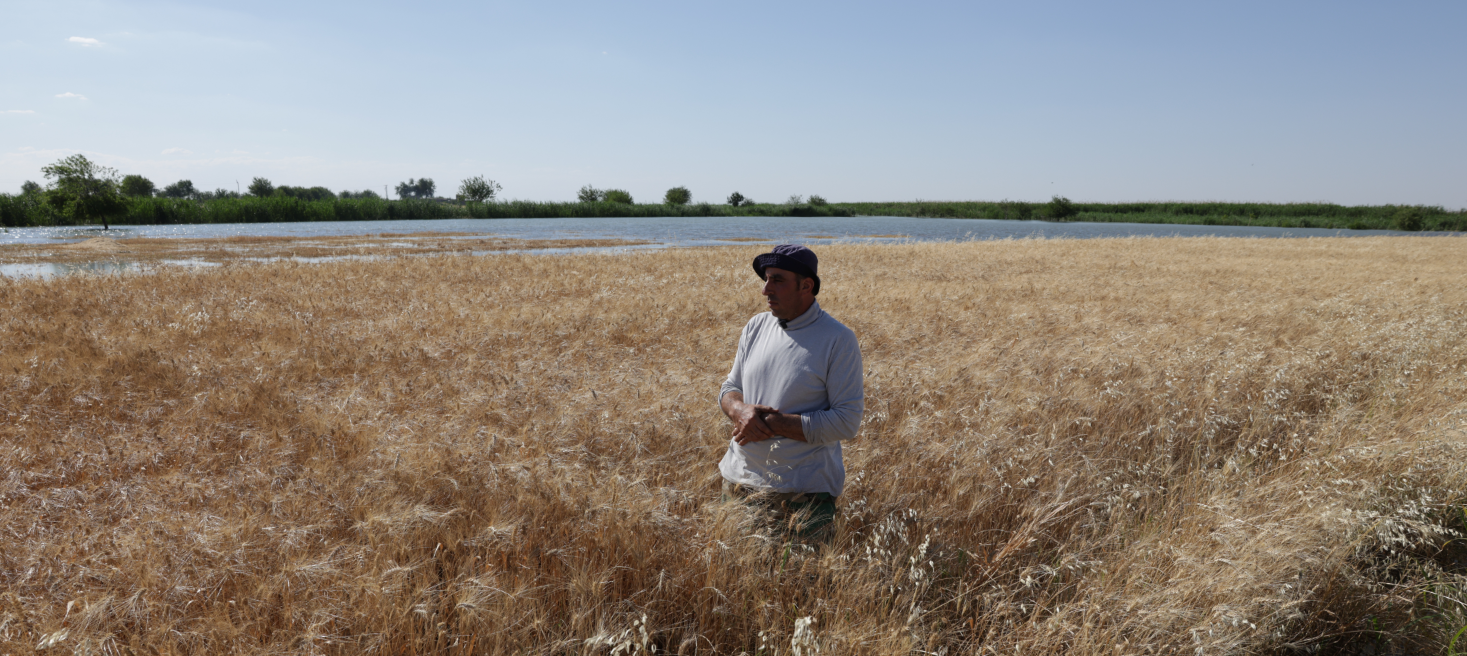
Wheat farmers across Syria are unhappy with government procurement prices. Syria in Transition spoke to some of them. They argue that the wheat, flour and bread sectors should be gradually liberalised to improve incentives for producers, boost productivity and strengthen Syria’s food security.
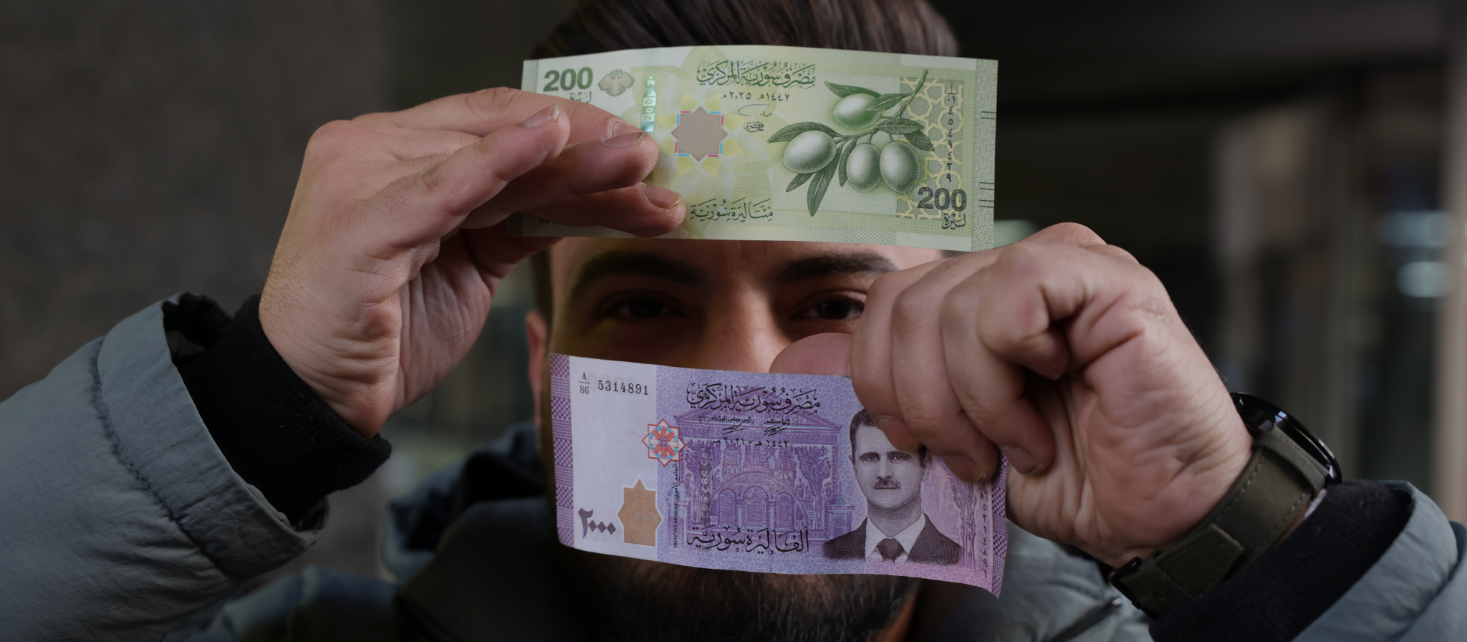
Another week, another protest, another government U-turn. This time it wasn’t taxi drivers or teachers but farmers. The dispute began with the Economy Ministry announcing this year’s procurement price for wheat: $330 per tonne. According to many farmers this was not enough to cover the cost of seed, fertiliser, pesticide, irrigation, haulage and land rent. The price was also set in the gradually-sliding Syrian pound (at the time of publication it had just crossed 14,000 of old denomination pounds to the US dollar). What made the decision more galling was that farmers had been expecting a bumper crop after plentiful rainfall; and a chance finally to turn a decent profit. The dispute is a test of whether Syria’s new free-market rhetoric can survive contact with the country’s most politically sensitive commodity.
Price games
In Raqqa, protests were staged outside the Governor’s office, with some threatening to withhold deliveries to the state-run General Establishment for Cereals (SEC). In Daraa, the Farmers’ Union published an angry letter warning of “severe resentment and anger” and urging an immediate re-think. Many farmers said that wheat may lose out next year to cumin, coriander and other crops with better market returns.
Salvation came with the intervention of President Ahmad al-Sharaa and Decree No. 120 of 24 May, granting farmers a bonus of $80 per tonne delivered to the SEC, albeit set in depreciating Syrian currency and three months after delivery. Assad-era governments also used presidential directives and delivery bonuses to pull wheat into state channels. Keeping bread affordable has long been one of the core functions of the Syrian state.
What is different now is that Syria has a pro-free market government, yet it continues to pursue an agricultural policy inherited from a defunct era of state socialism. The fixed procurement price functions as a subsidy to farmers, costing the state as much as $900m a year. Yet even at $400 per tonne after the presidential bonus, many farmers remain in survival mode, barely able to pay off their debts and unable to invest seriously in equipment or expanded production. For comparison, farmers in Iraq receive $540 per tonne – and have considerably lower energy costs.
In effect, this government, like its predecessors, is asking rural producers to “take one for the team” by accepting a consistently low price for their wheat relative to production cost in order to keep bread cheap for urban consumers and the state coffers.
The problem is that bread is no longer especially cheap. A bundle of ten flatbreads from state-run bakeries — now just under 1kg, down from 1.2kg only a month ago — costs about $0.33, still requires waiting in a queue and is often of questionable quality. The same bundle from private bakeries is set at $0.44. At those prices, the claim that farmers must accept low wheat prices to keep bread affordable looks thin. Something in the chain between field, mill, bakery and consumer is not adding up.
Five-year plan
Field research by Syria in Transition suggests that the answer is not a sudden free market in wheat. That would expose small farmers and destabilise bread supply. What Syria needs, say farmers, is gradual liberalising reforms over five years, beginning with agriculture and extending into flour milling and bread production.
The first stage should be transparency and protection. The government should this year publish a cost-of-production formula for hard and soft wheat. This should include seed, fertiliser, energy, irrigation, labour, land rent, harvesting, transport and a modest profit margin. It should also recognise differences between rain-fed areas, irrigated land, steppe cultivation and the Euphrates basin. A single national price conceals very different farming realities.
Next year the state should establish a guaranteed floor price. The government would remain a buyer of last resort, protecting farmers from collapse and securing strategic reserves. But licensed private buyers should be allowed to enter the market and purchase growing quantities above that price, giving farmers a route to better returns without removing the state from the market.
The second stage, farmers told Syria in Transition, should be controlled competition. In year three, private mills, pasta factories, cooperatives and private traders should be brought into a regulated and transparent procurement system. The state would still buy for reserves, but it would no longer need to absorb the entire crop. Those farmers that cannot produce wheat at anywhere near competitive prices should be encouraged to try other, more profitable, crops.
The third stage, said informants in the agricultural sector, should be direct support and a more open bread economy. In year four, agricultural support should consist almost entirely of direct production support. The government and donor governments wishing to help Syria rebuild its economy could help farmers by reducing their costs: subsidised seed, credit schemes, solar- and wind-powered irrigation, and modern water-saving systems. A farmer who spends less needs a smaller price intervention at harvest.
By year five, Syria should aim for a mixed wheat economy. The state would still retain oversight of quality, competition and consumer protection. It would also retain a crucial role in shielding Syrian farmers from cheap imports, allowing foreign wheat into the market only when domestic shortages were expected or strategic reserves needed replenishing. Import controls, however, should be rule-based rather than discretionary, or they will simply create a new field for favoured traders. Meanwhile, farmers would sell primarily through cooperative or private channels.
Gradual market liberalisation should extend beyond procurement to the structure of the bread economy itself, urged Syria in Transition’s sources. This should include expanding licences for private milling, selling off most state-owned bakeries to small and medium-sized private operators and simplifying the process for opening new private bakeries. A broader cohort of private operators should be able to buy flour through transparent channels, either directly from farmers or through intermediary agribusinesses that supply bakeries on commercial terms.
Liberalisation done right
For too long the bread economy has served as an arm of the bureaucracy, stressed Syria in Transition’s informants, insisting that the state does not need to bake bread in order to guarantee that Syrians can afford it. Burying the cost of cheap bread inside the consistently low price paid to farmers is both unfair and counter-productive. The government should instead create a decentralised market in which wheat, flour and bread prices transmit more honestly along the chain, while consumers are protected through targeted support for the most needy and fair competition policy.
Such a five-year programme could enable Syrian farmers to reach a level comparable to that of their Turkish counterparts. The base wheat price set by Turkey’s state grain board is $350 per tonne — in the same pre-bonus dollar range as Syria’s. But Turkish farmers operate within a more developed, and more competitive, milling, storage, credit and market infrastructure, and that difference matters as much as the headline price.
Five-star hotels and prestige airports might be more eye-catching; but if the government is serious about free market reforms, it should begin with the humble loaf.