The Druze Supervillain
Attempts to securitise Suwayda are ill advised
Suwayda compresses many of Syria’s key challenges into a remarkably narrow space: decentralisation of governance, minority relations, competing victimhood narratives, a lack of accountability and transitional justice, war-economy networks and Israeli intervention. None of these are unique to the province. How they are handled in Suwayda may prove a revealing indicator of the Syria of tomorrow.
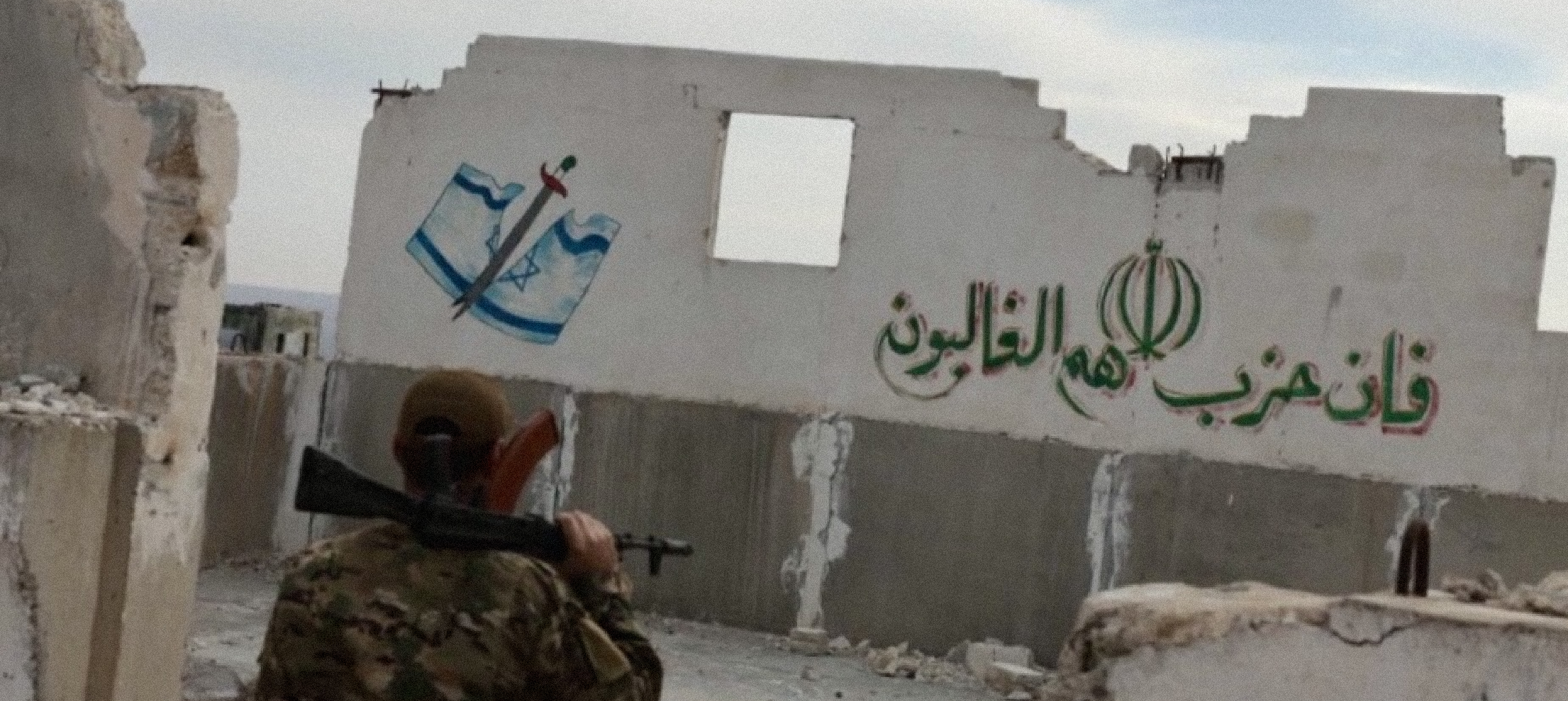
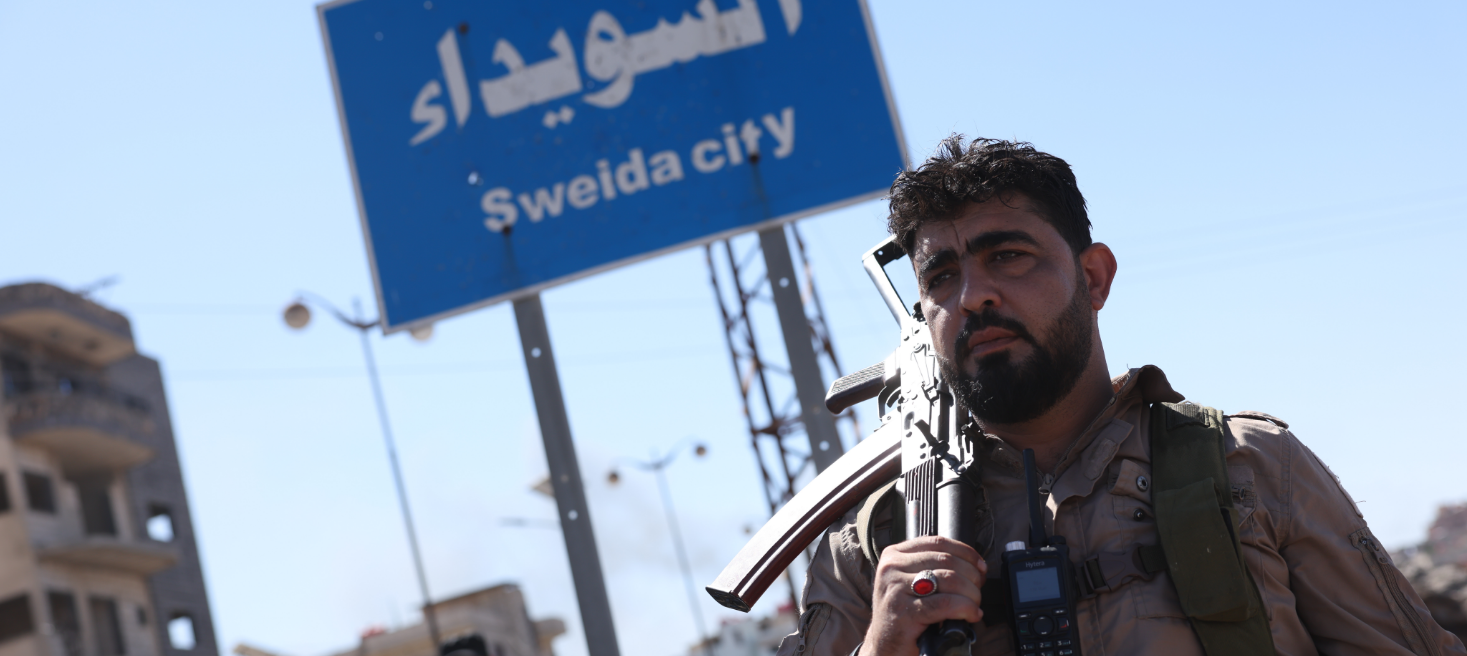
Nearly a year since the central government's attempt to impose control by force over the predominantly Druze province of Suwayda, and the massacres and extensive violations committed against the Druze population, the Damascus government shows no sign of accepting accountability. Rather, pro-government media and analysts are avoiding serious discussion, casting Hikmat al-Hijri and his supporters as the real villains of the story while reframing widespread Druze rejection of central government authority as a transnational security threat. Suwayda is portrayed as a Hijri-run tyranny beset by chaos and controlled by drug-lord-run criminal gangs gathered under the Hijri-endorsed 'National Guard’, dominated by 'regime remnants'. Hijri and his supporters are thus simultaneously framed as Zionists and 'Assadists' conspiring with Israel to undermine Syria's transition and unity.
The Bashan current
Of course, there are elements of truth. Hijri and his followers have sought to impose a rejectionist consensus on relations with the central government, promoting the idea of separation and renaming the region 'Bashan Mountain’ — a reference to the biblical region encompassing parts of southern Syria. The symbolism is hardly accidental. It gestures toward the idea of alliance with Israel that Hijri and his supporters openly espouse, mirroring to some extent the close identification of many Israeli Druze with the Israeli state.
Although some Hijri supporters portray ‘Bashan’ as an old historical name for Suwayda, a member of the pro-Hijri 'Abu Ibrahim Commando Forces’ told Syria in Transition that the name is in fact new in local Druze political discourse, describing the shift starkly: "We were Syrians some time ago, and we have now become Bashan Mountain." Whether the Bashan current represents a genuine secessionist project, however, depends on whom one asks. While Hijri himself has openly spoken in favour of separation, many Druze supporters of autonomy articulate it as a reaction to deep alienation from the current government. In general, many still express the wish to remain part of a Syria in which Druze can live safely and as equal citizens.
Closing the ranks
Local voices calling for Suwayda to remain part of Syria find it increasingly difficult to speak openly against the ‘Bashan’ movement. This was noted both by a source in Rijal al-Karama — a Druze faction that previously was open to negotiating with the government but formally aligned with the National Guard after the massacres — and by a former activist involved in Suwayda’s 2023-2024 anti-Assad protest movement. Both said that publicly opposing the rejectionist line carries considerable risk. Indeed, a close examination of the discourse of Rijal al-Karama's leader, Mazid Khadaj, suggests that he does not support separation from Syria or renaming the area 'Bashan', even as he rejects the current government. This has led to some more hardline Hijri supporters accusing him of betrayal. There have also been cases of torture and killing of those accused of collaboration with Damascus.
Claims made by many of Hijri’s supporters that the 'National Guard' represents a real unified force ring hollow. Although some constituent groups have adopted brigade and battalion numbers, these labels do not indicate the building of a coherent professional army any more than corps and brigade numbers did for the Turkish-backed 'Syrian National Army' or Iraq's Popular Mobilization Forces. The formation of ‘Brigade 104’ within the National Guard, for example, suggests superficially that Rijal al-Karama has been fully absorbed into a unified military structure. Yet the abover-mentioned Rijal al-Karama source stressed that the brigade does not include the entire movement and that the merger exists largely on paper.
He noted also that Rijal al-Karama members receive money, weapons and supplies from a variety of sources, not from the National Guard and its Israeli and Druze Gulf-expat backers. In reality, fasa'iliya (factionalism) remains a defining feature on the ground, even if most Druze armed groups are united in opposition to the government. It is also likely that some factions are using the rhetoric of defending 'Bashan' as cover for criminal activity, including drug production and trafficking.
Consensus by fear
There is a difference, however, between a nuanced discussion of these problems and the discourse advanced by pro-government voices at home and abroad, which increasingly veers into exaggeration and seems eager to drum up support for a renewed military campaign. The situation in Suwayda is somewhat analogous to the broad anti-“reconciliation” consensus that was prevalent in rebel-held areas before the Assad regime’s fall. There, too, some people favoured returning to the regime’s fold for a variety of reasons; yet reconciliation was widely rejected because of the massacres and mass displacement committed by a regime that showed no remorse and no interest in accountability. Those accused of collaboration with Damascus were socially ostracised or arrested.
In Suwayda the anger and trauma surrounding the massacres remain intense. The events engendered a shared sense, amongst Druze from very different political backgrounds, that they could not identify with a government whose forces massacred members of their community on a sectarian basis, occupied dozens of villages in the north and west of the province and burned and looted homes and shrines. At the same time, violations against Druze elsewhere in Syria continue, reinforcing the perception that the government is either unwilling or unable to offer protection. These incidents include the vandalisation of a Druze shrine near Zabadani in April and, more recently, the kidnapping of a Druze family in Damascus, reportedly in retaliation for the National Guard detaining a driver alleged to be affiliated with the Syrian military and implicated in the July massacres.
Dishonest arguments
Alongside accusations of alignment with Israel, pro-government voices usually advance two additional arguments. The first is that “regime remnants” — former members of the Assad regime’s military and security apparatus — occupy key positions within the National Guard. It should be stressed, however, that they are not seeking to revive Assadism. Individuals such as Talal Amer, a former Major in the Fourth Division, now the National Guard’s spokesman, openly advocate separation from Syria and alignment with Israel, anathema to Assadist ideology. A more reasonable application of the “regime remnants” argument is that former regime figures have found a “safe haven” in Suwayda, allowing them to avoid accountability. That is a legitimate concern; but it is hardly unique to Suwayda. Former regime figures have found protection and reintegration across all of Syria, including within state institutions and military circles linked to the current authorities. Reducing the issue to Suwayda alone — and using a structural problem affecting Syria as a whole to demonise one side in a highly complex conflict — does little to advance any meaningful process of transitional justice.
The second line of argument — intensified in recent months — is that Suwayda has become not only a safe haven for regime remnants, but also a centre for the vast Captagon networks once overseen by the Assad regime. This narrative, however, overlooks that all the access routes into Suwayda are controlled by Damascus. Since the raw materials to produce Captagon originate from outside the province, Captagon trade and production clearly extend far beyond Suwayda and some Druze factions. State media itself recently reported the seizure of 25 million Captagon pills in Homs province, reportedly prepared for export via Syrian seaports. Here again, concentrating structural problems that plague the whole of Syria onto Suwayda serves to give the central government a legitimacy and political rectitude lacking from the de facto authorities in the province. It is a destructive framing that obscures the broader national dimensions of the problem. For people in Suwayda, this discourse only reinforces the perception that government supporters no longer regard them as a part of Syria, but as malicious traitors and criminals.
The long game
Damascus' strategy towards Suwayda appears to be long-term. For now, the government seems reluctant to launch a major military campaign against the outnumbered National Guard for fear of renewed Israeli attacks. The frontlines are largely frozen, though intermittent clashes occur, sometimes involving the use of drones by government forces. In the meantime, Damascus appears to be betting that people in Suwayda will eventually grow exhausted by local divisions and by isolation from central state services, and distance themselves from the 'Bashan' current. The government is also likely hoping that regional and international cards will reshuffle sufficiently for Israel to accept formal Druze reintegration under the Sharaa government. As the Rijal al-Karama source skeptical of the Hijri project put it: “The government is playing a long game, and the project will collapse bit by bit until it ends completely."