Integration blues
As opaque negotiations on SDF integration grind on, the city of Qamishli lives with parallel authorities, shrinking subsidies and growing uncertainty over who will govern next
How is the SDF integration process going? On the streets of Qamishli many people say they just don’t know. Government forces, at least, are nowhere to be seen. A journey through the remnants of the Autonomous Administration shows just how long and bumpy the road to integration remains – and how the YPG and YPJ have retained their prestige even as the political project they fought for is slowly eroding.
Five months into the Damascus - SDF agreement signed on 29 January, on the streets of Qamishli the government is nowhere to be seen. A small contingent of Internal Security Forces (a.k.a. General Security) is now deployed to the city and is barracked inside a larger Asayish (Kurdish security forces) compound in what was formerly the Assad regime’s “Security Square.” From the street, only the blue banners of the Asayish fly above a US-supplied Humvee parked at the gate.
The absence of visible integration by the SDF into the central state now controlled by the former jihadists of HTS is accompanied by widespread uncertainty over how negotiations between the two parties are progressing. The 29 January agreement on general terms of integration was reached by President al-Sharaa and the small circle around him, on the one hand, and the secretive leading cadres – PKK veterans – of the SDF on the other. The opacity and slow pace of the ongoing negotiations may protect both sides from popular dissent for now. Many people on the streets of Qamishli say they have no clue how integration is proceeding. The uncertainty is hardly confined to the northeast. In the June wave of Syria Poll, nearly two thirds of respondents in western Syria said they did not even know how to assess the government’s handling of SDF integration. Eventually, however, the band-aid will have to come off: full implementation will require clarity over who governs Qamishli, who controls its security forces and where ultimate authority lies.
Bringing forces into the fold
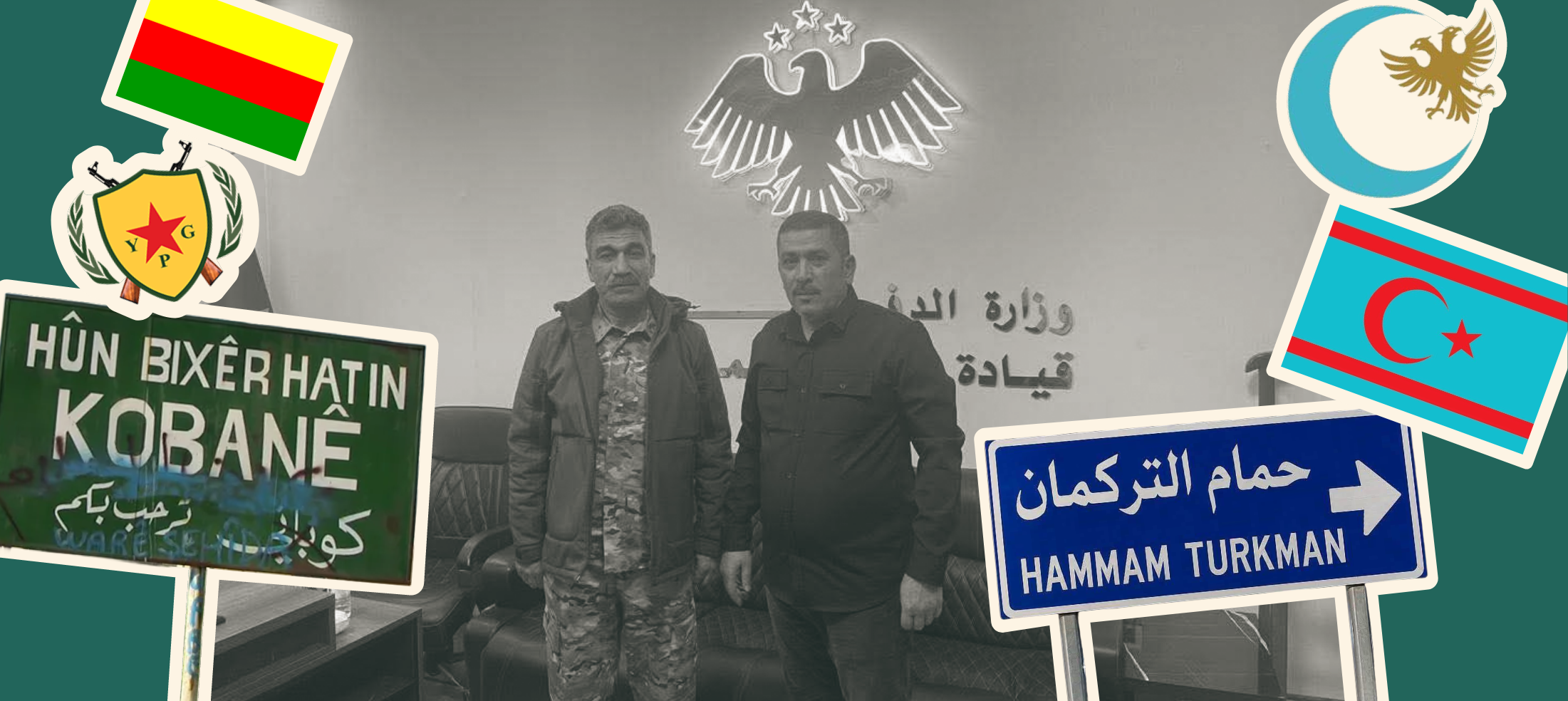
While integration is not visible on the streets of Qamishli, some discernible progress has been made since January. For obvious reasons, the military file has been given priority. Four senior SDF cadres now hold leadership positions within the Syrian Ministry of Defense. These include Sipan Hemo, Assistant Minister for the Eastern Region, as well as Chiya Kobani, Luqman Khalil and Mahmoud Kobani, who now hold command positions within the army’s 60th Division. The division is to include four new brigades of 1,300 SDF fighters each. The units formed so far remain garrisoned in areas under SDF control, divided between Qamishli, Hasakah, Derik/Malikiyah and Kobani. They are being sent one by one to Nabk close to the border with Lebanon for Ministry of Defense retraining. The Qamishli brigade has already completed the course, while the Derik brigade is currently undergoing it. The integration of around 10,000 Asayish members into the Ministry of Interior is at an earlier stage, with the latest reports indicating that Damascus is still vetting nominated candidates. On the ground, the Asayish police force continues to operate largely as before, although its members are now also deployed alongside government security forces at joint checkpoints on the edges of areas still controlled by the SDF. The atmosphere at these checkpoints appears calm and cordial.
According to statements by Mazloum Abdi and other officials, the SDF, Asayish and civilian administration will not formally disband until the integration process reaches its final stage. Disputes remain over how many SDF and Asayish members will ultimately be absorbed into state institutions. Damascus wants to limit their number, while the SDF is demanding government employment for those who remain on its rolls. Beyond the roughly 6,000 fighters expected to join the 60th Division, SDF officials say another 7,000 remain outside the integration framework, not including the all-female YPJ, which Damascus continues to refuse to integrate into the Ministry of Defense, insisting that it could be integrated into the Ministry of Interior’s established female police units. A further 9,000 Asayish members are likewise not currently included; and across the board, negotiations continue over whether higher ups will receive local leadership positions.
© syriaintransition.com
Righting past wrongs
Arguably the most consequential developments accompanying the integration process have been the naturalisation process initiated by Damascus to grant citizenship to stateless Kurds. Also important is the Ministry of Education’s recent decision to recognise diplomas awarded by Autonomous Administration schools. The first stems from Presidential Decree No. 13, unilaterally declared on 16 January 2026, rather than from the integration agreement itself. If successfully implemented, however, it would address one of the Syrian Kurdish movement’s longest-standing grievances: the consequences of the 1962 special census in Hasakah, which stripped tens of thousands of Kurds of citizenship and left hundreds of thousands of their descendants stateless.
The enduring dilemma of education under the Autonomous Administration also needed a solution. The Assad regime’s curriculum was available only in schools located inside the regime-controlled security squares of Qamishli and Hasakah, while the alternative curriculum offered by the Autonomous Administration for more than a decade remained unaccredited. The latter has been allowed to continue for the next academic year (2026-27) while a new nationwide curriculum is being developed, with the SDF pushing for a full Kurdish language curriculum to be retained. It remains to be seen whether the Ministry of Higher Education will similarly recognise degrees awarded by universities operated by the Autonomous Administration – and, if so, what reputation those degrees and institutions will have in the long term.
Parallel governance
The local face of the integration process is Hasakah Governor Nour al-Din Ahmad, nominated by the SDF and approved by Damascus. Ahmad, a Kurd from the prominent Xanika family of Qamishli, is an engineer by training who worked in the provincial bureaucracy before being dismissed in 2012 for anti-regime activity. He joined the YPG only afterwards. His background stands in marked contrast to that of the PKK cadres now serving in the Syrian Ministry of Defense. Some of those interviewed by Syria in Transition in Qamishli say that Ahmad was chosen because he had good relations with local Arab and other non-Kurdish communities. Others claim that it was because he was seen by Damascus and the SDF as a “soft touch” and the opposite of a confrontationalist, lacking an independent power base of his own.
Despite serving as governor for the past five months, Ahmad has yet to make public visits to parts of the province outside SDF control. Several provincial directorates, including Education and Health, operate headquarters in Hasakah city near his office. Syria in Transition was told, however, that the real weight of administrative power in the province has shifted south to Shaddadi, the largest city under Damascus’s control in Hasakah province. There, authority rests with Damascus-appointed Deputy Governor Ahmad al-Hilali, a native of Qamishli from the mixed Arab and Kurdish Muhallami tribe, who was once affiliated with the Islamist group Ahrar al-Sham.
The arrangement is said to be temporary, pending further integration. For now, however, Ahmad symbolically presides over a province whose day-to-day administration is conducted either from a city he does not visit or by the remaining institutions of the Autonomous Administration. None of the provincial directorates operate offices inside Qamishli, and daily life continues to be governed largely as it was before January 2026. Yet uncertainty over the future of institutional integration has brought parts of the Autonomous Administration’s work to a halt, particularly anything involving registration of companies. People ask whether a new business permit issued by the local administration will still be valid six months from now?
© syriaintransition.com
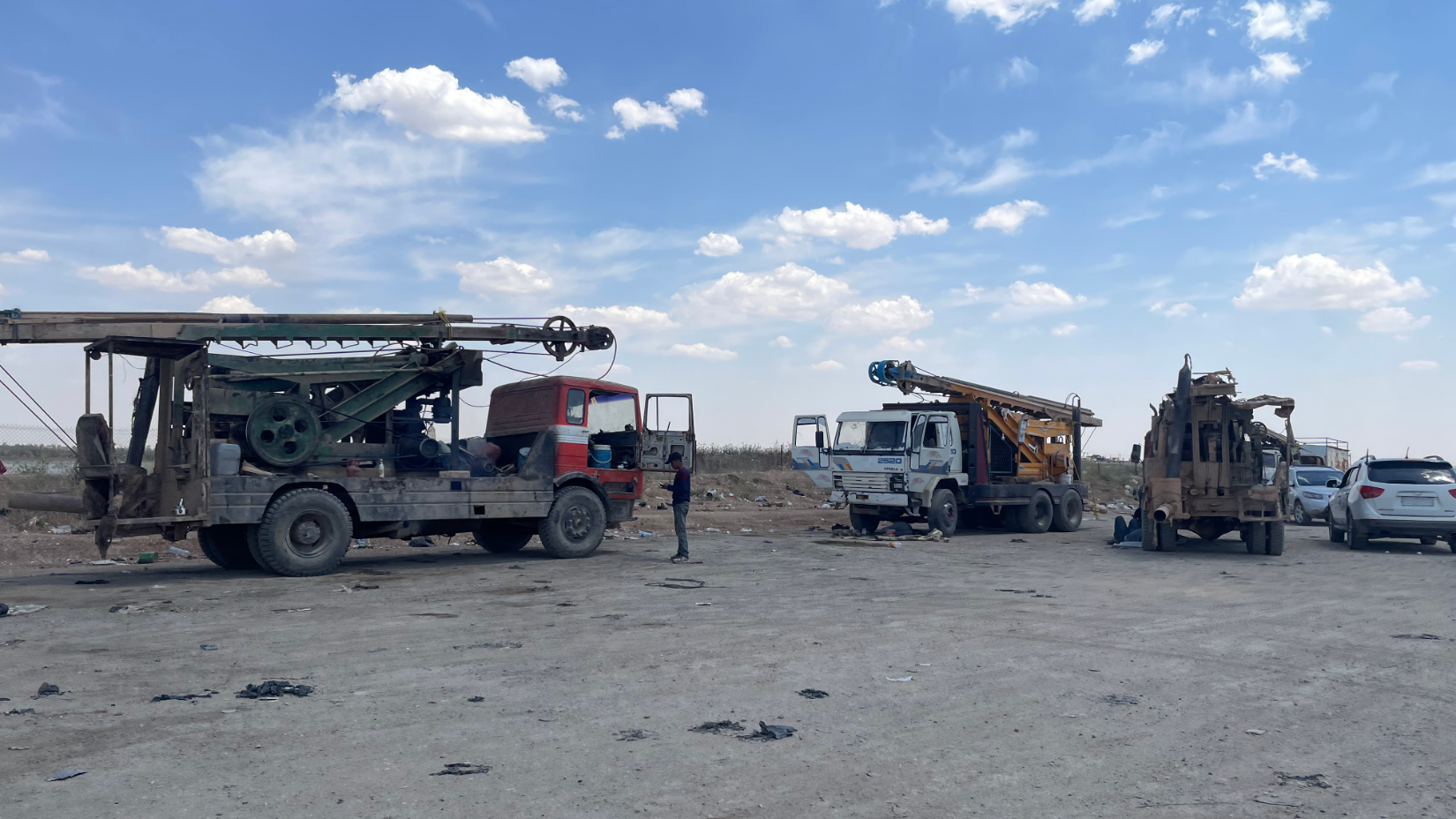
Approaching Qamishli from the west, one passes dozens of well-drilling trucks, some operating in fields and others parked along the main road. According to press reports, the Autonomous Administration has, unlike in previous years, allowed unregulated well drilling. This has been attributed partly to the heavy rainfall Syria experienced this winter and spring, but also coincides with permitting and regulatory bodies slowing down or suspending their work in anticipation of administrative reorganisation and integration.
A local analyst told Syria in Transition that “from the [Autonomous Administration] staff side they don’t really take their job seriously anymore because they are not sure if the [Damascus government] will keep them in these jobs… [and] on the people’s end, they find that the [Autonomous Administration] authorities are not ‘official’ anymore and that they need to be integrated [into the central state] to be legitimate, so they take advantage of this gap.”
The same institutional uncertainty is affecting the Autonomous Administration’s commune system, involving participatory councils from the neighbourhood to the provincial level. Established and overseen by PKK cadres, the communes have partially ceased to function. While they were criticised for lacking autonomous decision-making power and suffered from low participation, they nevertheless provided a mechanism for communal feedback and coordination and helped communicate local service needs.
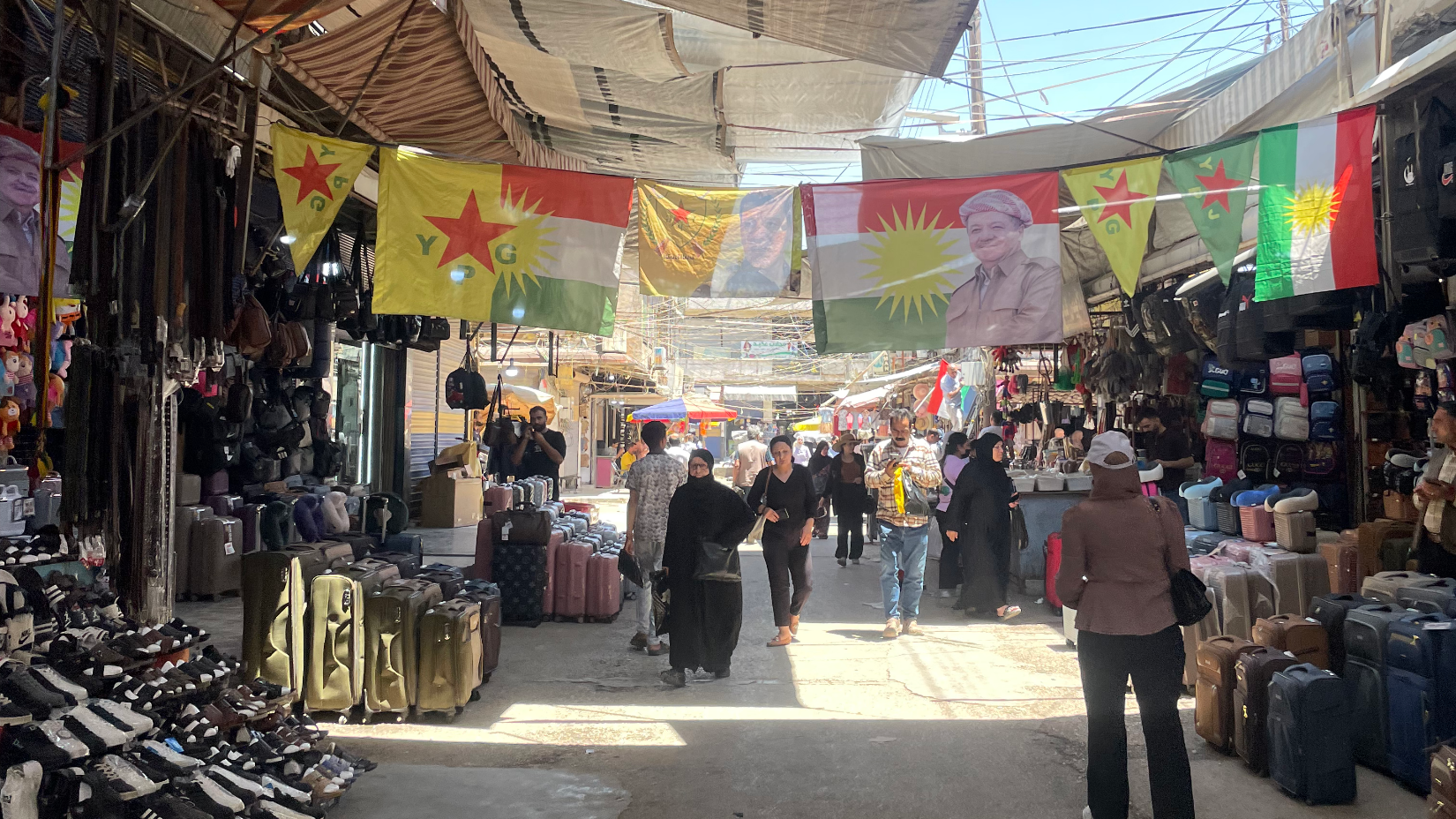
To an outsider, Qamishli feels normal enough and much like the rest of Syria, aside from the different flags and security forces, as well as central Qamishli’s many pedestrian-only areas, including the old souqs; and the partially barricaded streets around church entrances. As in western Syria, conversations quickly turn to the poor economic situation and lack of work, though in recent months the deterioration has arguably been felt more acutely in the north east. Integration is not only about military forces and government offices. It also means incorporating the north east into Damascus’s economic model, replacing the substantial subsidies provided by the Autonomous Administration with the ideologically market-friendly policies of President Ahmad al-Sharaa.
© syriaintransition.com
Feeling the pinch
Consumer goods prices continues to rise in areas still under SDF control. Since officially taking over the Semalka crossing to Iraqi Kurdistan, Damascus has standardised customs duties to bring them in line with those imposed at Syria’s other border crossings. For many goods, the new duties are significantly higher than those previously imposed by the Autonomous Administration, reflecting the transitional government’s heavy reliance on customs revenues.
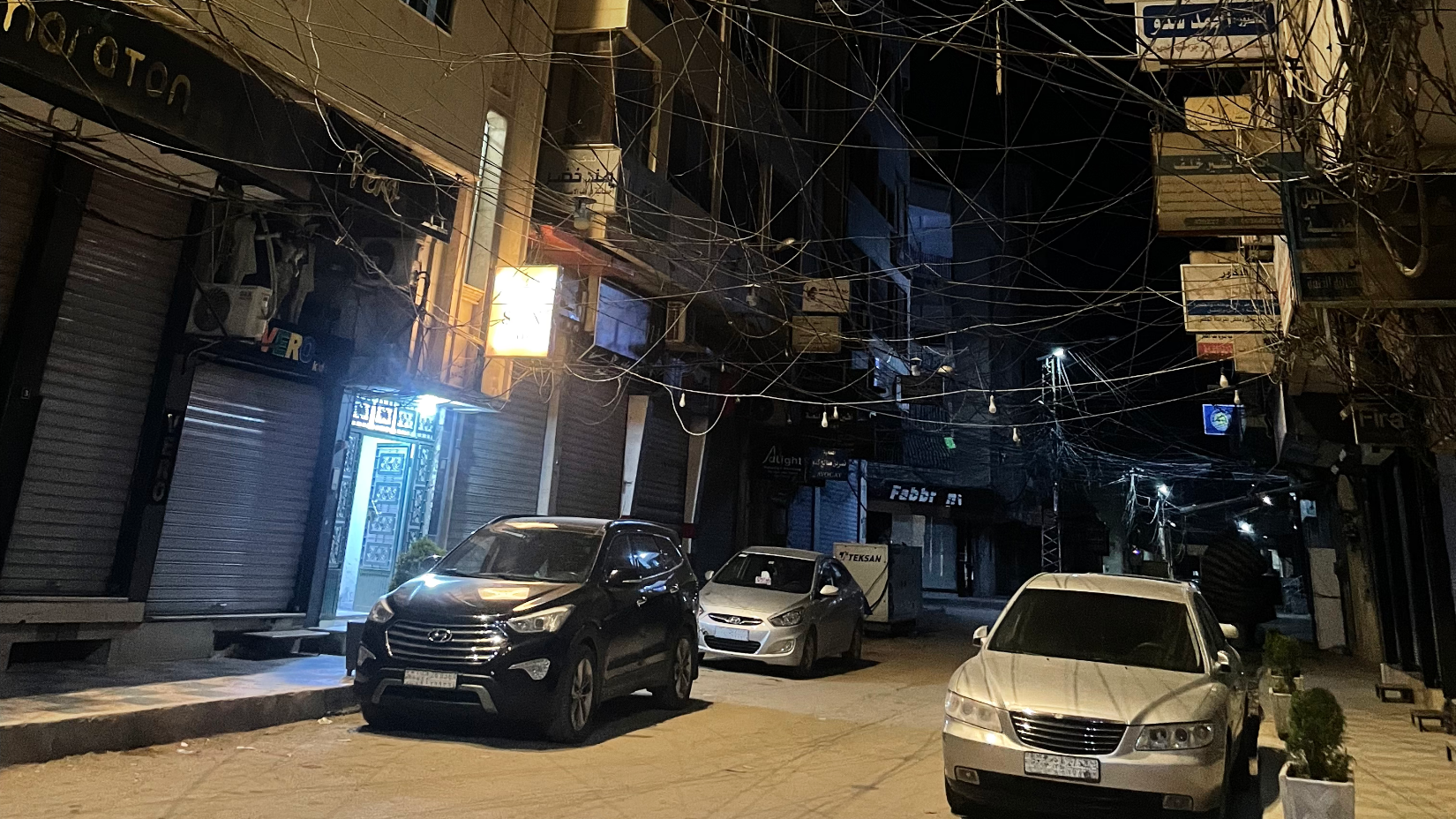
Most significantly, gasoline has become sharply more expensive and simultaneously scarcer. Throughout June protests erupted in Qamishli after the Autonomous Administration cut subsidies to bring gasoline prices in line with those elsewhere in Syria – currently around $1 – and ended fuel allocations previously provided to various service providers. The effects were immediate. Numerous microbuses stopped running, water-delivery trucks suspended operations and neighbourhood generators shut down. Residents have been forced to reduce their electricity subscriptions to keep the lights on, with 24-hour access to one ampere now costing $25 a month.
Alongside the price increases, the gasoline market has experienced significant supply shortages, which in recent weeks have also affected government-controlled parts of eastern Syria. In Qamishli, several explanations are offered. One is that production from local oil fields has been diverted to other parts of Syria. Representatives of the state-owned Syrian Petroleum Company are now present at some of these fields, while seven were recently taken over by the US-based company HKN. Another explanation is that subsidised gasoline was being purchased in SDF-controlled areas and resold in government-held territory, where prices were considerably higher.
© syriaintransition.com
The long road to integration
Beyond these immediate material concerns, many locals have serious misgivings about integration and the prospect of coming under the full control of Damascus. While some have travelled to and from western Syria over the past year and a half, many have not and, rightly or wrongly, continue to view the transitional government as largely run by cut-throat jihadists, as evidenced by last year’s massacres on the coast and in Suwayda. When arriving in Qamishli from Damascus, one is frequently asked what life is like under the transitional government. At the same time, few people want a return to war or the north east’s current limbo to continue indefinitely. Attitudes towards Damascus range from begrudging acceptance to outright hostility. Measures to grant citizenship to stateless Kurds and recognise Autonomous Administration diplomas are naturally welcomed, but they’re widely regarded as a necessary baseline for government behaviour. Trust sufficient to outweigh concerns has not yet been built.
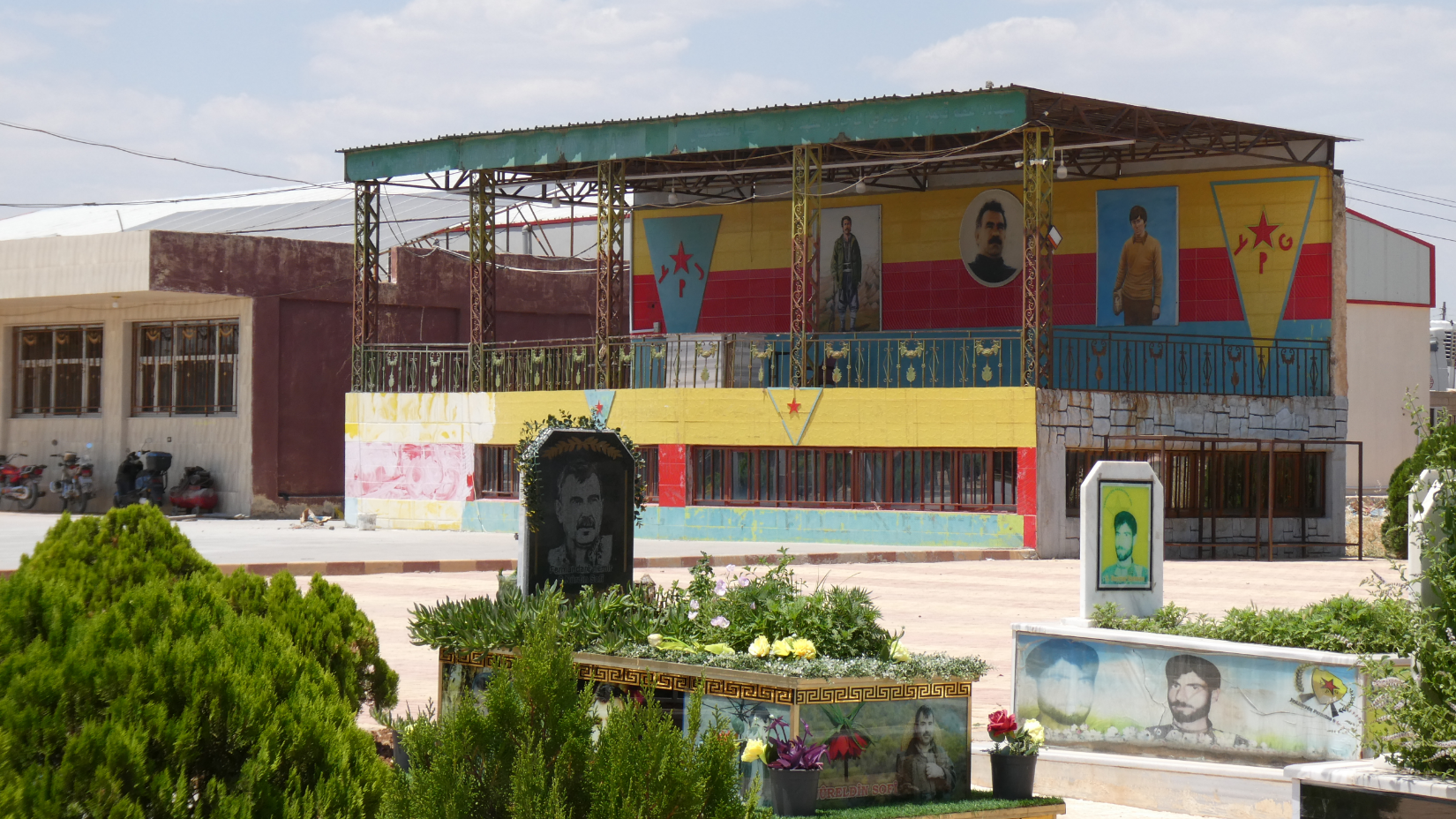
Contrary to the frequent conflation of “the Kurds” with the SDF and its political project, Qamishli offers no single Kurdish view of the key actors. The SDF, now largely reduced to its Kurdish YPG and YPJ core, is regarded by many as a force that protected the Kurdish community and remains a source of nationalist pride. The Autonomous Administration, by contrast, is widely criticised for poor service provision – with both Kurds and Arabs in the north east each accusing it, interestingly, of favouring the other in the distribution of investment. The PYD, the local PKK affiliate at the centre of the political system, remains deeply polarising. Without reliable survey data, its actual level of support is impossible to measure, although it appears to be the most popular individual party in the Kurdish political landscape. Its rivals remain divided, despite many of them being formally allied within the Kurdish National Council.
Yet even some who favour the PYD question how much the party itself now matters. The decisive negotiations with Damascus are not being conducted by party leaders, local councils or the public, but by Mazloum Abdi and the small circle around the SDF leadership. Political parties and the population at large remain firmly in the back seat of the integration process, left to speculate about the terms of an agreement negotiated above their heads while they watch bodies that had governed their lives for over a decade slowly losing authority.