Exit without departure
What’s left of Iran’s influence in Syria?
Assad’s fall has stripped Iran of most of its assets in Syria, but networks remain and could be leveraged to open a new front.
Prior to December 2024, Iranian influence in Syria primarily took three main forms. The first was military: Islamic Revolutionary Guard Corps (IRGC) officers and Hezbollah officers helped recruit, train and command auxiliary 'Local Defence Forces' (LDF) units composed of Syrian fighters, as well as leading a myriad of IRGC-affiliated Shia armed groups from Iraq, Pakistan, and Afghanistan. The second was cultural: the IRGC sought to foster ideological support for the 'axis of resistance', most notably through the 'Aleppo Defenders Legion' that produced literature and organised cultural events, as well as scholarships to study in Iran. The third was religious, primarily a targeting of the country's Twelver Shia community, encouraging them to follow Iran's Supreme Leader Ali Khamene'i as their marja' - a religious authority who dispenses guidance.
These layers of influence often overlapped. Some members of the Twelver Shia community, for example, also enlisted in LDF units. With the regime’s collapse, however, Iranians and their foreign allies from Afghanistan, Pakistan, Iraq and Lebanon swiftly withdrew from Syria.
LDF no more
Most of those who worked with the LDF were not Shia but members of the country's Sunni majority, with some units built around Sunni tribes. Members of the Bekara tribe, for example, formed the Baqir Brigade. The Berri clan in Aleppo fielded the Martyr Ali Zayn al-Abidin Berri Brigade. As the regime fell, these Sunni groups either turned against Iran or simply stood down. Their networks have since aligned with the new government or kept a low profile.
A contact linked to the Martyr Ali Zayn al-Abidin Berri Brigade told Syria in Transition that, as Aleppo began to fall, Haj Khalid of the Baqir Brigade informed the brigade’s leadership that he was coordinating with Hay'at Tahrir al-Sham (HTS). The group initially planned to withdraw toward Homs and then Damascus, but as Homs fell, it instead chose to defect and headed back to Aleppo. There is currently no indication that either group, or what remains of their networks, is secretly coordinating with Iran.
Endurance at the religious level
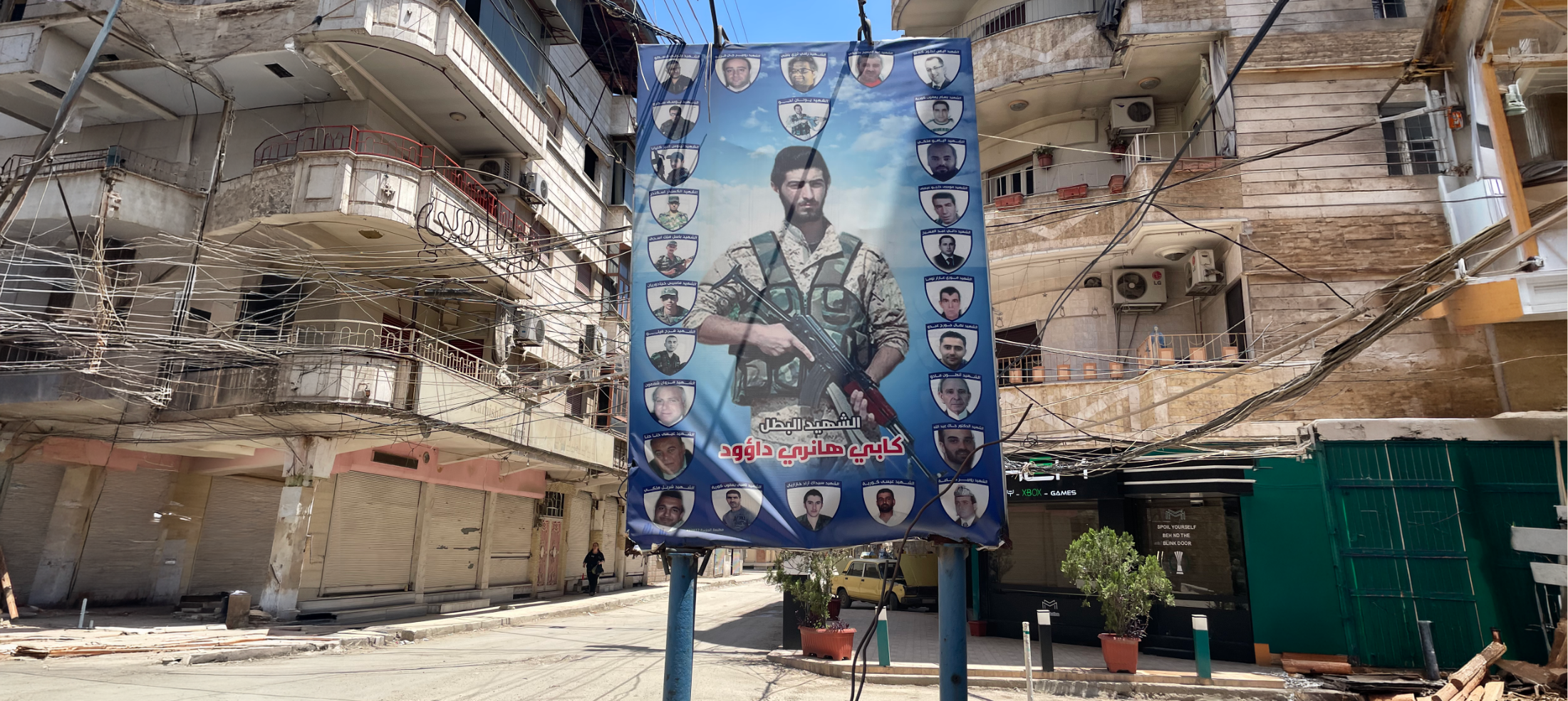
Among the country's Twelver Shia community, the picture is more complex. With the regime’s fall, many Iranian institutions were forced to close, including branches of Iran's al-Mustafa University in Sayyida Zaynab and the Shia town of Nubl in Aleppo province. A cleric from Nubl told Syria in Transition that local religious figures now face increasing financial difficulties as they no longer receive payments from Khamanei's office. Outwardly, the Shia community’s leadership has moved to accommodate with the new authorities. In the 'martyr' cemeteries of Nubl and neighbouring al-Zahra', images of Khamane'i, Qasem Soleimani and Hezbollah symbols have recently been removed from graves and public displays.
At the level of religious practice, however, ties to Iran persist. Many within the community continue to follow Khamanei as their marja’, a position that now extends to his son Mojtaba who succeeded him as Supreme Leader. This was visible during Eid al-Fitr. While Syria officially announced Friday 20 March as the first day of the holiday this year, many residents of Nubl continued fasting in accordance with the directives of Khamanei's office and other prominent regional Shia clerics such as Ayatollah Sistani.
There is also clear sympathy with Iran in its ongoing war with the US and Israel, even if this is rarely expressed openly. There have been instances where IRGC officers who were in contact with residents of Nubl and al-Zahara' have tried to recruit them as informants. However, such efforts are unlikely to bear any meaningful fruit for Iran apart from enabling it to keep a tab on the Shia community's precarious situation.
Alawite insurgents as Iranian proxies?
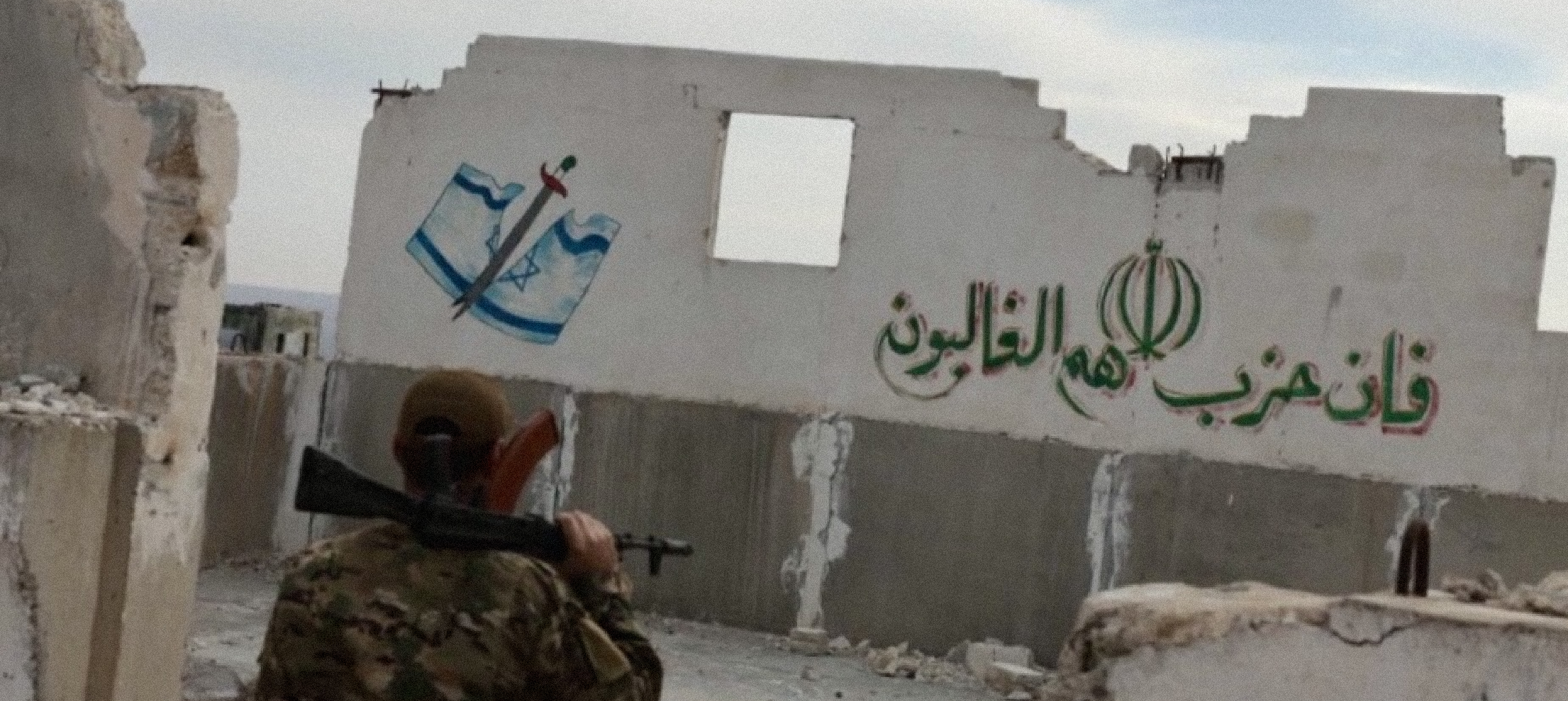
Outward expressions of support for Iran and the 'axis of resistance' are now largely confined to social media, particularly among groups that declare themselves to be in opposition to the new government. One such is the 'Islamic Resistance Front in Syria – Awali al-Ba's' - which is a moniker claimed by two separate entities. The leader of one of those groups, known as 'Abu Mujahid’, told Syria in Transition that his group does not receive support from “the resistance axis or the brothers in Iran, but it has some friends who provide assistance.” The group claims to carry out operations targeting Israel and the United States, including a purported strike in early March against the “American al-Shaddadi base” in Hasaka, from which U.S. troops had already withdrawn. While such claims may well be dubious, they point to the continued presence of small networks and individuals who retain an ideological affinity with the 'axis of resistance'.
Another network expressing support for Iran and the 'axis of resistance' online is 'Coastal Shield', probably the best-known brand of Alawite insurgent groups opposing the new government – although not all Alawite insurgents share this alignment. Mudar Ali, a former Republican Guard member from Jableh and leader of 'The Alawite Resistance', admitted to initially coordinating with Coastal Shield during the March 2025 uprising that culminated in the coastal massacres. Yet he identified Coastal Shield’s alignment with Iran – whose “farcical expansionist projects” he says he rejects – as a key point of disagreement. In his view, Coastal Shield received Iranian support prior to the uprising, though he could not confirm whether such backing continued. Those declaring alignment with 'Coastal Shield' do not openly acknowledge receiving such backing although their ideological affinity with Iran and the ‘axis of resistance’ is unmistakeable.
Hezbollah no more?
Ongoing security operations by Damascus indicate a continued presence of cells linked to Hezbollah, either operating as insurgents against the government or facilitating weapons smuggling. In July last year, the government announced the dismantling of an Alawite insurgent cell in Latakia led by Maher Hussein Ali, who, according to investigations, had received logistical support from Hezbollah. The same announcement declared the arrest of al-Wadah Suhayl Isma’il, leader of Fawj al-Makzun – an Alawite insurgent group linked to the same network and affiliated with Suhail al-Hasan, former commander of the Russian-backed Tiger Forces. The Fawj al-Makzun group ceased activity on social media that same month.
There is also evidence that some anti-government insurgents use territory in Lebanon under Hezbollah influence as a safe haven. Abu Ali Sumer, leader of the Alawite insurgent group Fawj Azra’il al-Jabal, in November 2025 told Syria in Transition that he opposed “Iran’s project” and criticised Tehran for failing to support Alawites during the coastal massacres, even stating he would accept Israeli support if it could genuinely help the Alawites. Despite his stated disdain for Iran, he was reportedly killed in an Israeli strike in Lebanon in March.
Overall, Hezbollah’s hard power in Syria appears largely degraded. But many Syrian Shia from Homs, some of them affiliated with Hezbollah, are now displaced in Lebanon. And there is at least one confirmed case of a Syrian killed while fighting for the group in Lebanon. It appears that these networks may not have disappeared but have shifted geographic focus.
Tactical depth
Claims by former Iranian diplomat Amir Mousavi that “armed groups affiliated with al-Jolani” are now facilitating greater Iranian support to Hezbollah than during Assad’s rule are best read as rhetorical bluster. But that does not mean Iranian influence has vanished. If the war on Iran evolves into a prolonged regional confrontation, including Lebanon, Tehran can no longer rely on the strategic depth it once had in Syria. What remains, however, is a thinner but more adaptable form of influence: ideological alignment and networks built over years through overlapping ties of crime, religion, family and patronage - networks that tend to endure, and can be reactivated when conditions allow.