Currency confusion
Syria’s redesigned bank notes have erased two zeroes and the Assads’ portraits. They have also confused locals and foreigners alike
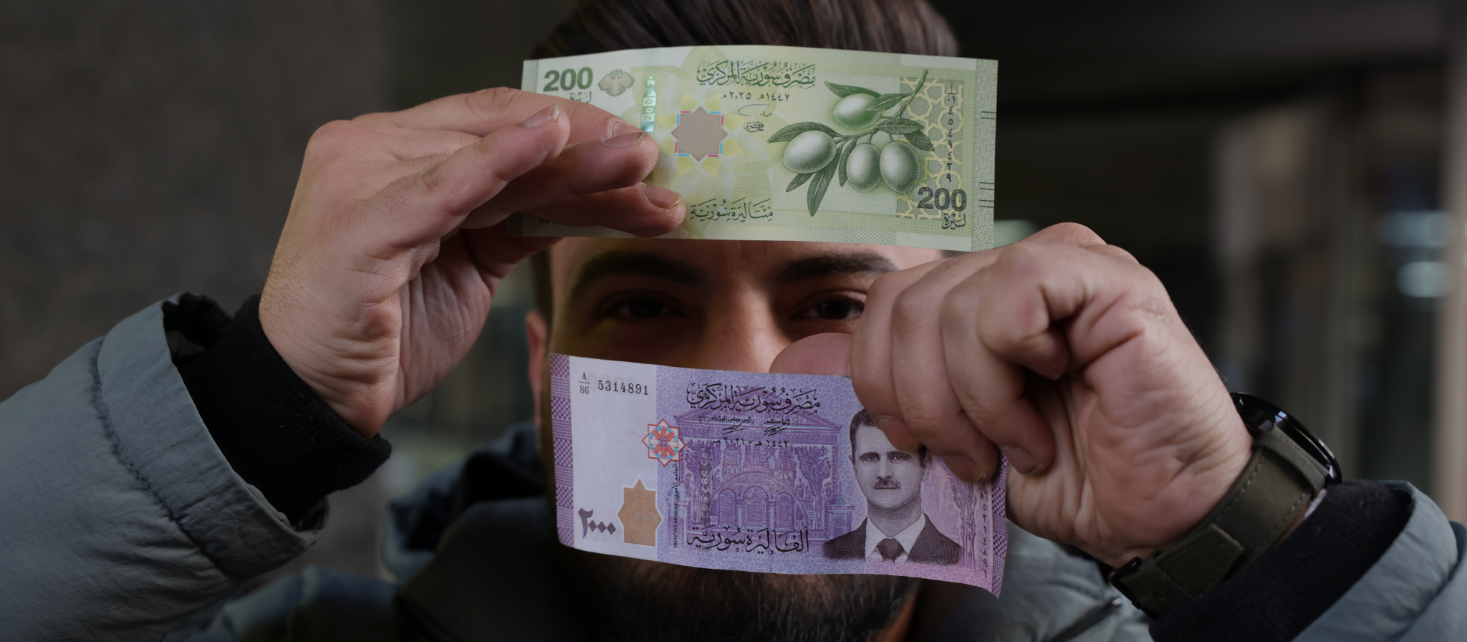
Ahmad al-Sharaa issued a presidential decree formally launching Syria’s new national currency on December 24 2025. A week later, on January 1, a new set of Syrian bank notes began entering circulation across the country. The new notes, with a new set of denominations, replaced Assad-era imagery with designs featuring agricultural and livestock motifs – wheat and sparrow (500 note), olives and the Arabian horse (200), cotton and gazelle (100), oranges and conch shell (50), mulberry fruit and swallow (25), and rose with butterfly (10). According to Al-Sharaa, the move away from designs featuring individuals (Hafez and Bashar Al-Assad featured on the old currency) was “an expression of the new national identity and a move away from the veneration of individuals.”
While the new currency is certainly colourful, and the removal of Assad-family references a refreshing break, some Syrians have criticised the new designs for lacking a sense of history, of occasion and of place; distinct Syrian personality, one might say. The old notes, for example, carried images referencing Syria’s rich cultural, historical and archaeological heritage, such as the Norias (water wheels) of Hama, the Umayyad Mosque and Ugarit and Ebla tablets.
More significant than the designs, however, was the Syrian pound’s redenomination at a ratio of 100:1, effectively removing two zeroes from the currency. After a seven-month transition period – extended from an initial three-months – in which the old and the new currencies operated concurrently, as of 31 July the new currency became the only legal tender in Syria.
Confusing system
As a foreigner living in Syria, the new currency, along with the ongoing legacy of the old currency and the continuation of an existing practice of Syrians using shorthand totals when referring to monetary amounts, makes for confusion.
First, on the shorthand.
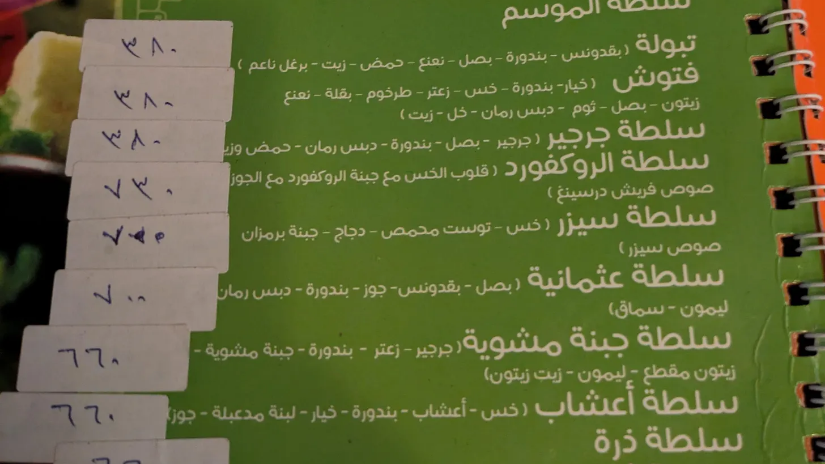
In the main, at least outside official institutions like banks, Syrians use a shorthand when referring to monetary amounts. Let’s say that under the old currency, before the redenomination, a kilo of fruit cost 75,000 Syrian pounds. On the street, and in common parlance between Syrians, that value would be referred to as simply 75 (khamseh wa saba’een). The three zeroes would be ignored verbally and as a way of understanding value, but a quantum of 75,000 pounds would still change hands. Under the new currency, that same kilo of fruit is now officially worth 750 pounds, but the same shorthand number is used (75). 75,000 used to be 75. Now 750 is 75. Depending on the circumstance, all three might be used to refer to the same value.
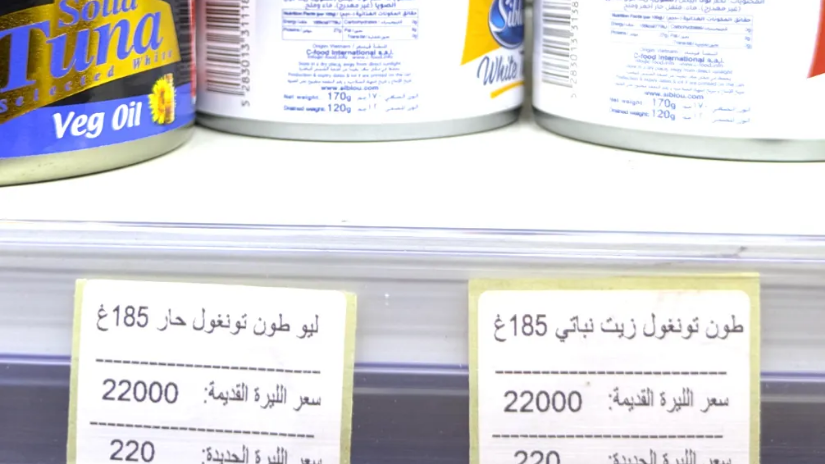
Mastering the shorthand system can be a challenge. A foreigner asking a seller in Arabic how much something costs may be given the shorthand figure and, unfamiliar with the actual value of the goods, hand over precisely that amount in new notes – 60 pounds, say, for something costing 600. The seller then has to translate between two currencies and one shorthand convention to explain what is actually owed. Still following?
The shorthand system is not restricted to Arabic-speaking Syrians. Tourists speaking in English may find themselves confronted with Arabic shorthand amounts, English new currency amounts, or a combination thereof. Ask for the price of a litre of water in the heart of Damascus’s Old City and the answer may be “sab’a” – seven in Arabic – quickly followed by “seventy” in English.
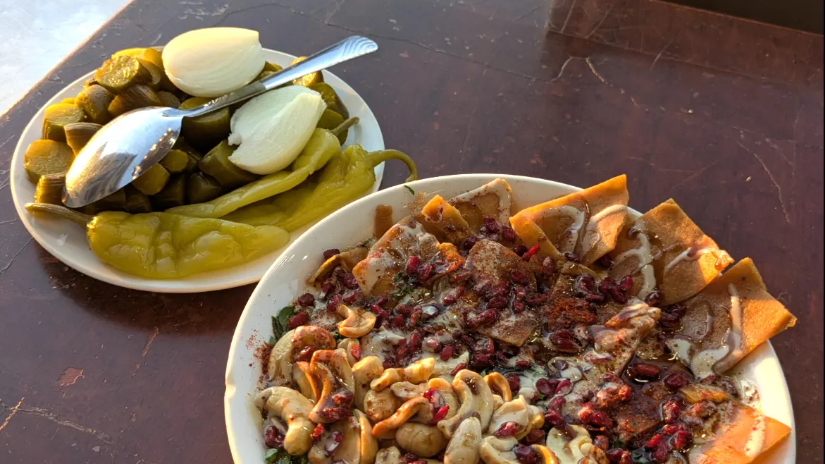
The shorthand system is also confusing in reverse. Syrians are so accustomed to the shorthand that new currency amounts can befuddle them. After a foreign visitor paid 450 new Syrian pounds – about US$3.70 – for a bowl of fetteh in Mezze, he later asked a Syrian friend whether the price was reasonable. “You paid 450 for a bowl of fetteh?! Why didn’t you call me? You paid too much!” came the response. A second later, the penny dropped: “Oh, you mean bi al-jadeedeh!” – by the new currency. “Yes, it’s a good price, I think.” She had instinctively interpreted 450 as shorthand, which would have meant roughly US$37 for breakfast. Anyone would have been shocked.
The missing five pound note
The absence (currently) of a 5-pound note (about 4 US cents) is also causing issues. Buy a litre of mango juice priced at 180 new Syrian pounds and hand over 200, and the change may be 25 rather than 20 simply because the seller lacks two ten-pound notes. The opposite happens too: 30 pounds owed in change may become 25. There is talk that a five-pound note will eventually be introduced, making smaller transactions easier. There is certainly demand for it.
Anecdotally, the absence of a 5-pound note is a big issue for Syrians. Asked about the missing denomination, an economics student at Damascus University was unequivocal. “We need it”, he said. “The government said they will do it, but it’s the government”, he said dismissively. Asked whether people actually wanted the note, his answer was equally clear: “Yes, we need it.” A local dukan owner agreed, “It’s a big problem. It would help with small transactions.”
Change and continuity
For now at least there’s no sign that the redenomination of the Syrian currency will bring the shorthand system to an end. Asked why he continued using shorthand instead of stating prices in the new currency, one fruit seller offered a straightforward explanation: “If I tell people the amount in the new currency, they will think my fruit is expensive.” Fair enough.
Nor has the introduction of the new currency changed the dire economic reality faced by Syrians. A satirical meme that spread following the introduction of the new currency gestures at this, with a humorous Damascene voice seeking a loan asking “give a few olives” and “lend me some wheat”, a mocking reference both to the agricultural produce that beautifies Syria’s new bank notes and its inability to alleviate existing economic hardship. Satirical redesigns of the notes suggesting a more accurate representation of Syria’s cultural heritage can also be found online, with a fulsome plate of mashawi (grilled meat) replacing wheat on the 500-pound note, and a large bowl of fattoush replacing mulberry fruit on the 25-pound note.
One thing is clear: Getting more wealth into Syrians’ hands will be a more meaningful marker of progress than redesigned and redenominated banknotes – and, unfortunately, a much harder one for Syria’s transitional government to achieve in the short term.