What the Knesset elections mean for Syria
A conversation with Ksenia Svetlova
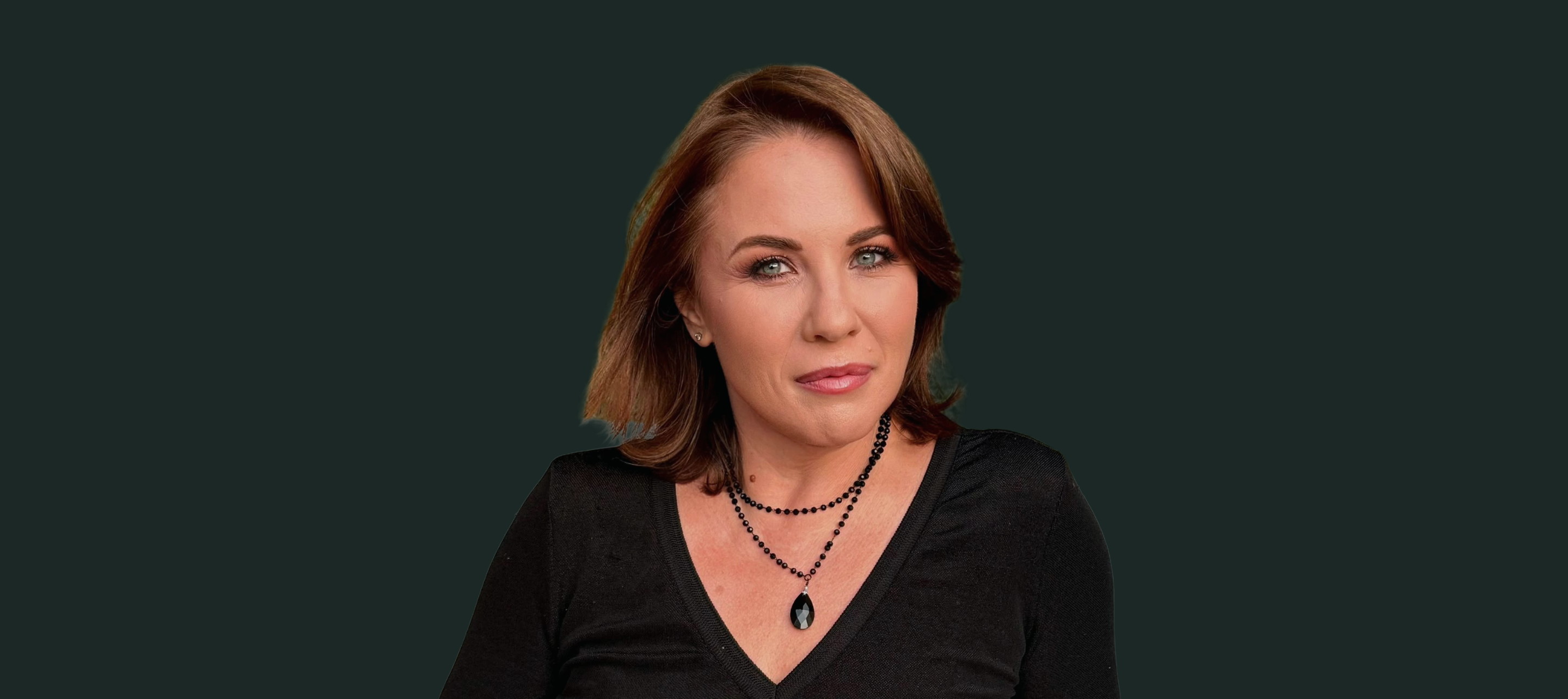
Knesset elections on 27 October will decide whether Israel continues under the leadership of Benjamin Netanyahu and his Likud Party, or whether a new coalition takes over. To learn more about what a change in power could mean for Israel’s Syria policy, and the prospects for Israeli-Syrian relations more broadly, Syria in Transition spoke with Ksenia Svetlova, Executive Director of the Regional Organisation for Peace, Economics & Security (ROPES), which brings together Israeli and Palestinian leaders with Arab actors. She is also a policy fellow at the Israeli Institute for Regional and Foreign Policies and an associate fellow at Chatham House.
An omnipresent description of Ahmad al-Sharaa in the Israeli press and political establishment is that of a “terrorist in a suit”. Is that view prevalent across the Israeli political spectrum, or could a Netanyahu defeat in the upcoming Knesset elections lead to a noticeable shift in Israel’s approach?
Svetlova: Currently this description is quite prevalent across the political spectrum, and there is mainly a lot of suspicion not only about Al-Sharaa’s motives, but also about the Syria-Turkey alliance as a potential threat to Israel’s security. It’s important to note that the negative approach derives from both the security establishment and the politicians. At the same time, if a different government is formed after the October elections, and this government will not be led by Netanyahu, chances are that the policy towards Syria can slightly change. For example, the negotiations can become more intensive, and there could be more room for quiet cooperation in both security and economic fields.
How significant is the financial cost of Israel’s operations in Syria? Building and maintaining military infrastructure is expensive, troops have to be deployed, and reservists are taken out of the civilian economy.
Svetlova: Israel still has all of its fronts open – in Gaza, in Lebanon and in Syria. It also has thousands of soldiers in the West Bank busy with policing the local population. If you count all of these expenses together, they are of course enormous. However, I don’t think that it is the costs of the Syrian operation that would make the decision makers change their minds, as currently the operation is quite limited and there is no public uproar about its financial or human costs.
Yashar promises a new national-security doctrine, replacing what it calls the current government’s “Band-Aid approach” with a more coherent regional strategy. What would that actually mean in practice for Syria?
Svetlova: Both Yashar and Be-Yahad (Bennet-Lapid) speak about a coherent regional strategy. The leaders of these parties have good ties in the Arab world, they are attentive to them and would like not only to expand these ties, but also make them more stable and deep. In case the anti-Netanyahu bloc will win a majority, or if it creates a minority government supported by the Arab parties, we will definitely see an attempt to restart the relationship with many regional actors, including Syria. A security agreement with Syria will become more probable, as many potential stakeholders have spoken favourably about it in the past. However I do expect that it will take time as this government will be constantly attacked by the extreme right and it will also have to navigate the Druze issue. In short, Syria will hardly be the first item on the new government’s agenda, and it will take time to do any progress. At least for a while any new government will maintain the current policy.
Ahmad al-Sharaa said in September that US-mediated negotiations had come close to producing a security agreement, but that Israel ultimately pulled back. The Israeli side has disputed that account, and the speeches by both leaders at the UN General Assembly did not exactly suggest that the two sides were moving closer together. Where do talks between Syria and Israel stand at this point?
Svetlova: As I was not a part of the negotiating team, it’s really difficult for me to say what exactly went on in the negotiating room. As an analyst I can say that it was clear that there is absolutely no room for any kind of agreement with Syria prior to the October elections. Everything is political right now, and everything is connected to 7 October. I could not imagine any kind of agreement that would stipulate that the IDF has to pull back its forces from Syria, as it would be portrayed by the prime minister’s opponents – even some parties in the opposition – as a defeat. So although it’s believed that a security agreement with Syria should not be a complicated affair, what complicates it is domestic politics. After the elections, should the government change, there will be immense pressure on the new cabinet not to withdraw from Syria, Lebanon, and Gaza, but the prospects to promote such an agreement will grow.
So what you are saying is that continued occupation is the most likely scenario, and Israel may be open to discreet security and economic arrangements within that new reality. That would be a tenacious status quo. Do you also see the possibility that Israel could escalate further by occupying more territory or otherwise enforcing a “demilitarised southern Syria”?
Svetlova: If the current government replicates itself the chances for escalation will grow, as it keeps pushing the violent and expansionist agenda. In case of a change, I do not see much appetite for an escalation, given that the situation in southern Syria will not deteriorate. The discreet arrangements might actually come as a gesture of goodwill and an attempt to test the waters before jumping into a security agreement.
The Druze question looms large over any prospect of Israeli-Syrian rapprochement. Hikmat al-Hijri’s pursuit of independence for Suwayda seems difficult to realise, both legally and practically. Damascus, on the other hand, insists on its right to enforce state authority in Suwayda, but has yet to offer a convincing path towards genuine reconciliation – and its room for manoeuvre is constrained by Israel’s military sway. How do you envisage the Druze question being resolved?
Svetlova: It’s hard for me to imagine that the ‘Bashan project’, as it’s referred to by Al-Hijri, as well as by the extreme right here in Israel, will ever materialise. The Druze population in Syria is a part of Syria and they have to be protected by the Syrian state. What happened in Suwayda in 2025 is horrific, and it should not happen again. As for the perception of the “Israeli shield” for the Druze: first of all, Israel didn’t intervene to help the Druze against the Nusra front during the civil war, nor when Sheikh Al-Balous was murdered in 2015 in Suwayda. Also any kind of protection for the Druze will only have a tactical form, rather than a strategic one. I’m sure that Israel, which has a sizeable Druze population with close ties to their Syrian brethren, could do much more to help the Druze community rebuild through diplomacy than through military means, particularly if it develops closer and more stable ties with Damascus.
The rhetorical confrontation between Israel and Turkey has intensified over the past few months. One argument often made against taking the prospect of a serious confrontation too literally is that Turkey continues to facilitate large-scale deliveries of Azerbaijani crude oil to Israel via the Baku–Tbilisi–Ceyhan pipeline. How do you square that?
Svetlova: The relations between Israel and Turkey go up and down, and until very recently there was significant trade between the parties, even when Ankara declared that it will cut all relations with Israel. Nevertheless, the embassies are still operating in Ankara and in Tel Aviv, some trade is ongoing, and there is of course the Azerbaijan factor that you mentioned. I do not underestimate the danger of the Turkish support for radical Islamist movements across the region, including Hamas, but I do believe that there is no interest in direct military confrontation, on either side. Things will never go back to what they were before Erdogan, at least not for the next few years, but there is still room for de-escalation – with the help of the US, Azerbaijan and some Arab countries.
What do political analysts most commonly misunderstand about Israeli-Syrian relations?
Svetlova: I do think that many in Israel have completely missed the point of view of the Syrian population: the fatigue with the conflict, and with Assad-era rhetoric about Israel. So instead of trying to give this relationship a fresh start, our government and whoever advises it continued with the same “enemy country mode”. I think that we have missed a chance for a pro-peace campaign, and with the current policy of the Israeli government we might miss it altogether.
There are a lot of open questions about the future of Israel-Syria relations and a lot of uncertainties about the nature of the new regime and its intentions. But I think that it’s in Israel’s interest to make sure that Iran does not return to Syria, and that the Syrians will have a chance to rebuild their lives after the horrific civil war. Israel can actually be instrumental in that – it’s one of Syria’s immediate neighbours with immense knowledge in modern agriculture, water management and technologies. At the end of the day, we are neighbours. We can choose to be good neighbours, or neighbors who keep fighting and killing each other. The future is in our hands today.