Syria Business Diary – October 2026
The first letter of credit in 14 years, and no cheap diesel yet
October brought Syria's first letter of credit in 14 years and a new chief at the oil company. Burhan, a lighting trader in Damascus, and Khaled Mahmoud, a microbus driver from Quneitra, both spoke to us in September. Burhan still cannot pay his suppliers through his bank, and Khaled has yet to see the cheaper diesel he was promised. Our Business Diary follows Syria's economy from government announcements and billion-dollar deals to prices, wages and transactions on the ground.
Banking and finance: the first letter of credit in 14 years
For the first time in 14 years, the Central Bank has opened a letter of credit, to pay Saudi Aramco for 65,000 tonnes of diesel. The first tanker, carrying about 64,000 tonnes, reached the Banyas terminal on 19 October. JP Morgan helped confirm the letter of credit, a Syrian energy official said. The bank declined to comment. Aramco made the sale in a month when it had cut European buyers off its October crude after attacks on its pipeline to the Red Sea. By late October it was close to a $10 billion credit line with a group of banks that included JP Morgan. Central Bank Governor Safwat Raslan wrote on 11 October that the deal mattered less than "rebuilding trust and reopening banking channels" that had been out of reach for years. A week earlier, on 5 October, his delegation met the Federal Reserve in New York to discuss the Central Bank's account there.
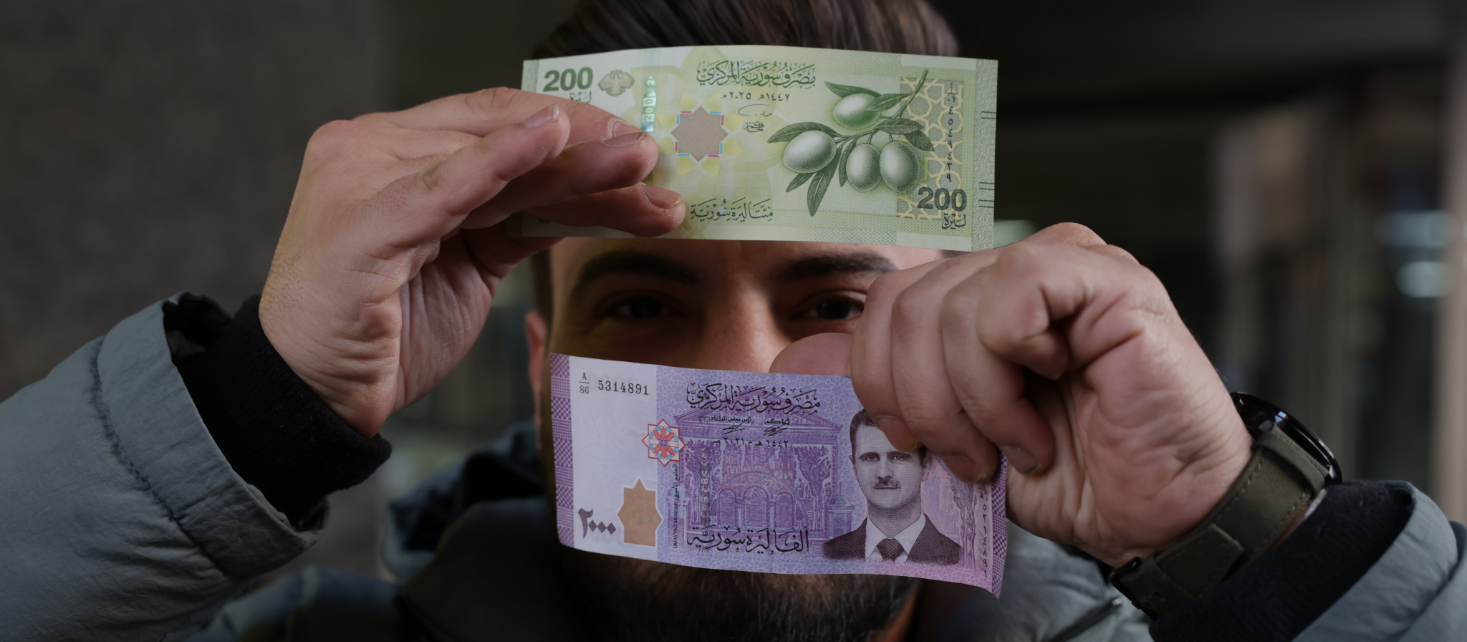
Private importers are still waiting, a month on. Burhan, whose lighting showroom in Damascus's Sanjaqdar market supplies several lighting shops in Rural Damascus, told Syria in Transition in September that he hoped to pay his Chinese suppliers "directly and officially" through his own bank. Nothing has changed, he said this week. He has accounts at the International Islamic Bank and the Real Estate Bank, and neither offers transfers abroad or SWIFT. More than six Syrian banks had resumed commercial dollar transfers abroad by late September. Burhan's two are not among them. At home, the Real Estate Bank asks for his commercial register and ID just to withdraw 10,000 new pounds (about $69 at the market rate) a week.
His partners in the UK and the US wire the money to China from their own accounts. A recent $150,000 payment cost him $45 that way, he said. Through a Syrian remittance office the fee would be 6 to 8 percent, which "completely drains the profit margin." He also pays about $5,000 to ship a container of goods worth $18,000. The Chinese embassy's visa office, which once let him travel easily to meet suppliers, has been shut since the fall of the Assad regime. Reopening was promised for the start of October but failed to occur.
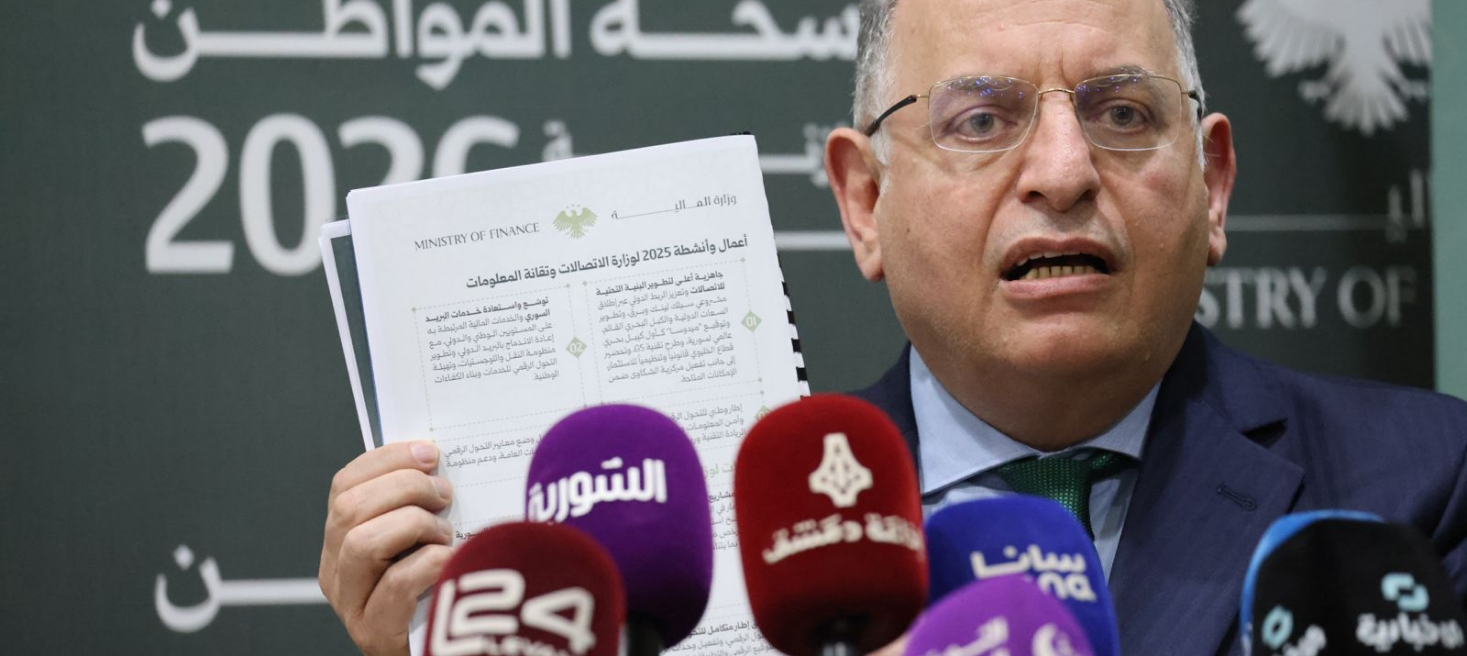
Syria left the IMF and World Bank meetings in Bangkok with commitments of nearly $900 million in grants and loans. At the meetings, held from 12 to 18 October, Finance Minister Mohammed Yisr Barnieh discussed how to use $493 million in World Bank grants, and import financing with the Arab Monetary Fund. The Saudi Fund for Development approved six projects worth $406 million in soft loans, to be signed soon. The grants and loans go to government projects. Syrian officials also held first talks with JP Morgan, Bank of America and two Japanese banks. On 1 November Syria joined the World Bank's Arab Group constituency.
Syria's 2027 budget has yet to reach the People's Assembly. In the first half of 2026 the government spent about $3.7 billion and collected $2.7 billion. In late September, Mr Barnieh put this year's deficit at about $1.8 billion, and added that the presidency had told ministries to cut spending and defer projects. He said the budget would be finalised in October. On 21 October he told Assembly committees it was in its final stages, and the two sides agreed to meet monthly. It is not yet clear how much say the new Assembly will have.
By 2024 the civil war had cost the Syrian economy about $1 trillion, according to the Syrian Center for Policy Research. The cumulative figure includes lost output, factories and infrastructure destroyed or left idle, and growth that never happened. It does not include the cost of reconstruction. Annual output fell by about two-thirds between 2010 and 2024, the center's Rabie Nasser said on Ala Blata ("Straight Up"), an Arabic video series that explains economic issues in plain terms, in an episode posted on 28 October. He said that even that understated the damage, because Syria had been growing at 4 to 5 percent a year before the war.
Bread and prices: shortages in Hasakah, no WFP bread
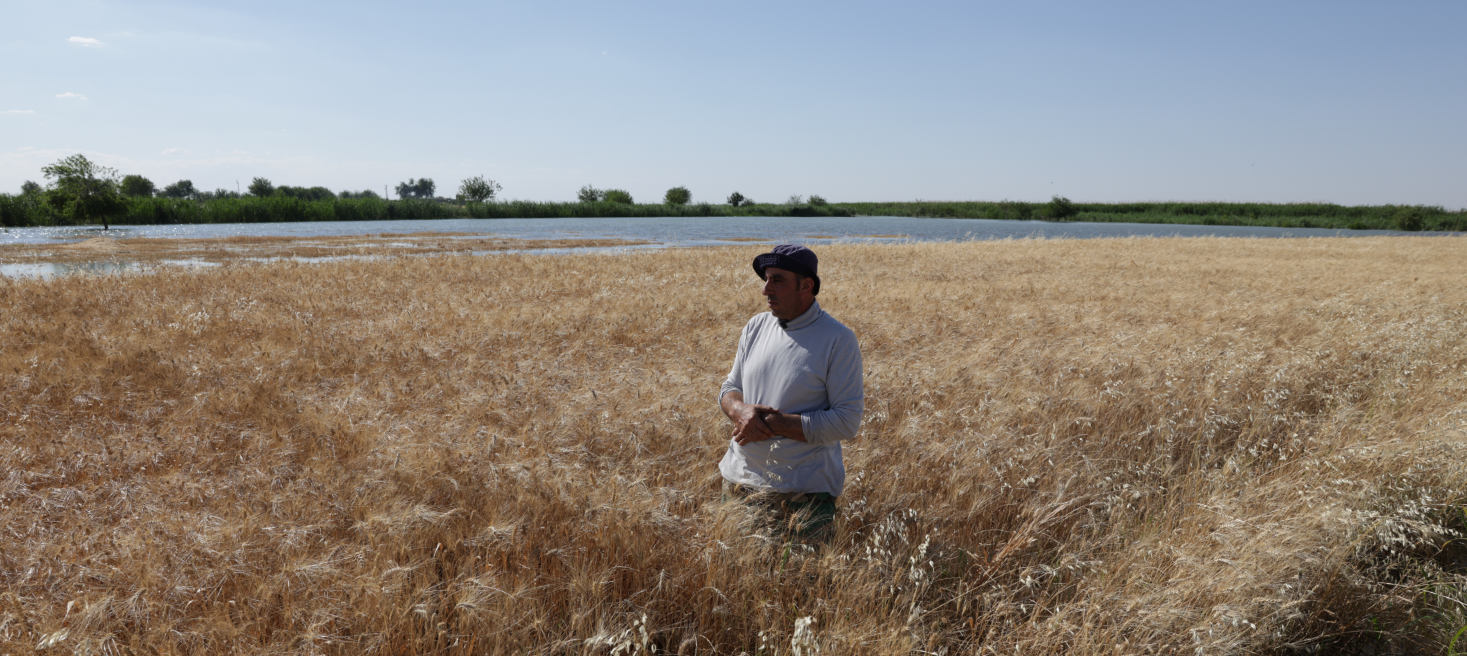
Subsidised bread still costs 40 new pounds (about 28 cents) for eight loaves weighing a kilo, the size set in June, when the bundle went from ten loaves to eight. On 17 October residents of rural Hasakah reported a bread shortage, rising prices and queues, and farmers in the Jazira said on 6 October that wheat payments were late and some might not plant. The government paid 55,000 new pounds (about $380) a ton for wheat this season, including a bonus, and irrigation alone can account for 20 to 50 percent of a grower's costs.
WFP's subsidised bread program, suspended early this year for lack of money, has not restarted. It supplied flour to 300 bakeries serving about two million people. Bread prices rose around 18 percent after it was stopped, WFP Syria Country Director Marianne Ward told Syria in Transition.
WFP now reaches far fewer people – over 619,000 with food and cash in August. It has put its money into the supply chain instead, rehabilitating 14 bakeries and three silos this year and 44 bakeries since 2020. "As winter approaches, many families face difficult choices between buying food, heating their homes, and meeting other essential needs," Ms Ward said. WFP estimates 7.2 million Syrians are acutely food insecure.
Consumer prices rose 8.1 percent in September, up from 1.8 percent in August, the Syrian Center for Policy Research found in its monthly bulletin. Prices rose in all 14 governorates. After the 13 September fuel decision, diesel rose 45.5 percent on average and gasoline 29.9 percent. Bus and shared-minibus fares went up 32.6 percent, to about 44 new pounds (31 cents) a trip. Fuel, housing and transport made up about 87.5 percent of the month's inflation. Food followed: cucumbers rose 19.2 percent, potatoes 18.8 percent and tomatoes 14.7 percent. The pound slid from about 132 to the dollar on the eve of the fuel decision to 143 by the end of October.
Investment and trade: tariff cuts and a border closure
Decree 188, issued on 12 October, cut customs duties on energy equipment, including generators, transformers, cables and wind turbine parts, on industrial machine parts and on some medical equipment. The financial analyst Abdul Hamid Qatlan told Al-Watan it "represents an important step to move the economic wheel and encourage industrial and commercial investment." He warned that it "may reduce customs revenues in the short term."
The Nassib crossing with Jordan, Syria's main land route to the Gulf, closed for a day. The General Authority for Borders and Customs shut it on 27 October after Jordanian airstrikes in Daraa the night before. Hundreds of trucks, cars and buses were backed up about three kilometers on the Jordanian side, Jordan's Al-Mamlaka TV reported. Traffic returned to normal the next morning, after the two foreign ministers agreed to set up a joint security committee. Jordan's exports to Syria rose 28.9 percent in the first eight months of the year.
Syrian fruit and vegetables bound for the Gulf travel that road. The Damascus wholesale market sent about 15,000 tons of fruit and vegetables to Gulf countries in September, most of it by refrigerated truck to the UAE and Saudi Arabia. Saudi Arabia is Syria's biggest export market, and sales there rose 17 percent in the first five months of the year.
The Hasya industrial city has granted 29 administrative licenses this year, out of 39 applications. This month a factory in its engineering zone went up for sale. "The factory is now just a warehouse, unfortunately," the owner's son, Abdul Rahman al-Sayfi, told Syria in Transition. Three new industrial cities in Raqqa, Idlib and Daraa will cost about $760 million, the industry ministry says.
EBLA Ventures led two Syrian startup rounds in two days. Alo Hakeem, a home healthcare platform based in Aleppo, raised about $165,000 in a round led by EBLA Ventures, announced on 12 October. It came through Maynger Ventures' ChangeMakers program and plans to launch its app in November. The next day Salehli, which matches customers with plumbers, electricians and other tradesmen, closed a $100,000 round, also led by EBLA, with Maynger taking part. It says it has more than 15,000 users and 3,500 verified professionals and plans to expand to cover more Syrian cities.
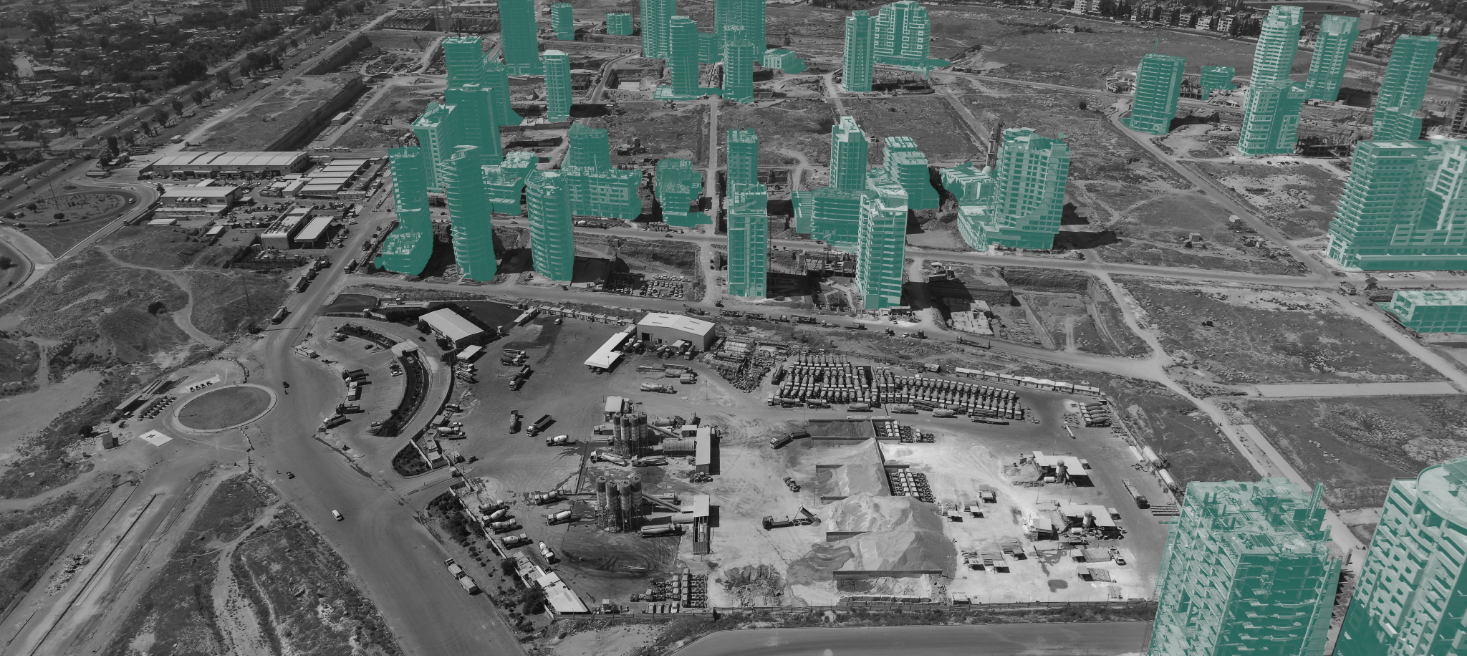
Eagle Hills signed for more than 14 million square meters of land in Damascus and Latakia on 5 October. The value of the framework deal with the government, for 10 million square meters in Damascus and 4.3 million in Latakia, was not disclosed. Eagle Hills is the Abu Dhabi developer founded by Mohamed Alabbar, who built Dubai's Emaar. Its Belgrade Waterfront project drew protests in Serbia over a lack of transparency and public consultation.
The next day, the Old Damascus directorate closed Khan As'ad Pasha, the 18th-century caravanserai in the spice market, pending a decision on its future. It reopened on 7 October, and the directorate said a plan to turn it into a hotel had been dropped. Activists had objected that a tender had been drawn up with no public debate and no named investor. The khan answers to four authorities, the governorate and the ministries of culture, tourism and religious endowments, which still write to each other on paper, the activist Fadi Zidan told Asharq Al-Awsat. Accor is in advanced talks on two hotel projects in Syria, Wyndham is scouting Damascus and the coast and Minor Hotels is studying old houses in Old Damascus as small heritage hotels. Visitor arrivals more than doubled to 3.52 million in the first half of the year. Of these, 2.13 million were Syrians living abroad.
Fuel: a new oil chief, and still no heating diesel
The head of the Syrian Petroleum Company was replaced on 18 October, five weeks after fuel prices rose. Youssef al-Qablawi left after a scandal over adulterated gasoline, and Decree 190 named Maher Khalil al-Hassan chief executive. Mr al-Hassan, a petroleum engineer who once ran oil fields east of Homs, had been deputy minister of economy for internal trade. On 13 September, the day fuel prices rose, he promised that bread prices and weights would not change.
An American company is now pumping oil in the northeast. HKN, partnered with Qatar's UCC Holding, has taken over eight fields around Rmeilan in Hasakah that the Kurdish-run Jazira Oil Company ran after 2011. It signed a 25-year deal with the Syrian Petroleum Company in April. The aim is to raise output from these fields from just over 100,000 barrels a day to about 250,000 by the end of 2027.
When we spoke to microbus driver Khaled Mahmoud in September, he had been told that cheaper diesel might reach his station within two months. The ministry announced the 150-pound ($1.04) transport grade at the end of September. Neither it nor the 115-pound (80-cent) heating diesel has reached any station he uses, and he knows no one who has received either. As of 2 November, heating diesel had not been handed out anywhere in Damascus or Rural Damascus. "Government promises to provide subsidised heating diesel remain nothing more than talk," he told Syria in Transition. On Sunday he and his son Majd split shifts on the microbus and filled up at 175 new pounds ($1.22) a litre, the price since September, at a station in Qaboun. Fares have not moved either. He saw on the news that Saudi diesel had arrived for provinces short of fuel, but it has not changed what he pays.
At his home in Jubata al-Khashab, a village in the foothills of Jabal ash-Shaikh (Mount Hermon) in Quneitra governorate, the station sells only gasoline and the same diesel. He has cut dead trees on his land for the stove, but the family hasn't lit it yet, fearing that if they burn the wood too early they might run out before spring.