Popularity contest
The government’s strategic communication campaign was once brilliant. It’s now failing.
The sophisticated media campaign that once made HTS’s ascent appear disciplined, pragmatic and even socially palatable is now showing signs of fatigue – and, increasingly, of disconnect from the realities on the ground.
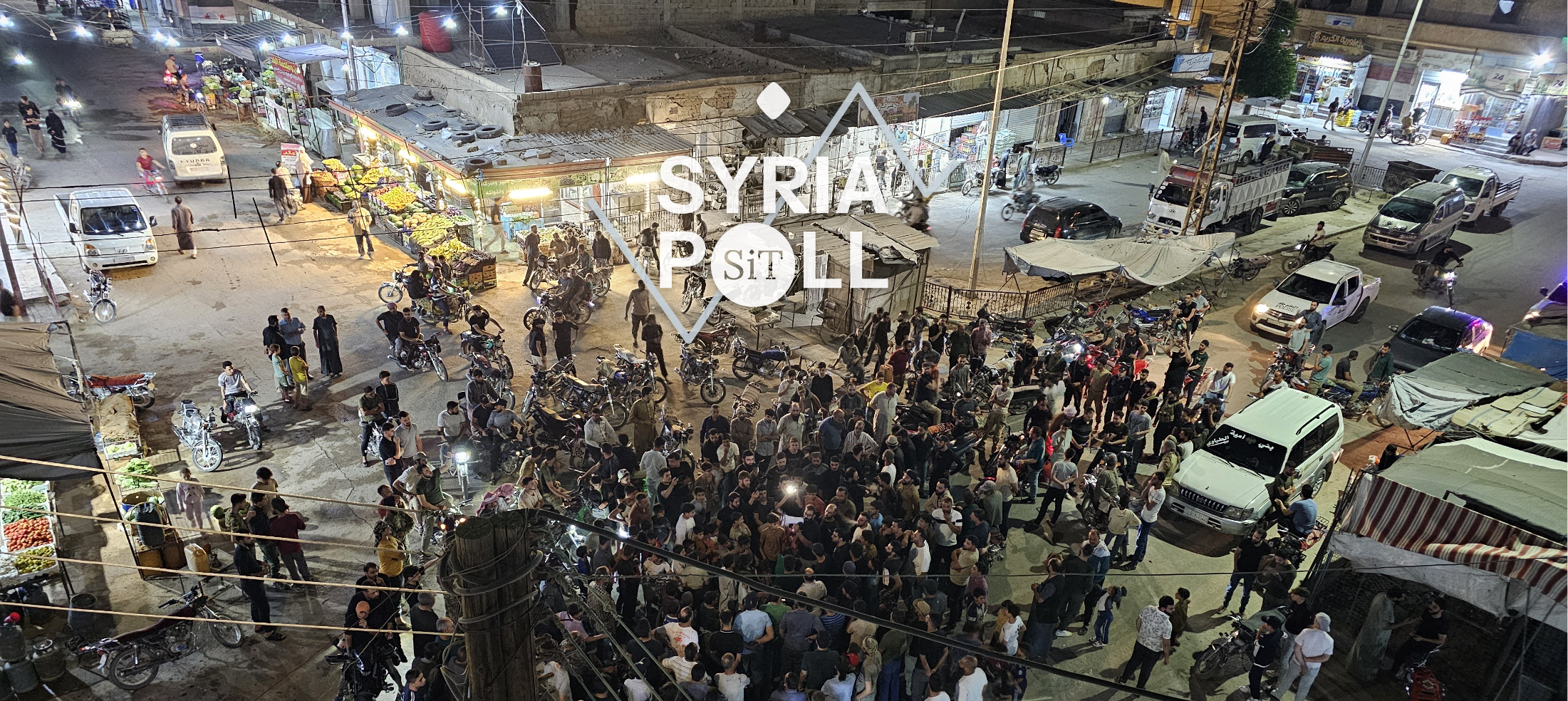
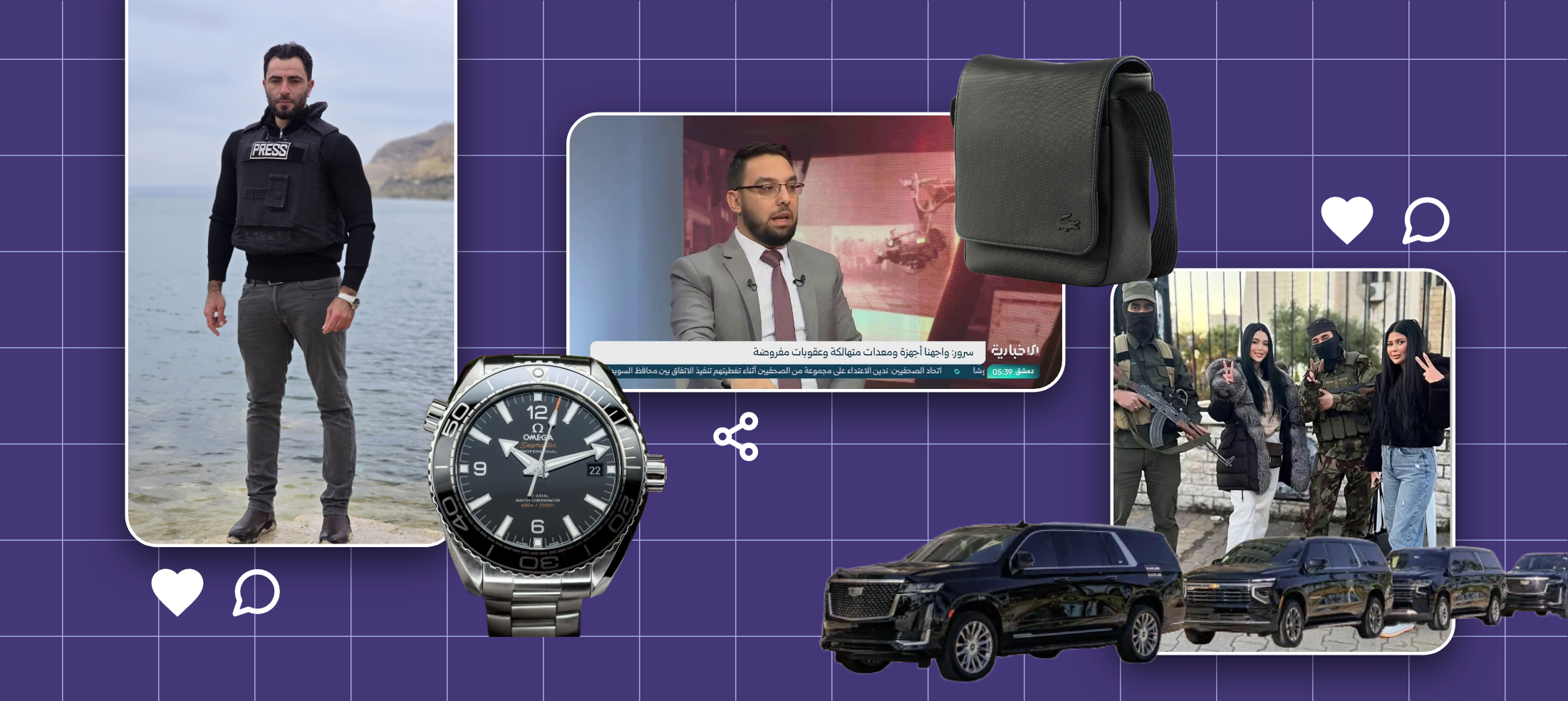
One of the more unexpected developments in the immediate aftermath of Bashar al-Assad’s fall was the speed and sophistication with which Hay’at Tahrir al-Sham (HTS) and its leader, Ahmad al-Sharaa, managed their public image. Media coverage frequently highlighted carefully curated scenes: HTS fighters from Idlib – bearded, young, visibly tough – taking selfies with unveiled women in jeans on the streets of Damascus. The contrast helped to portray HTS’s victory as something socially acceptable, even “cool”. At the centre of this media campaign was Sharaa himself, whose media appearances at that time included many spontaneous strolls in public settings mobbed by adoring crowds.
For almost a year, HTS demonstrated an ability to control narrative and perception. That is ending. Partly it is because of the deepening cost-of-living crisis and broader economic strains; but it also stems from an over-reliance on shallow social media influencers; and from increasingly unfavourable perceptions of HTS personnel.
First cracks
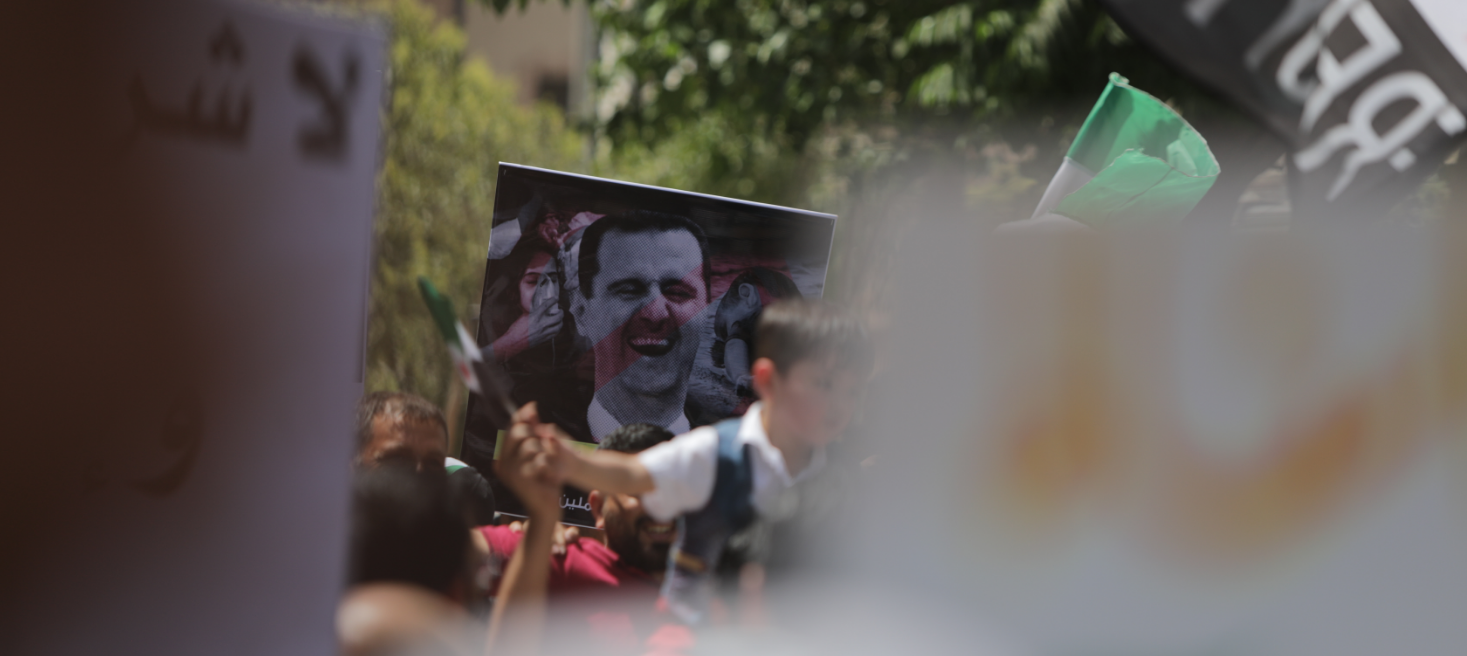
The first serious cracks in the government’s strategic communication campaign appeared in July 2025, with the outbreak of violence in Suwayda. For the first time, Sharaa seemed uncertain and reactive, perhaps not fully in control. There was also a clear policy miscalculation that the government initially sought to gloss over, but which Foreign Minister As’ad al-Shaibani later acknowledged, admitting to reporters that “we had fallen into a trap.” Unlike the coastal clashes, where Assadist remnants were decisively crushed, the confrontation with the Druze proved messier and more protracted, and the government’s authority was more openly contested.
For many, however, it would take more than a massacre or two to discredit the government. That was accomplished mainly by HTS’s own promoters and members.
Influence peddling
From the outset, HTS relied heavily on a network of social media influencers to shape the domestic narrative. The influencers were given access to the HTS leadership in return for positive talking points and tips on upcoming government announcements. “It’s about connecting with the Gen-Zs who are less likely to question HTS,” says a Syrian journalist.
Their style – like that of influencers worldwide – was provocative, not particularly thoughtful, and usually in poor taste. The strategy proved effective at first in mobilising support (if only in an ironic way) and drowning out criticism; but over time it became tedious and increasingly grating, at times resembling a localised version of Andrew Tate.
Repeated vignettes reinforced this perception. When successful businessman and ex-news anchor Musa al-Omar filmed himself atop Mount Qasioun in June 2025 to announce a new five-star hotel development, many Damascenes questioned how he had obtained the building permit so quickly. When Jamil al-Hasan, a gym bro vlogger, broadcast an emotional video from the Kaaba during the hajj, the display struck some viewers as performative. If they question the messenger, they’ll question the message.
Then there is the increasingly synchronised messaging. A loose and expanding cohort of influencers – now estimated at around 40 – appears to move in lockstep. One week, the focus is the police force’s new ‘visual identity’; the next, it is the resounding victory in the northeast; the week after, a government-announced pay rise. The effect is to bombard the public with a series of pre-prepared talking points that have become both unconvincing and patronising.
More importantly, the influencers have drifted away from reality: showcasing investment conferences and talking about billions just around the corner while ordinary Syrians struggle to make ends meet. As economic conditions deteriorated towards the end of 2025 and living costs rose sharply, the constant reassurance that everything was improving, that the leadership knew what it was doing and that patience would be rewarded, rang hollow.
A derisive nickname, mutabileen (“drum beaters”) has been given to the influencers, who have also become a rich source of memes.
Conduct unbecoming
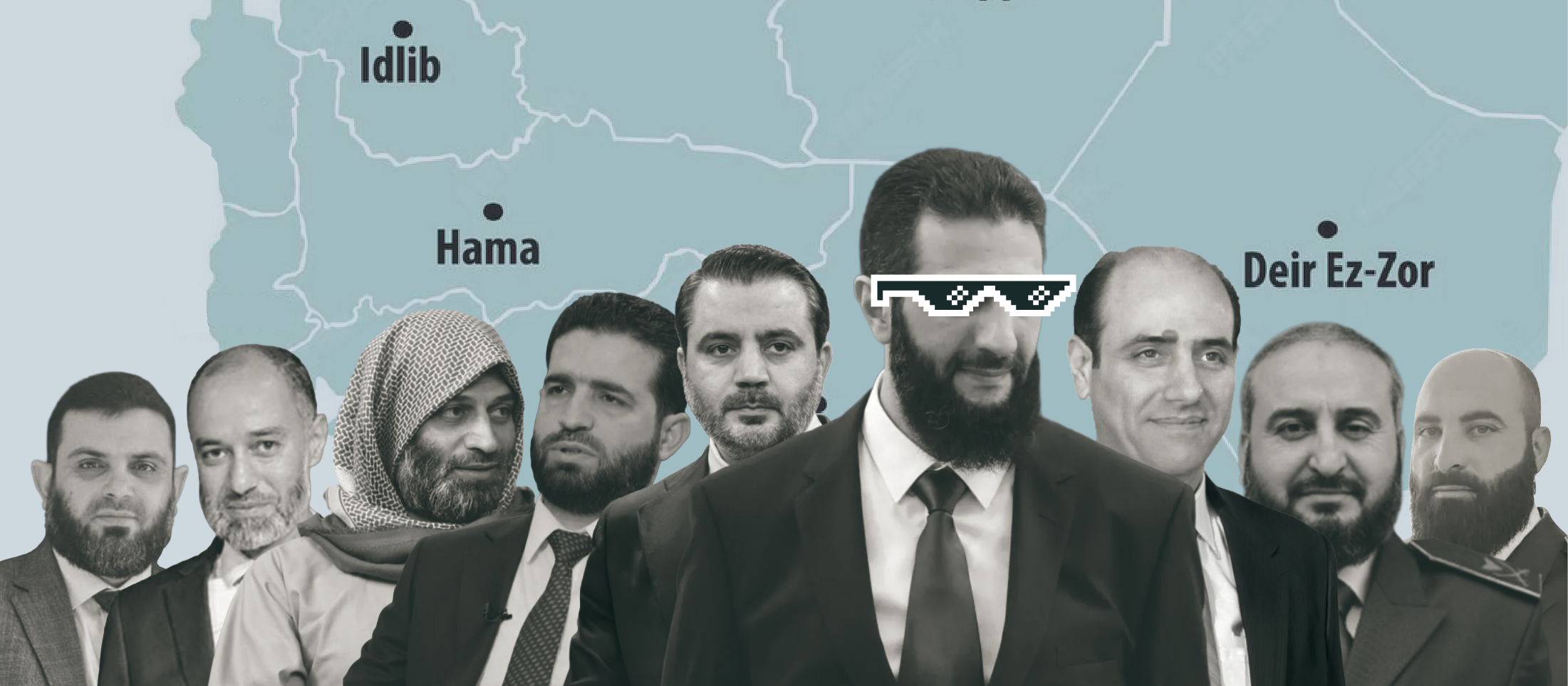
The conduct of HTS members themselves did not help. Many were diligent and serious; too many, however, appeared to enjoy the privileges of power rather too openly. The convoys of black Cadillac Escalades quickly became a source of irritation. So, too, did the growing visibility of officials engaging in private business while in office. The dark suits, oversized watches, Lacoste manbags and fondness for conspicuous dining in pricy restaurants attracted jealousy and disdain in equal measure.
The disciplined, austere image that had accompanied HTS’s rise began to fade, replaced by a perception of officials as arrogant, on-the-make, and more interested in putting on a show than getting things done. It did not apply to all, but it applied to enough to shape public perception. As one Damascene woman in her early forties put it: “The clever one is whoever fills his pockets in the end – some of it openly, some of it hidden – but always cloaked in religion, slogans, and morality.”
The problem did not go unnoticed at the top. In November 2025 President Sharaa reportedly rebuked his officials over what he described as growing “suspicions of corruption”, warning that this risked eroding public trust. He urged them to show restraint in their consumption – having smaller motorcades, for example. He also promised a renewed crackdown on public-sector corruption, estimated to cost Syria some $2bn annually. And he began with his brother, Jamal, whose office was closed down after rumours of shady business deals. The intervention was important: an implicit admission that the behaviour of parts of the ruling class had begun to undermine the government’s image.
Doom scrolling
At its heart, the problem with the government’s strategic communication campaign is structural. Syrian state and quasi-state media remain geared towards producing i’lamiyeen – media personalities – rather than practising sahafa (journalism) in any meaningful sense. Creating celebrities and generating viral clips on TikTok and Facebook may be entertaining; but it’s not trustworthy.
Without reliable, professional interlocutors – experienced journalists, editors and presenters – audiences have little reason to believe what they hear from influencers or the state-run media that serves as their vessel. Even President Sharaa’s statements and decrees appear to carry less weight than before as people begin to tune out.
Media reset
The government’s image has been tarnished by the shallowness and sleaze of a coterie of social media influencers and elements of the HTS apparatchik class. This sits uneasily with Sharaa’s tangible achievements, including the lifting of US sanctions, the merger deal with the SDF, and a cautious avoidance of entanglement in the Iran-Israel war.
While good taste cannot be legislated, and combating corruption is a long and arduous task, credibility and seriousness can be rebuilt reasonably quickly through more professional journalism. That means the government granting its media outlets – Al-Ikhbariya TV, Al-Thawra newspaper, and SANA news agency – genuine independence to investigate, question and report without self-censorship, and without having constantly to praise and glorify, Assad-era style.
The credibility of government
Communications can be greatly enhanced through consistent, fact-based reporting, and there is no shortage of talent. As one retired Syrian newspaper editor put it: “Syria is a country full of journalists, with no journalism.” What Syria lacks is media institutions: newsrooms that function as schools of journalism, capable of training reporters and enforcing standards. As trust in such journalism grew, it would greatly encourage a broader restoration of confidence in the government itself.